Golf Swing Trainer Guide
A swing trainer only helps if it targets a specific fault and gives you feedback you can feel or hear. Most golfers buy one without a clear goal, swing it a few times, and put it in the garage. This guide breaks down the main trainer types, what each one actually does, and how to use them so the practice transfers to the course.

Identify Your Fault Before You Buy Anything
Before you pick a trainer, identify what your swing is doing wrong. The most common faults that trainers can fix:
- Overswinging – the club goes past parallel at the top, causing timing issues
- Poor tempo – rushing the transition from backswing to downswing
- Grip problems – hands rotate or slip during the swing
- Off-plane swing – the club moves outside or inside the correct path
If you don’t know your fault, film your swing with your phone or ask a local pro for a quick look. A trainer that targets the wrong fault can make your swing worse by reinforcing a different bad habit.
Stop and escalate: If you’ve filmed your swing and can’t identify a clear fault, or if a pro has told you the issue is in your setup or impact position, skip the trainer and book a lesson. Trainers reinforce movement patterns — if you don’t know which pattern to change, you’ll just groove the one you already have.
Weighted Trainers: Build Tempo and Feel
Weighted clubs (heavier than a standard club) slow your swing down so you can feel positions you normally rush through. The key is swinging slowly enough that you can hold your finish position for two full seconds.
What they help with: tempo, sequencing, and getting the club to the top without overswinging.
How to use one effectively:
1. Take 10 slow swings at 50% effort, focusing on a full shoulder turn
2. Take 10 swings at 70% effort, focusing on the transition
3. Take 5 swings at full speed, then immediately grab your normal club and swing
The contrast between the heavy trainer and your regular club teaches your body to maintain the same tempo with a lighter load. The SKLZ Golf Tempo & Grip Trainer includes two weight adjustments so you can progress from iron weight to wood weight as your tempo improves.
Verify it’s working: After your final set, take three swings with your normal club. Your transition should feel noticeably slower and more deliberate, and you should be able to hold your finish position without wobbling. If your normal club feels exactly the same as before, you swung the trainer too fast — repeat the drill at 50% effort.
Common mistake: swinging the weighted trainer at full speed. That defeats the purpose. The trainer works because it forces you to slow down and feel positions. If you catch yourself swinging hard, put the trainer down and restart the drill.
Retractable Trainers: Audible Feedback for Timing
Retractable trainers extend and retract during the swing, and many produce a click or snap sound when you hit the correct positions. The sound gives you instant feedback without needing a camera or a coach.
What they help with: swing plane, extension, and timing the release.
The XSMSGO Retractable Golf Swing Training Aid extends the shaft when your swing path is correct and makes a clear click sound at the right moment. If you don’t hear the click, your swing is off-plane or your release is mistimed.
How to use one effectively:
1. Start with half-swings and listen for the click at the same point every time
2. Gradually increase to full swings while keeping the click consistent
3. Use it for 5–10 minutes before hitting balls to set your timing
Verify it’s working: The click should happen at the same point in your swing on at least 8 out of 10 swings. If the click moves earlier or later, or disappears entirely, your release timing is inconsistent. Slow down to half-speed until you can hit the same spot repeatedly, then build back up.
Common mistake: chasing the sound instead of maintaining your posture. The click is feedback, not the goal. Keep your spine angle steady and let the sound confirm your path. If you find yourself contorting to make the click happen, stop and reset your setup.
Grip Trainers: Fix Hand Position First
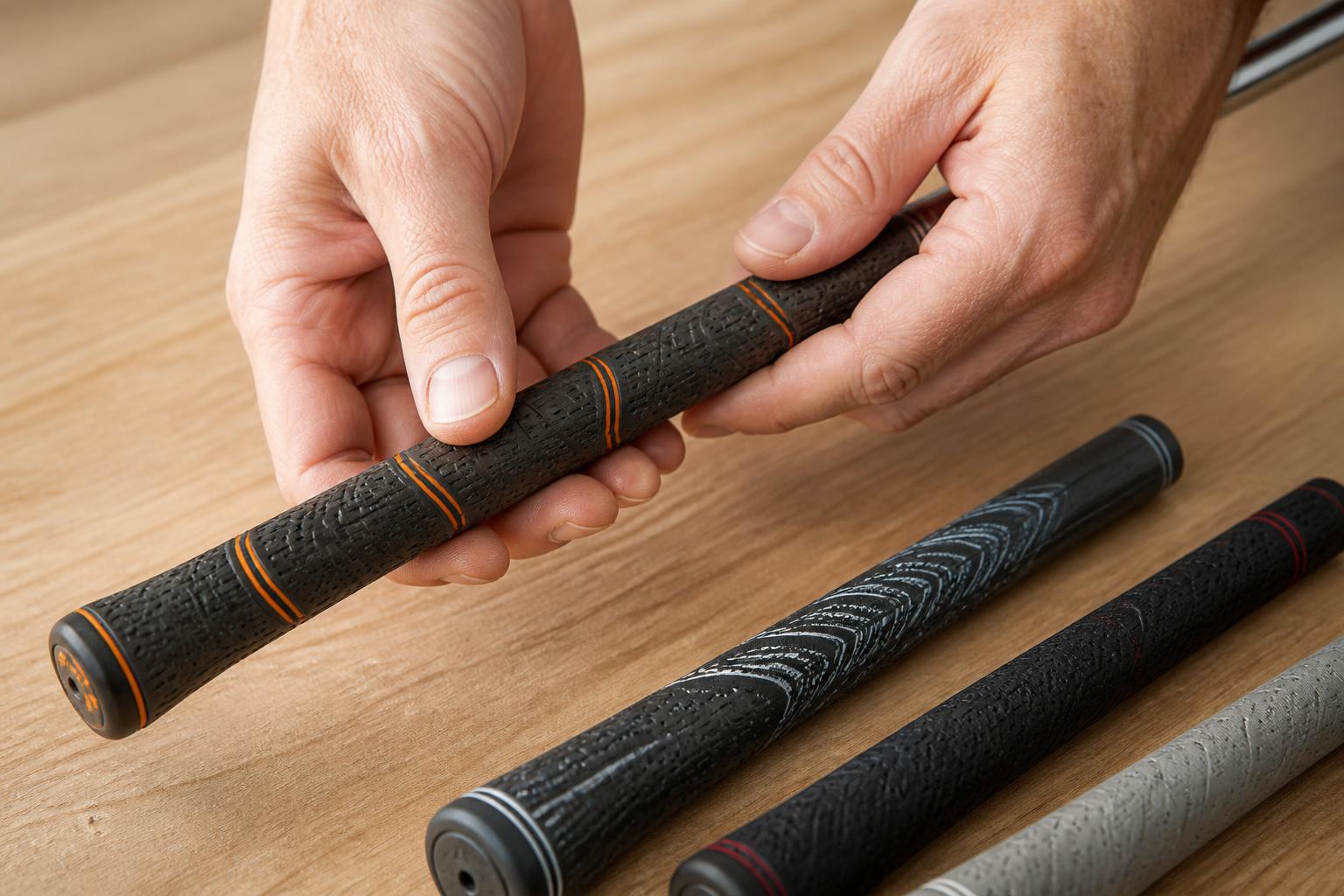
Grip trainers are usually a molded grip that forces your hands into the correct position. They’re useful if you tend to let the club slip in your hands or if your grip changes during the swing.
What they help with: neutral grip position, hand placement consistency, and preventing the club from twisting at impact.
The SKLZ Golf Tempo & Grip Trainer doubles as a grip trainer, so you can address hand position and tempo with one tool. Use it for slow practice swings first, then move to full swings.
How to use one effectively:
1. Set your hands on the trainer and check the molded guides align with your palms
2. Take 20 practice swings focusing on keeping the grip pressure consistent
3. Hit 10 balls with your normal club and check if your grip stays the same
Verify it’s working: After 10 balls with your normal club, look at your hands at the top of your backswing. Your grip should look identical to how it looked on the trainer. If your hands have rotated or the club has shifted, go back to the trainer for another 10 slow swings before continuing.
Common mistake: squeezing the grip too hard. The trainer shows you where your hands go, but grip pressure should stay light — roughly a 4 out of 10. If your forearms feel tight after 10 swings, you’re gripping too hard.
Stop and escalate: If you’ve used a grip trainer consistently for two weeks and your grip still slips or rotates during full swings, stop. This could indicate a grip size issue — your clubs may need thicker or thinner grips to fit your hand size. A local pro or club fitter can measure your hands and recommend the right grip size.
How to Structure a Practice Session
A swing trainer session should be short and focused. Twenty minutes of deliberate practice beats an hour of mindless swinging.
Sample 20-minute session:
| Time | Activity |
|---|---|
| 0–5 min | Warm up with slow swings using a weighted trainer |
| 5–10 min | Tempo work — 15 swings at 70% speed, hold finish |
| 10–15 min | Plane work with retractable trainer — 20 swings, listen for click |
| 15–20 min | Grip check and 10 full swings with your normal club |
The final step matters. If you don’t transition back to your regular club, the trainer work doesn’t carry over. Always finish with normal swings while thinking about the one feeling you practiced.
Verify the session worked: After your final 10 swings, ask yourself one question: did the swing feel different from when you started? If yes, you’ve locked in the feeling. If no, pick one drill and repeat it tomorrow — don’t add more drills to a session that isn’t landing.
What Trainers Can’t Fix
Swing trainers have limits. They won’t fix:
- Setup and posture issues – you need a mirror or video for that
- Ball flight problems caused by face angle – trainers don’t give you impact data
- Physical limitations – flexibility or strength issues need a different approach
If your swing fault is in your setup or your impact position, a trainer that only works on the swing path won’t solve it. In that case, a lesson with a pro who can see your whole swing is the better investment.
Stop and escalate: If you’ve practiced with a trainer for three weeks and seen zero improvement in ball flight or consistency, stop and book a lesson. The trainer isn’t working for your specific fault, and continuing will only groove the same pattern. A pro can identify what the trainer can’t see — your setup, alignment, and impact position.
Choosing the Right Trainer for Your Situation
Match the trainer to your specific need:
- You rush your downswing – weighted trainer for tempo work
- Your swing plane is inconsistent – retractable trainer with audible feedback
- Your grip slips or rotates – grip trainer
- You’re not sure what’s wrong – start with video analysis, then pick a trainer
For most golfers, a retractable trainer like the XSMSGO Retractable Golf Swing Training Aid gives the most immediate feedback because the click sound tells you instantly whether your swing is on track. If tempo is your main issue, a weighted trainer gives you the physical sensation of a slower, more controlled swing.
Common Mistakes to Avoid
Using the trainer every day. Your muscles need time to adapt. Two or three sessions per week is enough.
Swinging too hard. Trainers work at 60–80% effort. Full speed with a trainer often reinforces the same timing issues you’re trying to fix.
Ignoring the feedback. If the trainer clicks at a different point each swing, stop and slow down. Consistency matters more than power.
Skipping the transition to a normal club. Always finish with regular swings so the feeling transfers.
Buying multiple trainers at once. Start with one that targets your primary fault. Adding a second trainer before you’ve mastered the first splits your attention and slows progress.
FAQ
How often should I use a swing trainer?
Two to three times per week for 15–20 minutes is enough. Daily use can lead to fatigue and reinforce sloppy mechanics.
Can a swing trainer fix my slice?
It depends on the cause. If your slice comes from an outside-in swing path, a retractable trainer with audible feedback can help. If it comes from an open clubface at impact, you need a different fix.
Do weighted trainers make my clubs feel lighter?
Yes, temporarily. That contrast is the point. The heavier weight slows your swing down so you can feel positions, and your normal club feels lighter and easier to control afterward.
Are swing trainers worth it for beginners?
Yes, but only if you have a specific goal. A grip trainer helps beginners learn hand position, and a weighted trainer helps build a repeatable tempo. Avoid buying multiple trainers at once — start with one and use it consistently.
How long before I see improvement?
Most golfers notice a difference in tempo and feel within two weeks of consistent practice. Ball flight changes take longer — typically four to six weeks — because you need to transfer the trainer work to your normal swing and build confidence in the new pattern.

Michael Reeves is a PGA Professional with over 20 years of experience in competitive golf and instruction. A former Division I collegiate player at the University of Texas, he competed on the mini-tours before transitioning to full-time coaching and golf journalism. He has been a certified PGA teaching professional since 2005 and has worked with players at every level, from absolute beginners to collegiate champions.
His writing has appeared in Golf Digest, Golf Magazine, and The Left Rough. At GolfHubz, Michael leads the editorial team, overseeing fact-checking and ensuring every answer meets the same standard he demands on the lesson tee: clear, evidence-based, and immediately useful.
When he’s not writing or teaching, Michael plays to a +1.4 handicap at his home club in Austin, Texas. He has attended over 40 major championships as a journalist and fan, and has played more than 200 courses across 15 countries.
You can reach Michael at [email protected] or follow his occasional swing analysis posts on the site.