Pro V1 vs Pro V1x Comparison: Specs & Differences
If you’re choosing between the Titleist Pro V1 and Pro V1x, you’re picking between two tour-level balls that perform differently in ways that directly affect your score. The Pro V1 flies lower with less spin and feels softer. The Pro V1x launches higher, spins more, and feels firmer. Your swing speed, typical miss, and short-game preferences determine which one actually helps you—not which one the pros play.
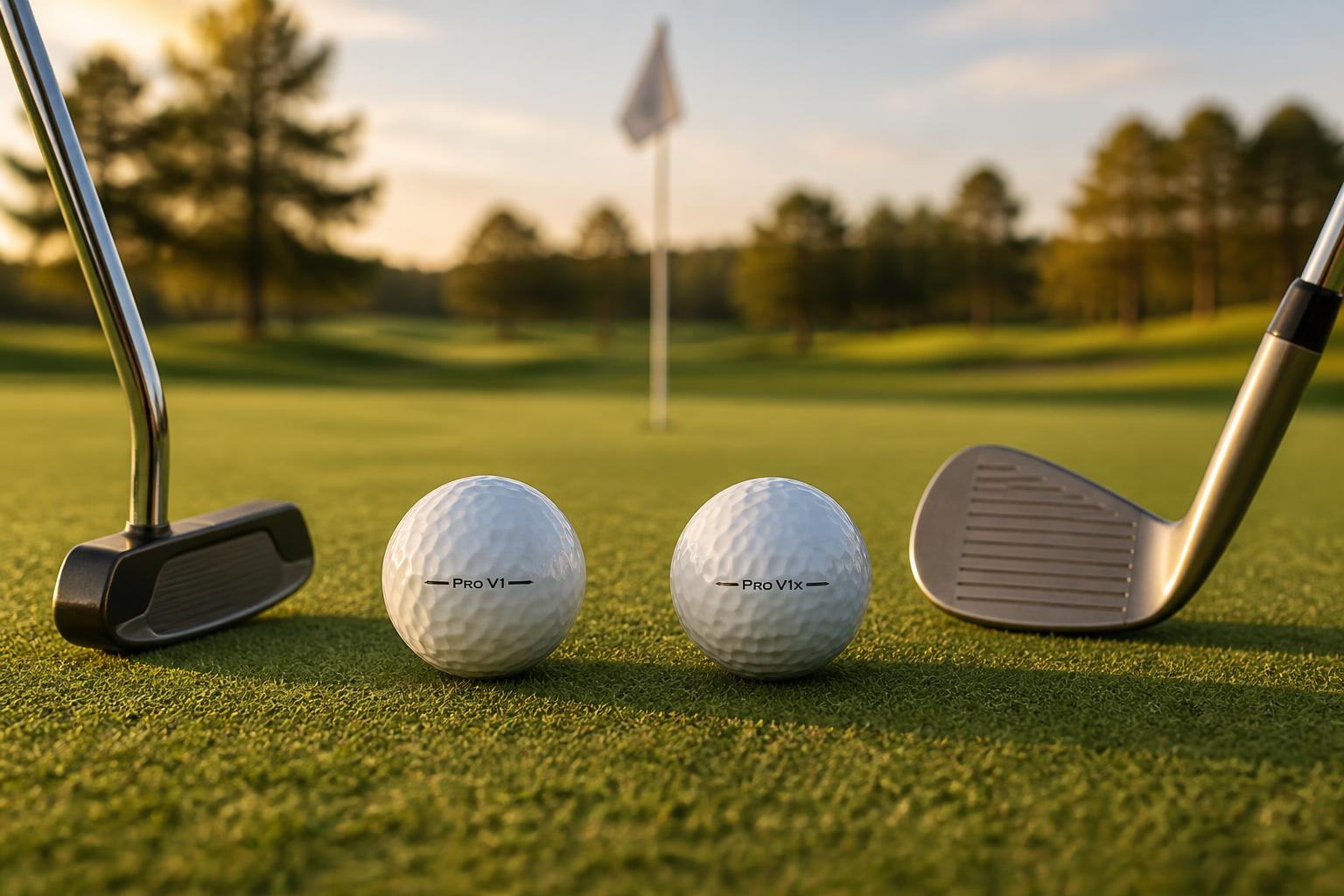
What Actually Changes Between the Two Balls
The performance gap comes down to three measurable differences: spin rate, launch angle, and compression. These aren’t marketing tweaks—they change how the ball behaves from driver to putter.
Pro V1:
- Lower trajectory off the driver
- Lower long-game spin, which reduces hooks and slices
- Softer feel on every shot
- Three-piece construction with a single core
Pro V1x:
- Higher launch angle across all clubs
- Higher spin on every shot, including wedges
- Firmer feel at impact
- Four-piece construction with a dual core
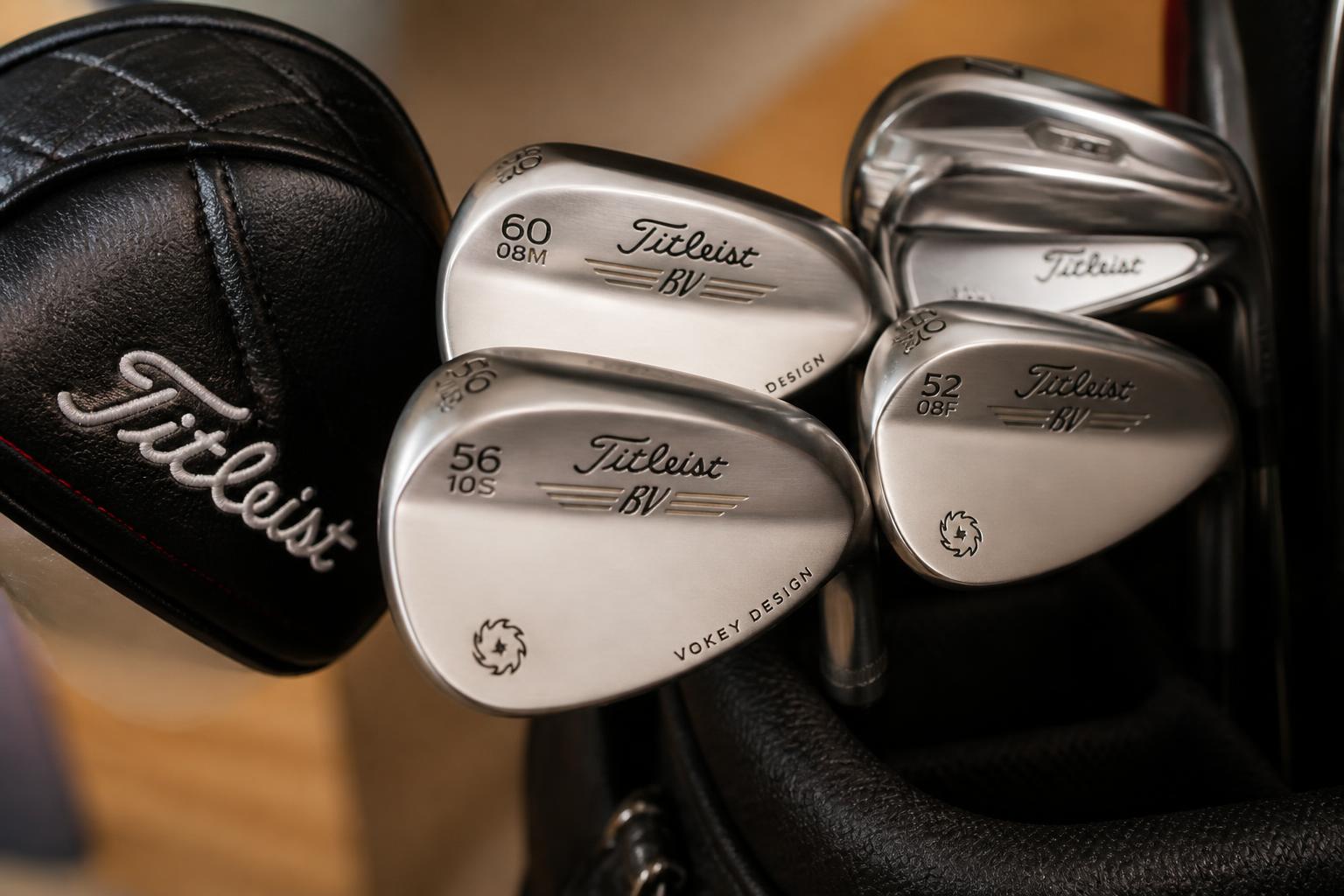
The practical effect: the Pro V1 is the control ball, and the Pro V1x is the spin ball. If you already fight a hook or slice, the Pro V1’s lower spin helps keep the ball in play. If you need to stop the ball quickly on firm greens, the Pro V1x gives you more margin for error on approach shots.
Compression and Feel: Why the x Feels Firmer
Compression ratings tell you how much the ball deforms at impact. The Pro V1 sits around 87–90 compression, which feels softer and is easier to compress for moderate swing speeds. The Pro V1x runs closer to 100–105 compression, which feels firmer and rewards faster swing speeds.
Here’s what that means for your game:
- Driver swing speed under 95 mph: The Pro V1’s lower compression helps you maximize distance without feeling like you’re hitting a rock. The Pro V1x may feel boardy and won’t compress fully, costing you carry distance.
- Driver swing speed above 100 mph: The Pro V1x’s higher compression holds up better and produces the launch and spin you need. The Pro V1 may feel too soft and can spin too little on wedge shots.
If you’re between 95 and 100 mph, this becomes a feel preference more than a performance requirement. Hit both and decide which one sounds and feels right.
Distance and Trajectory: The Roll vs. Carry Trade-Off
Neither ball is universally longer. The Pro V1 produces a lower, more penetrating flight that rolls out more on firm fairways. The Pro V1x launches higher and lands softer, which adds carry distance but costs you roll.
For most recreational players, the total distance difference is within a few yards. The real question is your course conditions:
- Firm, fast fairways: The Pro V1’s lower flight produces extra roll, which can add 5–10 yards of total distance on dry summer courses.
- Soft, wet courses: The Pro V1x’s higher carry keeps the ball in the air longer, which matters when fairways don’t roll out.
One common mistake is assuming the Pro V1x is longer because it’s the higher-spinning ball. That’s not how it works. The x is longer for players who need help getting the ball in the air. If you already hit it high, the x can balloon in the wind and cost you distance.
Around the Greens: Where the Choice Gets Personal
The short game is where these balls feel most different, and it’s where you should make your final decision.
The Pro V1’s softer cover gives a muted, “buttery” feel on chips and putts. It still spins well on short shots, but you need crisp contact to stop the ball quickly. If you’re a feel putter who hates a firm click, this is your ball.
The Pro V1x checks up more aggressively on wedge shots. If you like to fly the ball at the pin and trust it to bite, the x gives you more forgiveness on slightly imperfect strikes. The trade-off: the firmer feel on the putting green can feel harsh, especially on fast greens where touch matters.
Here’s a practical test: hit 10 pitch shots with each ball and watch how they stop. Then roll 20 putts with each. The one that feels consistent on putts and gives you confidence on pitches is the one you should play. Don’t let spin numbers override what your hands tell you.
Who Should Play Which Ball
Use these decision rules as a starting point, then verify with your own testing.
Choose the Pro V1 if:
- Your driver swing speed is under 100 mph
- You fight a hook or slice and want lower spin
- You prefer a soft feel on all shots
- You play in windy conditions
- You want a lower flight that runs more on firm fairways
Choose the Pro V1x if:
- Your driver swing speed is above 100 mph
- You want maximum spin on wedge shots
- You need help launching the ball higher
- You prefer a firmer feel at impact
- You play soft courses where carry distance matters more than roll
If you’re genuinely between the two, the Pro V1 is the safer choice for most players. Its lower spin is more forgiving on mishits, and the softer feel is easier to adapt to.
Price and Buying Options
Both balls retail at the same price—typically around $55 per dozen new. If that’s a stretch, you can find Titleist Pro V1 Golf Balls, Pack of 12 in pre-owned condition at lower prices. Just know that recycled and refinished balls use different preparation methods, and performance varies by condition grade. Inspect them carefully before buying in bulk—scuffed covers and inconsistent compression are common in lower grades.
For those who want the current model, the Titleist Pro V1 Golf Balls, Yellow, One Dozen offers the same performance in a high-visibility color. Yellow balls are easier to track in the air and find in the rough, which is a practical advantage on courses with thick grass or poor lighting.
If you’re looking to save money without sacrificing the Pro V1 design, the Titleist Pro V1 2023 Model Refinished Golf Balls – 12 Pack – Tour-Level Distance, Soft Feel, and Control – Premium Refinished Quality uses the previous generation’s core and cover. The 2023 model’s reformulated core lowers long-game spin for more distance, so you get many of the same performance traits at a lower price point.
How to Test for Yourself
You can read specs all day, but the only reliable way to choose is to hit both balls side by side. Here’s a testing protocol that takes about 30 minutes:
1. Start with wedges. Hit 10 pitch shots with each ball. Notice which one stops faster and which one feels better off the face.
2. Move to mid-irons. Hit 10 seven-irons with each. Pay attention to trajectory and whether one ball feels too firm or too soft.
3. Finish with the driver. Hit 10 drives with each. Note the flight window, the amount of curve, and total distance.
4. Putting test. Roll 20 putts with each ball. Choose the one that sounds and feels most consistent to you.
Don’t rely solely on a launch monitor for this decision. Your feel and your miss patterns matter more than raw numbers. If you’re between the two, the Pro V1 is the safer choice for most players because its lower spin is more forgiving on mishits.
Common Mistakes When Choosing
Buying based on what tour players use. The Pro V1x is the most played ball on the PGA Tour, but tour players have swing speeds most amateurs can’t match. Their needs are not your needs.
Assuming higher price means better fit. Both balls cost the same. The price isn’t the differentiator—your swing is.
Ignoring your miss. If you already hit a high, spinning ball that balloons in the wind, the Pro V1x will make that worse. If you hit a low, knuckling ball that doesn’t hold greens, the Pro V1x will help.
Skipping the feel test. Many players choose the x for its spin numbers, then realize after one round that they can’t stand the firm feel on putts. Feel is a performance factor, not a luxury.
What This Means for Your Next Purchase
Here’s the practical takeaway: if you’re currently playing one of these balls and wondering whether to switch, the answer depends on your swing speed and your miss. If you’re under 100 mph driver speed and playing the Pro V1x, you’re likely leaving distance on the table and fighting a firmer feel than you need. Switching to the Pro V1 will probably feel better and may add distance. If you’re above 100 mph and playing the Pro V1, you may be losing spin around the greens and struggling to hold firm greens—the Pro V1x gives you more stopping power.
Before you buy a dozen of either, verify your swing speed at a local fitting or on a launch monitor. Most golf shops offer this for free. If you can’t measure it, use your driver ball flight as a proxy: if your drives balloon and spin too much, the Pro V1 is the safer pick. If your drives fly low and knuckle, the Pro V1x will help.
The one scenario where you should stop and reconsider: if you’re buying either ball primarily because a tour player you like uses it. That’s not a fit criterion. The Pro V1 and Pro V1x are both excellent balls, but they’re tools with different purposes. Match the tool to your swing, and you’ll get the most out of either choice.

Michael Reeves is a PGA Professional with over 20 years of experience in competitive golf and instruction. A former Division I collegiate player at the University of Texas, he competed on the mini-tours before transitioning to full-time coaching and golf journalism. He has been a certified PGA teaching professional since 2005 and has worked with players at every level, from absolute beginners to collegiate champions.
His writing has appeared in Golf Digest, Golf Magazine, and The Left Rough. At GolfHubz, Michael leads the editorial team, overseeing fact-checking and ensuring every answer meets the same standard he demands on the lesson tee: clear, evidence-based, and immediately useful.
When he’s not writing or teaching, Michael plays to a +1.4 handicap at his home club in Austin, Texas. He has attended over 40 major championships as a journalist and fan, and has played more than 200 courses across 15 countries.
You can reach Michael at [email protected] or follow his occasional swing analysis posts on the site.