Two-Piece vs Multi-Layer Golf Balls
If you’re shopping for golf balls and feeling overwhelmed by the options, the first split you need to understand is simple: two-piece versus multi-layer construction. Two-piece balls prioritize distance and durability, while multi-layer balls (three-piece, four-piece, and up) prioritize spin control and feel around the greens. But the right choice depends on your swing speed, handicap, and what you actually want the ball to do when you hit it.
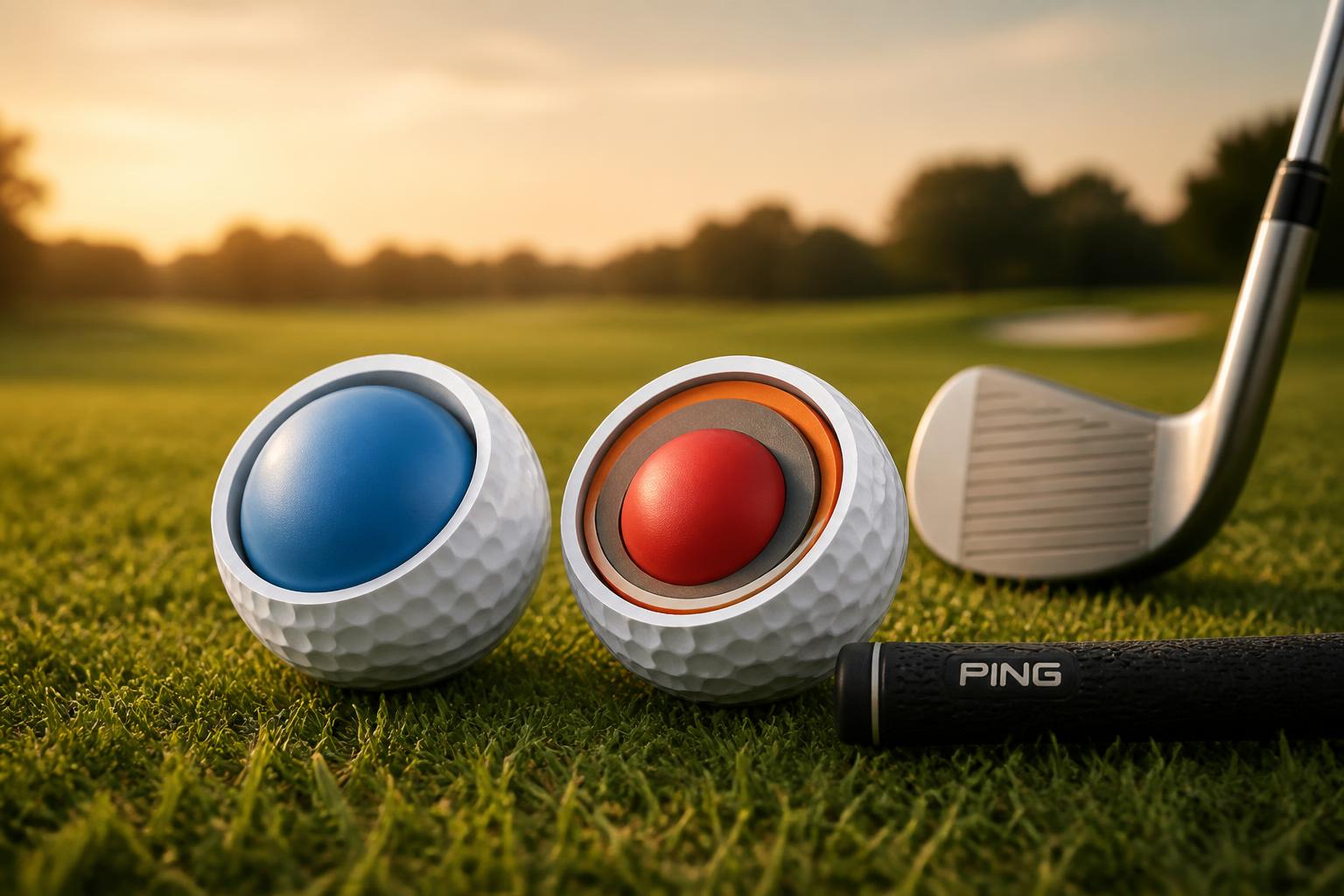
What a Two-Piece Golf Ball Actually Is
A two-piece golf ball has a solid rubber core surrounded by a single outer cover layer, usually made of Surlyn or a similar ionomer. That’s it — two components, no middle layers.
Because the core is large and firm, two-piece balls tend to:
- Launch higher with less spin off the driver
- Roll out more on landing, adding total distance
- Feel firmer on putts and chips
- Resist scuffs and cuts better than softer covers
The trade-off is around the green. With less spin on approach shots, you get less stopping power. A ball that lands on the front of the green is more likely to release toward the back, which makes distance control trickier on firm greens.
What this means for your next purchase: If you’re a high-handicap player or someone who loses a few balls per round, a two-piece ball is the financially sensible starting point. You won’t feel the sting when one finds the water, and the durability means a single ball can last multiple rounds if you keep it in play. If you’re a single-digit handicap, though, the rollout on approach shots will cost you strokes — that’s the signal to look at multi-layer options instead.
What Multi-Layer Golf Balls Add
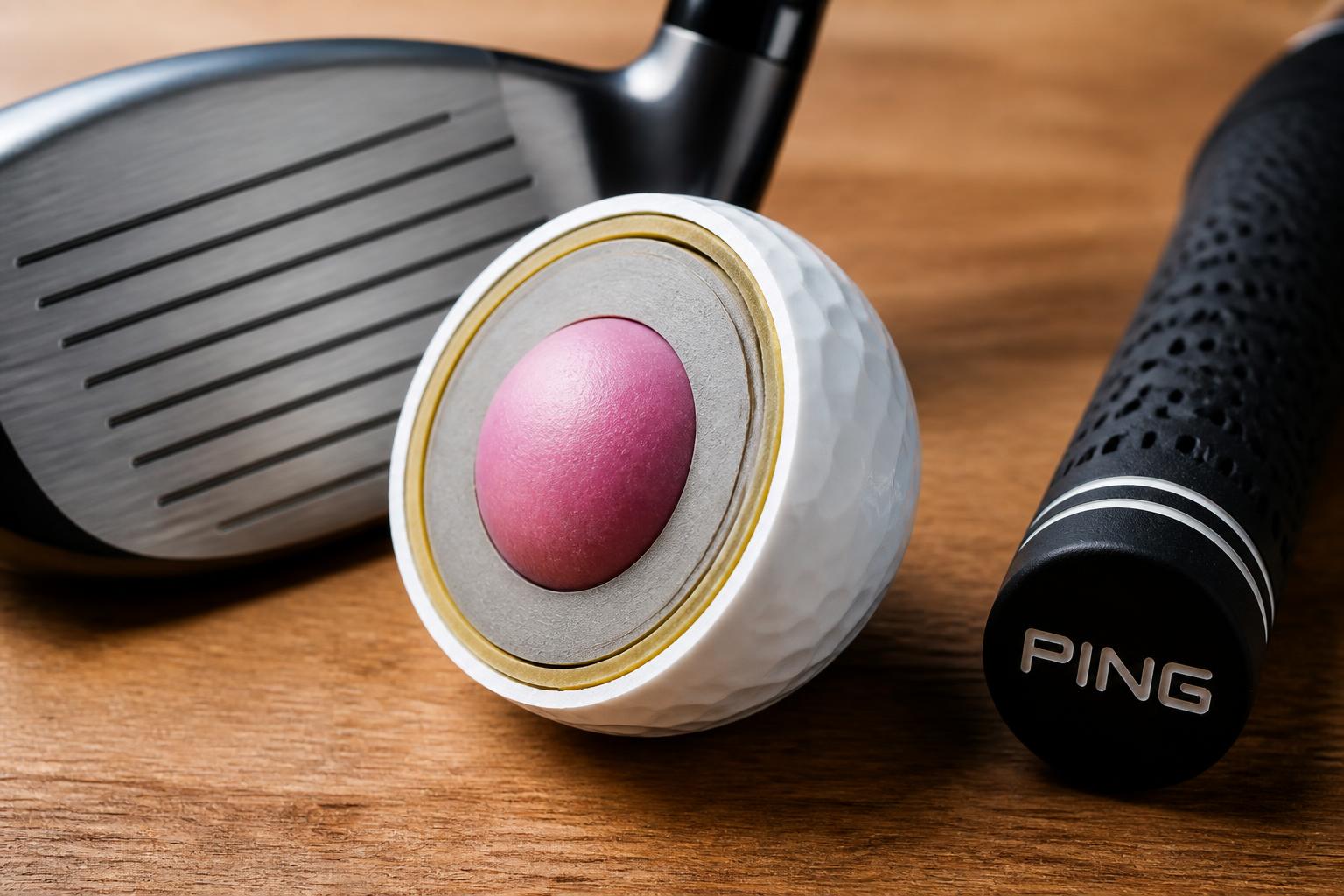
Multi-layer balls add one or more mantle layers between the core and the cover. A three-piece ball has a core, a mantle, and a cover. Four-piece and five-piece designs add additional mantles, each engineered to manage a specific part of the shot.
The key difference is how the ball behaves at different swing speeds:
- Off the driver (high speed): The outer mantle compresses less, keeping spin down for distance.
- Off short irons (moderate speed): The mantle engages more, generating higher spin for stopping power.
- Around the greens (low speed): The softer cover grips the clubface, producing feel and check.
That’s why multi-layer balls are the standard choice for low-handicap players who need to hold greens and shape shots. They’re not automatically “better” — they’re better at a specific job.
Distance vs. Control: The Real Trade-Off
Here’s the decision rule that matters most:
If your priority is maximum distance and you rarely spin the ball enough to notice a difference around the greens, a two-piece ball is the practical choice.
If you regularly hit approach shots that land and stop, and you want more feel on chips and putts, a multi-layer ball will serve you better.
Your swing speed matters too. Multi-layer balls are designed to compress in stages. If your driver swing speed is below roughly 85–90 mph, you may not generate enough force to fully compress the outer layers, which means you’re paying for spin technology you can’t access. A two-piece ball with a softer core will often produce better results for moderate swing speeds.
How to verify your fit: Check your driver swing speed at a local golf shop with a launch monitor — most will do this free if you’re testing clubs. If you’re under 90 mph, ask to see the compression ratings on the balls you’re considering. A ball with a compression rating above 90 will feel like a rock off the face and won’t deliver the distance you’re paying for.
Compression: The Number That Connects the Two
Compression measures how much a ball deforms under load. It’s not the same as construction, but it’s closely related to how a ball feels.
- Low compression (around 50–70): Softer feel, more distance for slower swing speeds.
- Mid compression (around 70–90): Balanced feel, suits average swing speeds.
- High compression (90+): Firmer feel, designed for faster swing speeds.
Most two-piece balls sit in the low-to-mid compression range. Multi-layer balls vary widely, so you can find soft three-piece balls (like a low-compression urethane model) or firm four-piece balls for high swing speeds.
The practical takeaway: don’t shop by layer count alone. Check the compression rating and match it to your swing speed.
The mismatch to watch for: A high-compression four-piece ball in the hands of a player with a 75 mph swing speed won’t just feel unresponsive — it will actually fly shorter than a low-compression two-piece ball. The ball never fully compresses, so you lose the spring-like effect that generates ball speed. This is the most common reason golfers switch to a premium ball and immediately lose distance.
Durability and Cost: Where Two-Piece Balls Win
Two-piece balls are cheaper to manufacture, and that shows up in both price and durability. The Surlyn covers resist scuffs from cart paths, trees, and wedge grooves far better than the soft urethane covers found on most multi-layer balls.
For practice rounds, casual play, or courses with heavy hazards, a two-piece ball makes financial sense. You’re less likely to cut one open on a bad lie, and you won’t feel the sting when you lose one in the water.
Multi-layer balls with urethane covers offer more spin and feel, but they mark up faster. A single wedge shot hit slightly thin can leave a scuff that affects performance.
The cost reality check: A premium multi-layer ball can run $45–$55 per dozen. If you lose two balls per round, that’s roughly $7–$9 per round just in lost balls. Over a 20-round season, that’s $140–$180 extra compared to a two-piece ball at $25–$30 per dozen. If you’re not consistently benefiting from the spin advantages, that’s money that could go toward green fees or lessons.
Who Should Play Two-Piece Balls
Two-piece balls are the right fit for:
- High-handicap players who lose several balls per round and don’t want to spend premium prices
- Seniors or players with slower swing speeds who need help getting the ball in the air
- Beginners still developing consistent contact
- Practice rounds where you’re working on swing mechanics, not scoring
The common mistake is assuming a “better” ball will fix a swing flaw. It won’t. If you’re averaging 95 or higher, a two-piece ball removes variables and saves money.
Who Should Play Multi-Layer Balls
Multi-layer balls make sense for:
- Low-handicap players who rely on spin to hold greens
- Players with driver swing speeds above 90 mph who can compress the ball fully
- Golfers who shape shots and need consistent spin characteristics
- Competitive rounds where scoring matters more than ball cost
If you’re a single-digit handicap playing a two-piece ball, you’re likely leaving strokes on the table around the greens. The inability to stop a ball on a firm green is a real scoring penalty.
How to Test the Difference Yourself
You don’t need a launch monitor to figure out which construction suits you. Try this simple on-course test:
1. Buy one sleeve of a two-piece ball and one sleeve of a three-piece ball in the same compression range.
2. Play a practice round alternating balls every hole.
3. Pay attention to three things: distance off the tee, stopping power on approach shots, and feel on chips and putts.
4. Check the condition after 9 holes. The multi-layer ball will likely show more wear.
If you can’t tell the difference in spin or feel, save the money and stick with two-piece. If the multi-layer ball holds greens noticeably better, the added cost is justified.
Common Misconceptions
“More layers always means more spin.” Not true. Layer count is about controlling spin at different speeds, not maximizing it. Some two-piece balls spin more than poorly matched multi-layer balls.
“Professional balls are too hard for amateurs.” The Tour balls used by pros are actually softer than many recreational balls. The issue isn’t hardness — it’s whether you can compress the layers effectively.
“Two-piece balls are only for beginners.” Many mid-handicap players benefit from two-piece construction, especially if they play on courses with firm, fast greens where rollout is an advantage.
A Note on Ball Retrievers
If you’re practicing with two-piece balls to save money, a ball retriever extends their lifespan significantly. Products like the No Worry Sports Original Scramble Pic Golf Ball Retriever with Suction Cup End and Magnetic Cart Fastener let you pick up balls from the cart without bending, which speeds up practice sessions and keeps you from fishing in ponds. The Scramble Stick The Original Golf Ball Retriever, Lightweight Design, 26-Inch, 1-Piece offers a similar solution with a lightweight, no-mechanism design.
For a more compact option, the Scramble Stick The Original Shorty Golf Ball Retriever, Lightweight Design, 20-Inch, 1-Piece fits easier in a carry bag.
These tools are especially useful if you’re practicing with premium multi-layer balls — retrieving them from hazards keeps the cost per round manageable.
Making the Final Call
The decision between two-piece and multi-layer golf balls comes down to one honest question: Do you need spin control, or do you need distance and durability?
If you’re not sure, start with a two-piece ball. They’re cheaper, more durable, and easier to hit consistently. As your game improves and you start attacking pins instead of just trying to stay in play, you’ll know when it’s time to move to a multi-layer ball. That’s not a marketing pitch — it’s the natural progression of skill and need.
The best ball for you is the one that matches your swing speed, your budget, and the shots you actually hit on the course.

Michael Reeves is a PGA Professional with over 20 years of experience in competitive golf and instruction. A former Division I collegiate player at the University of Texas, he competed on the mini-tours before transitioning to full-time coaching and golf journalism. He has been a certified PGA teaching professional since 2005 and has worked with players at every level, from absolute beginners to collegiate champions.
His writing has appeared in Golf Digest, Golf Magazine, and The Left Rough. At GolfHubz, Michael leads the editorial team, overseeing fact-checking and ensuring every answer meets the same standard he demands on the lesson tee: clear, evidence-based, and immediately useful.
When he’s not writing or teaching, Michael plays to a +1.4 handicap at his home club in Austin, Texas. He has attended over 40 major championships as a journalist and fan, and has played more than 200 courses across 15 countries.
You can reach Michael at [email protected] or follow his occasional swing analysis posts on the site.