Golf Club Regrip Cost Guide
What You’ll Actually Pay to Regrip Your Clubs
A full set of golf club regrips typically runs $80–$200 total, depending on three variables: the grips you choose, who installs them, and whether you do the work yourself.
Here’s the breakdown:
| Cost Component | DIY Price | Shop Price |
|---|---|---|
| Grips (13 clubs, standard rubber) | $65–$130 | $65–$130 |
| Tape + solvent | $10–$15 | Included |
| Labor | $0 | $40–$70 |
| Total | $75–$145 | $105–$200 |
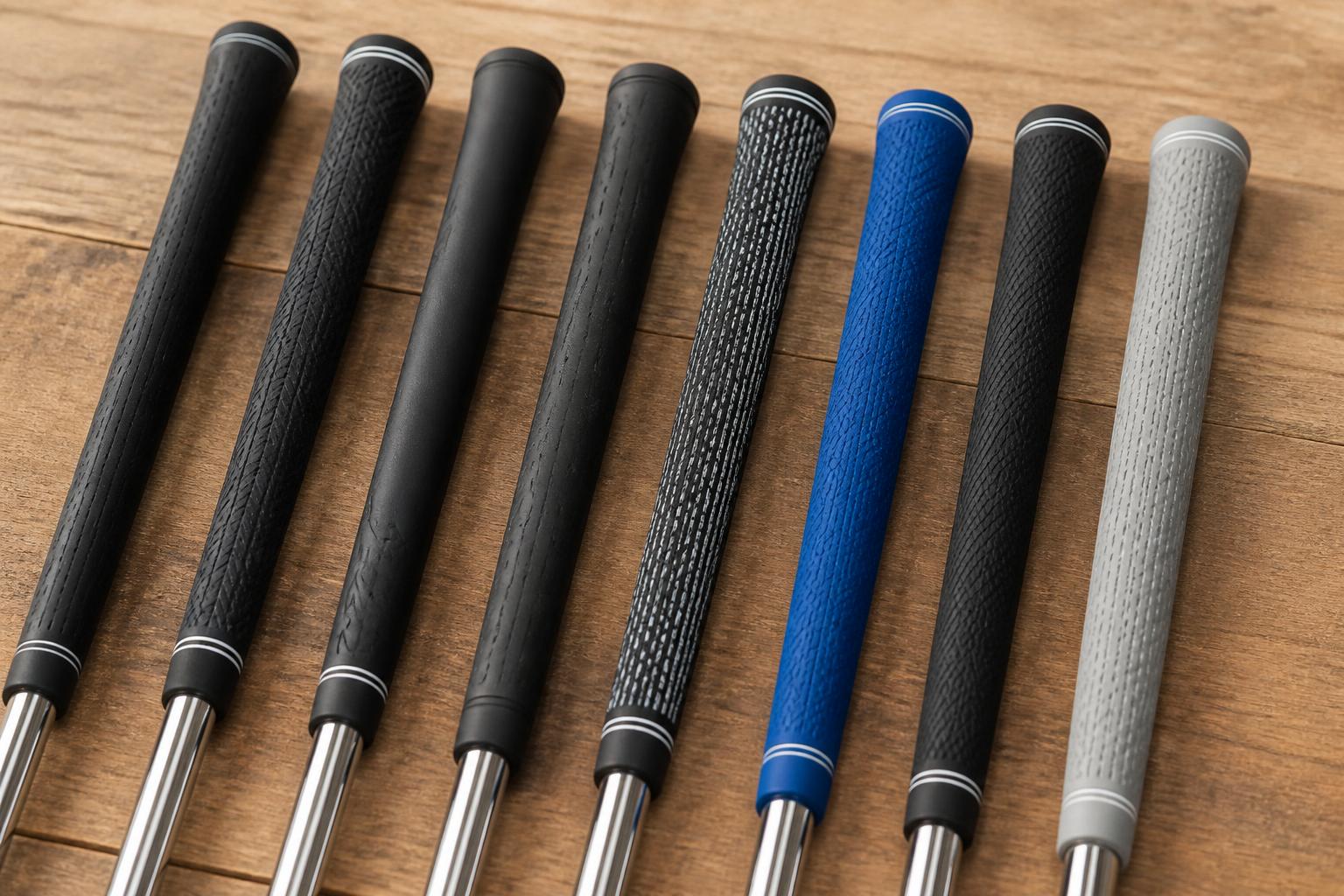
The single biggest price driver is grip selection. A basic rubber grip runs $5–$10 per club. Mid-tier options like Golf Pride Tour Velvet or Lamkin Crossline sit around $8–$12. Premium multi-compound or cord grips can hit $12–$15 per grip, pushing a 13-club set past $170 before labor.
Grip Price Ranges by Type
Standard rubber ($5–$10 per grip) — The baseline. Tour Velvet-style grips with a firm feel and moderate tack. Expect 40–60 rounds of life. If you play once a week, that’s roughly a year to 18 months.
Midsize or oversize ($7–$12 per grip) — Same materials, more rubber. Useful for golfers with larger hands or those who grip too tightly. The price bump comes from extra material, not better quality.
Cord or hybrid ($10–$15 per grip) — Cords add durability and all-weather performance but feel rough without gloves. Hybrids put cord only in the lower hand. These last longer than standard rubber — often 75+ rounds — which offsets the higher upfront cost.
Wraps or specialty ($8–$14 per grip) — Leather wraps and tour-style wraps cost more and require more care. They’re a preference pick, not a performance upgrade for most amateurs.
Putter grips ($15–$30) — A separate category. Putter grips use different sizing and installation methods. If you’re regripping the full bag, budget for this as an add-on.
Shop Labor Costs Explained
Most pro shops and big-box golf retailers charge $3–$5 per club for installation when you buy the grips from them. Some waive labor entirely as a purchase incentive. Standalone labor — bringing in your own grips — typically runs $5–$7 per club.
That labor covers:
- Removing old grips and tape
- Cleaning the shaft
- Applying new tape and solvent
- Aligning the grip properly
- Letting the set cure (usually 6–24 hours)
Decision rule: If you’re buying grips anyway, ask about installation bundles. A shop that charges $4 per club for labor adds $52 to a 13-club set. That’s often negotiable when you’re spending $100+ on grips.
Concrete example: A golfer bringing in grips purchased online to a big-box store at $6 per club pays $78 in labor alone. The same golfer buying those grips in-store during a labor-included promotion pays $0 in labor — a $78 swing on the same product.
DIY Regripping: Tools and True Cost
Doing it yourself cuts labor but requires a one-time tool investment:
| Tool | Price |
|---|---|
| Hook blade knife | $5–$10 |
| Double-sided tape (1 roll) | $8–$12 |
| Mineral spirits or grip solvent | $8–$15 |
| Rubber vise clamp (optional) | $15–$30 |
| Grip removal tool (optional) | $10–$20 |
First-time DIY total: $30–$60 in tools — but you’ll use that tape and solvent for multiple sets. If you plan to regrip more than once, DIY pays for itself by the second set.
The actual process takes about 2–3 hours for a full set. The most common mistake is rushing the solvent application — grips need enough solvent to slide on smoothly, but not so much that they spin after installation. Let the set dry overnight before playing.
Warning: If you have graphite shafts, skip the vise clamp unless you use a rubber shaft protector. Over-tightening a metal vise can crush graphite and ruin a shaft worth far more than the labor you’re saving.
Stop and escalate: If you notice the shaft flexing, cracking, or making a crunching sound while clamping or twisting during grip removal, stop immediately. A damaged graphite shaft is a safety hazard — a snapped shaft can send the clubhead flying during a swing. Take the club to a professional for assessment rather than continuing.
Hidden Costs That Change the Total
Grip tape buildup — Every regrip adds a layer of tape. After 3–4 regrips, the shaft diameter grows enough that grips feel firmer and install tighter. Shops sometimes charge extra for removing old tape buildup. You can strip it yourself with mineral spirits and a plastic scraper.
Grip size adjustments — If you’re moving from standard to midsize, you might need extra wraps of tape under the lower hand. That’s usually free, but custom buildup beyond two wraps can add $1–$2 per club.
Odd clubs — Wedges and putters often use different grip sizes. A putter grip runs $15–$30 alone, and installation is typically $5–$10. Factor that in if you’re doing the full bag.
Shipping costs — Online grip purchases add $5–$15 shipping unless you hit free-shipping thresholds. Buying from a local shop avoids this but may mean fewer options.
Failure mode to watch: If a grip spins or twists after installation, the solvent didn’t dry fully or the tape didn’t bond. Wait 24 hours before playing. If it still twists after a full cure, the grip is defective or the tape is old — replace it before you lose control of the club mid-swing.
How Often Should You Regrip?
The standard rule: regrip once per year or every 40 rounds, whichever comes first. But that’s a generalization.
Signs you need new grips now:
- The grip feels slick when your hands are dry
- You’re gripping tighter to hold onto the club
- Cracks or wear marks appear at the butt end or where your hands sit
- The grip twists slightly when you swing
The glove test: If your glove wears out faster than usual, your grips are likely worn and causing excess friction. That’s a $20–$30 glove cost you can avoid with a $100 regrip.
The dry-hand test: Wash and dry your hands completely, then hold a club with normal grip pressure. If the club slips or you feel the need to squeeze harder than usual to keep it stable, the grip surface is past its useful life — regardless of how many rounds you’ve played.
How to Save on Regripping
Buy grips in bulk. Many retailers offer discounts at 10+ grips. A 13-grip set purchase often drops per-grip price by $1–$2.
Regrip during off-season. Shops run labor specials in late fall and winter when business slows. A $30–$50 labor discount is common.
Check for closeouts. When manufacturers change models, old stock gets discounted 30–50%. The performance difference between last year’s grip and this year’s is minimal.
Split the work. Buy grips online, install them yourself, but pay a shop for the removal if you don’t have a hook blade or don’t want to risk shaft damage. Removal-only service runs $1–$2 per club.
Skip the premium if you play infrequently. If you play fewer than 15 rounds a year, standard rubber grips at $5–$7 per club are the smarter buy. Cord and multi-compound grips last longer, but you won’t wear out standard rubber fast enough to justify the premium.
What Affects Grip Lifespan
Frequency of play — 40 rounds a year wears grips out twice as fast as 20 rounds. There’s no way around this; friction is friction.
Practice habits — Range sessions with sandy or dirty balls accelerate wear. Wiping grips after every shot and cleaning them monthly with soap and water extends life by 20–30%.
Storage — Heat and UV light dry out rubber and cause cracking. Storing clubs in a trunk during summer can cut grip life in half. Keep them indoors or in a shaded area.
Glove use — Gloved hands reduce direct skin oil contact, which breaks down rubber. Players who don’t wear gloves often need regrips more frequently.
Humidity and climate — Golfers in humid regions (Southeast, Gulf Coast) may see grips break down faster due to constant moisture exposure. Golfers in dry climates may see cracking from UV exposure instead. Both point to the same fix: store clubs indoors and clean grips regularly.
Regripping vs. Buying New Clubs
A full regrip costs $100–$200. A new set of irons costs $800–$1,200. If your grips are worn but your shafts and heads are fine, regripping is the obvious value play.
But there’s a catch: regripping doesn’t fix a bad fit. If your grips are the wrong size or material for your swing, new grips won’t solve the underlying issue. Before spending money, confirm your grip size with a simple fitting — most shops measure hand size for free.
When to skip the regrip: If your shafts are rusted, your clubheads are heavily worn, or you’re already planning to buy new clubs within the next season, put the regrip money toward the new set instead. Regripping a set you’re about to replace is wasted spend.
Regional Price Variations
Labor rates vary by market. Urban areas and golf-dense regions (Florida, Arizona, Southern California) often run $5–$7 per club for labor. Rural areas and smaller shops may charge $3–$4. Big-box retailers like Golf Galaxy or PGA Tour Superstore typically fall in the middle.
Varies; verify locally. Call two or three shops in your area before committing. Ask specifically whether labor is included when you buy grips from them — that’s the most common discount.
Cost Summary for Golf Club Regripping
For most golfers, a full regrip lands between $100 and $150 at a shop with mid-range grips, or $75–$120 DIY. The decision comes down to whether you value your time or your money more.
If you play 20+ rounds a year and haven’t regripped in 18 months, you’re due. The cost is small relative to what you’ve already spent on clubs, and the feel improvement is immediate. A $120 regrip on a $1,000 set of irons is a 12% investment that extends the life of your equipment by a year or more.

Michael Reeves is a PGA Professional with over 20 years of experience in competitive golf and instruction. A former Division I collegiate player at the University of Texas, he competed on the mini-tours before transitioning to full-time coaching and golf journalism. He has been a certified PGA teaching professional since 2005 and has worked with players at every level, from absolute beginners to collegiate champions.
His writing has appeared in Golf Digest, Golf Magazine, and The Left Rough. At GolfHubz, Michael leads the editorial team, overseeing fact-checking and ensuring every answer meets the same standard he demands on the lesson tee: clear, evidence-based, and immediately useful.
When he’s not writing or teaching, Michael plays to a +1.4 handicap at his home club in Austin, Texas. He has attended over 40 major championships as a journalist and fan, and has played more than 200 courses across 15 countries.
You can reach Michael at [email protected] or follow his occasional swing analysis posts on the site.