Aldila Shaft Specs Chart
Aldila shafts show up in everything from stock factory drivers to aftermarket builds, and the specs tell you exactly why. If you’re comparing models side by side, the numbers that matter are weight, torque, tip size, and kick point. Here’s how to read an Aldila spec chart and pick the right one without guessing.
One important boundary before you start: Aldila specs vary by generation and model line, not just by flex label. An NV from 2010 and an NV ’23 Green are different shafts with different profiles, even though they share the NV name. The chart numbers only apply to the exact model and flex you’re looking at, so always confirm you’re reading specs for the right generation.

The Core Specs You Need to Understand
Every Aldila shaft chart lists the same five numbers. Here’s what each one actually does to your ball flight:
Weight (grams): Heavier shafts (70g+) feel more stable and help control tempo. Lighter shafts (50–60g) swing faster and launch higher. If you’re between flexes, weight matters more than flex for feel.
Torque (degrees): Lower torque (2.5–3.5°) means the shaft resists twisting. You get a firmer feel and tighter dispersion. Higher torque (4°+) adds a whippy feel and can help you feel the head during the swing, but it’s less forgiving on off-center hits.
Tip size (inches): This is the diameter of the shaft tip. Most modern drivers and fairway woods use 0.335″ for aftermarket shafts. Some stock shafts and older heads use 0.350″. They are not interchangeable without an adapter.
Kick point (low/mid/high): The point where the shaft bends most during the swing. Low kick launches higher, high kick launches lower, mid is the middle ground.
Length (inches): Standard driver length is 45–46″. Fairway woods run shorter. Longer shafts add clubhead speed but cost control.
Aldila NV Series: The Baseline Specs
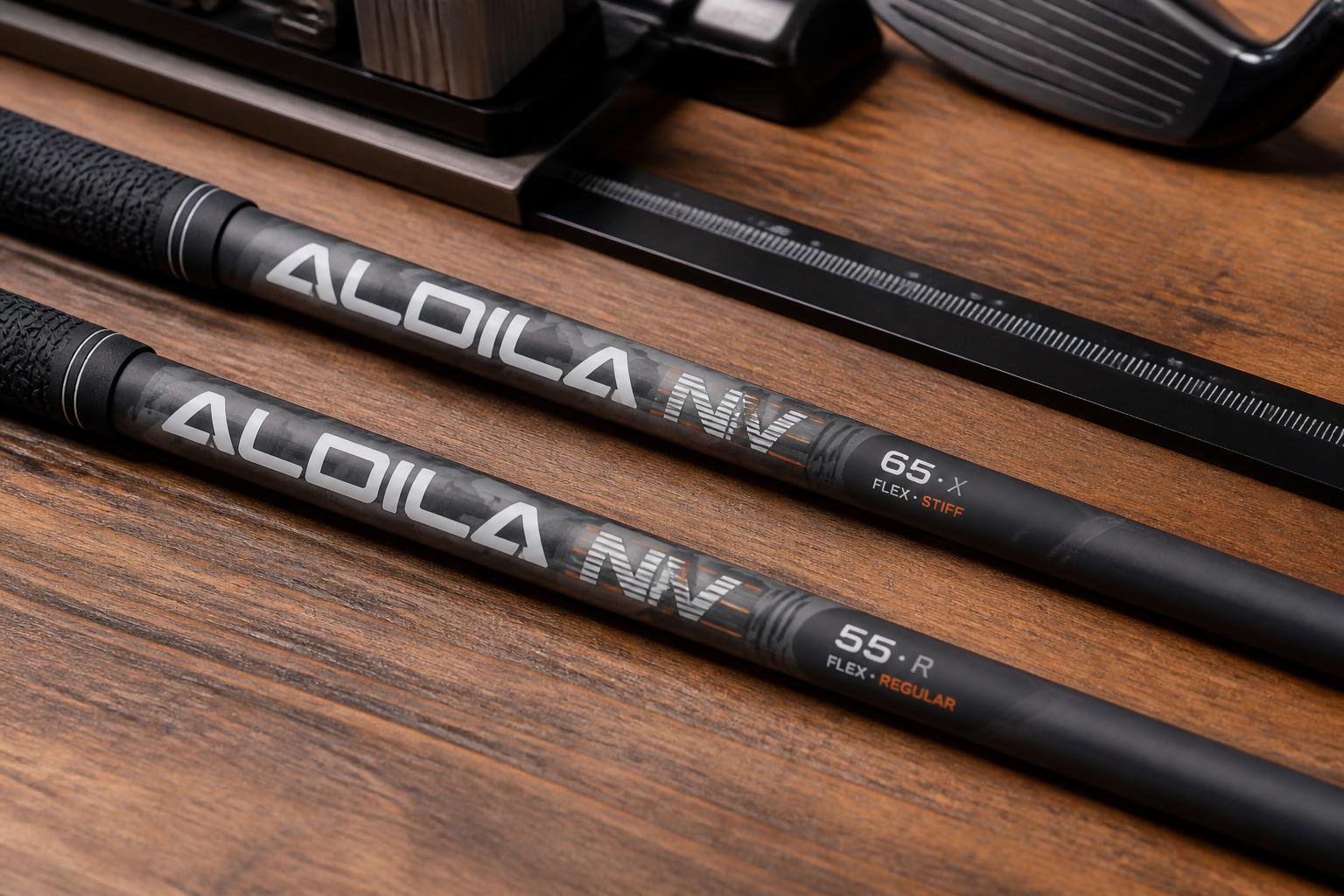
The NV line has been a staple for years. The Aldila New NV ’23 Green 65 Graphite Shaft (S-Flex (Stiff)) gives you a clean example of the current specs:
- Length: 46″
- Weight: 66–69g
- Tip size: 0.335″
- Torque: 3.6–3.7°
- Kick point: Mid/high
The mid/high kick point is the key detail here. It keeps the launch window down while the 3.6° torque keeps the head stable through impact. That combo suits players who already hit the ball high and want to tighten dispersion rather than add more loft.
If you need a softer feel, the Aldila NVS 55 R-Flex Shaft + Ping G410 Tip + Grip is the higher-torque cousin. The NVS line runs softer in the tip and mid-section, which helps players with moderate swing speeds load the shaft more easily. The Ping G410 tip means it’s ready to install in that specific head without extra work.
Here’s the practical implication of that difference: if you currently play an NV stiff and it feels boardy or you’re fighting a low ball flight, the NVS regular or stiff is the safer switch. If you play an NVS and it feels loose or you’re spraying shots right, moving to the NV stiff is the correction. The flex labels don’t tell you this — the torque and kick point numbers do.
Aldila NV 65: The Older Spec That Still Matters
The Aldila Nv 65 .335 Graphite Wood Shaft (Flex: X-Stiff, Length:N/A, Color:N/A, Head:N/A) is the classic version of the NV. It’s a 65g shaft with a 0.335″ tip, and the X-stiff flex option is what separates it from the newer green version.
The original NV was known for a low-mid kick point and a firm tip section. That’s a different profile than the ’23 green, which moved to mid/high. If you have a fast, aggressive transition, the older X-stiff NV gives you a boardier feel that resists over-torquing. The newer green version is more forgiving on less violent swings.
One warning: the older NV line has been out of production for years. If you buy one, check the tip for cracks and make sure the shaft hasn’t been trimmed. A used shaft with a damaged tip is not worth the savings.
The “Length: N/A” in that listing is a red flag you should take seriously. It means the seller can’t confirm whether the shaft has been tipped or butt-trimmed. A shaft that’s been tipped 1″ plays a full flex stiffer and launches lower. If you’re buying used, ask for the tip-to-butt measurement in inches before you commit. If the seller can’t provide it, move on.
How to Choose Between Aldila Shaft Weights
The weight class matters more than the specific model name for most golfers. Here’s the decision rule:
- 50g class: Best for senior flex, ladies flex, or players with swing speeds under 80 mph. You get more clubhead speed but less control.
- 60g class: The most common range. Suits moderate swing speeds (85–100 mph) and players who want a balance of speed and stability.
- 70g class: For faster swingers (100+ mph) or players who prefer a heavier feel to control tempo. The Aldila New NV ’23 Green 65 sits at the top of the 60g class, which makes it a crossover option for players who want 70g stability without the full weight.
If you’re not sure, go heavier rather than lighter. A shaft that’s too light makes you swing faster than your mechanics can handle. A shaft that’s slightly heavy just feels more stable.
The trade-off you need to watch: a 50g shaft in stiff flex can feel like a noodle if you have an aggressive transition, even if your swing speed is moderate. Weight and flex interact. A 60g regular might serve a player with a fast tempo better than a 50g stiff, because the heavier shaft resists twisting even though the flex label is softer. Don’t buy weight class in isolation.
Torque and Kick Point: The Specs That Change Feel
Torque and kick point are the two specs that most golfers ignore, and they’re the ones that change how a shaft feels more than weight or flex.
Low torque (under 3.0°): The shaft feels solid and linear. You get less feedback but more consistency. Good for players who hit the center of the face regularly.
Mid torque (3.0–4.0°): The sweet spot for most players. The Aldila New NV ’23 Green 65 at 3.6–3.7° sits here. You feel the head load slightly, but the shaft doesn’t twist excessively on mishits.
High torque (4.0°+): The shaft feels active and whippy. The Aldila NVS 55 runs in this territory. It helps players with slower swing speeds generate feel, but it’s less forgiving on off-center hits.
Kick point rule of thumb: If you hit the ball too low, choose a low kick point. If you hit it too high, choose a high kick point. If your ball flight is fine, choose mid and stop overthinking it.
Here’s how to verify what you actually need: check your current ball flight on the course, not the range. If your drives consistently land short of your playing partners’ but roll out a lot, you’re launching too low — that points to a low or mid-low kick point. If your drives balloon and die in the air, you’re launching too high — that points to a high kick point. The spec chart tells you what the shaft will do; your on-course results tell you which direction to go.
Common Mistakes When Reading Aldila Spec Charts
Mistake 1: Assuming flex means the same thing across models. An Aldila NV stiff is not the same as an Aldila NVS stiff. The NVS is designed to feel softer, so a stiff NVS plays closer to a regular NV. Always check the torque and kick point, not just the flex label.
Mistake 2: Ignoring tip size. A 0.335″ shaft won’t fit a 0.350″ head without a shim, and a 0.350″ shaft won’t fit a 0.335″ head at all. Check your driver or fairway wood’s tip size before buying.
To verify tip size on your current club: pull the shaft out of the hosel or adapter and measure the tip diameter with calipers. If you don’t have calipers, look up the head model’s specs online — most manufacturers list the required tip size in the head’s technical specs. If you’re buying a shaft with an adapter already installed, like the Aldila NVS 55 with Ping G410 tip, confirm the adapter matches your head model before you buy. A G410 tip won’t fit a G425 or G430 head without changing the adapter.
Mistake 3: Buying a shaft that’s already been trimmed. The Aldila Nv 65 .335 listing shows “Length: N/A” because the seller doesn’t guarantee the shaft hasn’t been cut. If you buy used, ask for the actual tip-to-butt measurement. A shaft that’s been tipped 1″ plays noticeably stiffer.
Mistake 4: Matching the shaft to your driver, not your swing. The shaft is the engine. Your driver head is just the body. If you have a smooth tempo, a mid-torque shaft like the NV ’23 Green 65 gives you a good balance. If you have a quick, aggressive transition, you need lower torque regardless of what the stock shaft in your driver says.
Putting It Together: A Simple Selection Checklist
1. Check your driver head’s tip size. Most modern heads are 0.335″. If you’re not sure, look up the head model or measure the tip of your current shaft.
2. Pick a weight class. 60g if you’re average. 70g if you swing hard. 50g if you’re slower.
3. Match torque to your tempo. Smooth tempo = 3.5°+. Aggressive tempo = under 3.5°.
4. Match kick point to your ball flight. Low flight = low kick. High flight = high kick. Fine flight = mid.
5. Verify the length. A 46″ shaft plays longer than a 45″ shaft. If you’re not a long hitter, shorter is often better for control.
The Aldila spec chart is just a table of numbers until you know which ones matter for your swing. Weight and tip size are non-negotiable. Torque and kick point are the tuning dials. Flex is the last thing to check, not the first.

Michael Reeves is a PGA Professional with over 20 years of experience in competitive golf and instruction. A former Division I collegiate player at the University of Texas, he competed on the mini-tours before transitioning to full-time coaching and golf journalism. He has been a certified PGA teaching professional since 2005 and has worked with players at every level, from absolute beginners to collegiate champions.
His writing has appeared in Golf Digest, Golf Magazine, and The Left Rough. At GolfHubz, Michael leads the editorial team, overseeing fact-checking and ensuring every answer meets the same standard he demands on the lesson tee: clear, evidence-based, and immediately useful.
When he’s not writing or teaching, Michael plays to a +1.4 handicap at his home club in Austin, Texas. He has attended over 40 major championships as a journalist and fan, and has played more than 200 courses across 15 countries.
You can reach Michael at [email protected] or follow his occasional swing analysis posts on the site.