Cobra DS-ADAPT Driver Specs Chart
The Cobra DS-ADAPT driver lineup replaces the Darkspeed series with a new adjustable hosel system and multiple head shapes. If you are comparing models or checking whether your current settings match the stock specs, this chart covers the key numbers.

DS-ADAPT Model Lineup Overview
Cobra offers four DS-ADAPT driver heads for 2025:
- DS-ADAPT MAX – High launch, draw bias, most forgiving
- DS-ADAPT MAX-K – Maximum stability, low spin, straight bias
- DS-ADAPT LS – Low spin, neutral-to-fade bias, tour-oriented
- DS-ADAPT X – Balanced launch, neutral bias, mid-spin
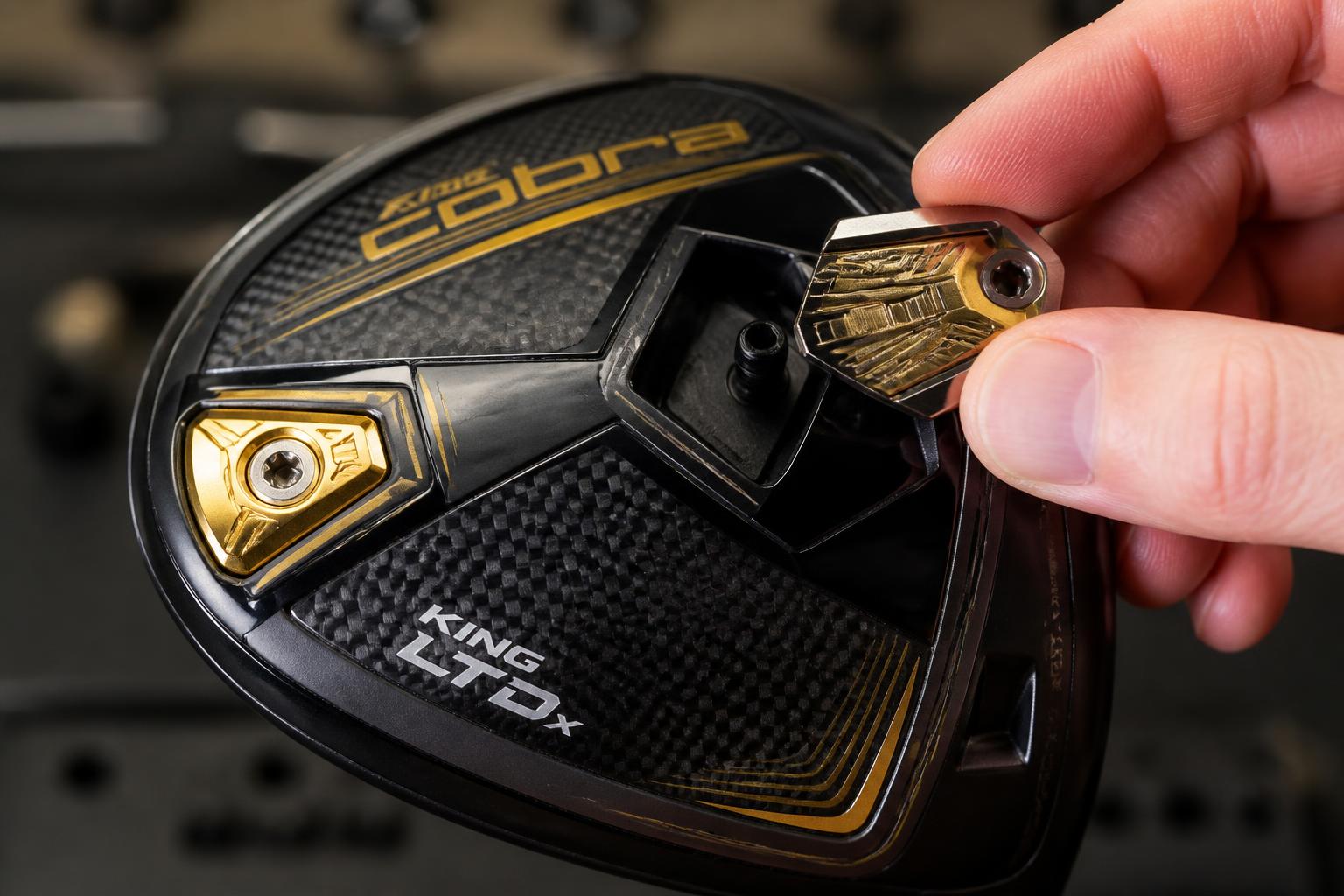
Each head uses the same FutureFit33 hosel, which allows 33 independent loft and lie combinations. That is the biggest change from the previous Darkspeed models, which used a simpler loft sleeve.
Stock Specs Chart
The following specs reflect standard retail configurations. Custom orders through a fitter can change length, loft, lie, and swing weight.
| Model | Loft (Stock) | Lie Angle | Head Size | Stock Length | Swing Weight |
|---|---|---|---|---|---|
| DS-ADAPT MAX | 9°, 10.5°, 12° | 57.5° | 460cc | 45.5″ | D3 |
| DS-ADAPT MAX-K | 9°, 10.5°, 12° | 57.5° | 460cc | 45.5″ | D3 |
| DS-ADAPT LS | 8°, 9°, 10.5° | 57.5° | 450cc | 45.5″ | D3 |
| DS-ADAPT X | 9°, 10.5°, 12° | 57.5° | 460cc | 45.5″ | D3 |
Note: Lie angle is adjustable through the FutureFit33 hosel. The stock setting is the neutral position, not a fixed specification.
FutureFit33 Hosel Settings
The FutureFit33 system lets you adjust loft and lie independently by ±2 degrees. That creates 33 total settings, up from the 12 settings on the previous Cobra drivers.
What you can change:
- Loft: Adjust up or down by 2 degrees in 1-degree increments
- Lie: Adjust up or down by 2 degrees in 1-degree increments
- Combination: Any loft setting can pair with any lie setting
Practical example: If you buy a 10.5° DS-ADAPT MAX and tend to miss left, you can set the lie to 2° upright (59.5°) to encourage a more neutral ball flight. If you want more carry distance, you can drop the loft to 9.5° while keeping the same lie angle.
The hosel uses a single screw and a numbered ring. The ring has markings for each setting, so you can replicate a configuration without a fitting session.
Verification step: Before you commit to a setting, remove the head and check the ring alignment against the alignment arrow on the hosel sleeve. The numbered ring should sit flush with the top of the ferrule — if it sits proud or tilted, the shaft is not fully seated. Reinsert and torque to spec (usually 40 in-lb) before testing.
Shaft Options and Length
Stock shafts vary by model and flex. Cobra offers several no-upcharge options, including:
- Project X HZRDUS Gen 5 (low launch, low spin) – Available in 50g, 60g, and 70g weights
- Mitsubishi Tensei 1K White (low launch, low spin) – 60g and 70g
- Mitsubishi Tensei 1K Blue (mid launch, mid spin) – 50g, 60g, and 70g
- UST Mamiya LINQ White (low launch, low spin) – 40g, 50g, and 60g
- Fujikura Ventus Blue (mid launch, low spin) – 50g and 60g
Stock length is 45.5 inches for all models. If you are shorter or taller than average, custom length options range from 44.5″ to 46.5″ depending on the shaft.
Swing weight note: Changing length affects swing weight. Cobra uses a D3 target for stock builds, but a shorter custom shaft will drop the swing weight unless the head weight is adjusted. The DS-ADAPT heads include a 2-gram and 6-gram weight in the sole, so a fitter can swap weights to compensate.
Trade-off to watch: Cutting a stock shaft down from 45.5″ to 44.5″ without adding head weight drops swing weight by roughly 6 points (from D3 to around C7). That makes the club feel noticeably lighter and can reduce tempo consistency. If you need a shorter build, order it custom from Cobra with the appropriate weight installed rather than cutting down a stock shaft after purchase — the aftermarket fix requires buying a heavier sole weight, which may not be available at your local shop.
Head Weights and CG Placement
The three non-LS models use a fixed weight system, not sliding weights. That is a departure from some competitors that offer movable track systems.
- DS-ADAPT MAX: 12g weight in the rear, 2g weight in the front
- DS-ADAPT MAX-K: 12g weight in the rear, 2g weight in the front
- DS-ADAPT X: 8g weight in the rear, 6g weight in the front
- DS-ADAPT LS: 2g weight in the rear, 12g weight in the front
The MAX-K uses a “K” shaped internal rib structure to increase stiffness at impact, which lowers spin without moving the CG forward. The LS model places more mass forward for the lowest spin of the lineup.
What this means for ball flight:
- MAX: High launch, high spin, maximum draw bias
- MAX-K: Mid-high launch, low spin, neutral ball flight
- X: Mid launch, mid spin, neutral ball flight
- LS: Low launch, lowest spin, slight fade bias
Mismatch risk: The fixed weight system means you cannot fine-tune ball flight after purchase. If you buy a MAX and later decide you want less draw bias, your only option is trading heads or moving to the X — there is no weight track to slide. Check your typical miss before buying. If you fight a hook, the MAX’s rear-biased weight and draw bias will amplify it; the X or LS is the safer choice.
Face Technology and COR Limits
The DS-ADAPT uses Cobra’s H.O.T. Face (Highly Optimized Topology), which is an AI-designed variable thickness pattern. The face is thinner than the previous Darkspeed model, which increases ball speed across a larger area of the face.
All drivers sold in the US conform to the USGA’s Coefficient of Restitution (COR) limit of 0.822. Cobra does not publish a specific COR value for retail heads, but the face design is optimized to stay within the legal limit while maximizing speed on off-center hits.
Practical takeaway: The face is not hotter than the legal limit. The performance gain comes from maintaining ball speed on mishits, not from exceeding the limit.
Comparing DS-ADAPT to Darkspeed
If you are upgrading from a Darkspeed driver, the main differences are:
1. Hosel adjustability: FutureFit33 offers 33 settings versus 12 on Darkspeed
2. Face design: The H.O.T. Face pattern is updated for the DS-ADAPT
3. MAX-K model: The MAX-K is new to the lineup, replacing the Darkspeed MAX-K but with a different internal structure
4. Weight placement: The DS-ADAPT X is a new model that sits between MAX and LS
The stock loft, length, and lie specs are nearly identical to Darkspeed. If you were fit into a Darkspeed setting, you can likely replicate it on the DS-ADAPT, but the hosel ring markings are different, so you will need to reference the new setting chart.
Upgrade decision rule: If your Darkspeed is less than two seasons old and you were happy with the ball flight, the performance gain from the DS-ADAPT is modest — mostly better mishit retention and more hosel settings. If you struggled to find a setting that eliminated a one-way miss, the independent lie adjustment is the reason to upgrade. If your miss was fine and you just want newer tech, the Darkspeed is still legal and competitive.
Common Fitting Mistakes
Ignoring lie angle. Most golfers focus on loft, but lie angle affects direction. If you hit pushes or pulls, adjusting lie independently from loft can fix the issue without changing launch angle.
Choosing MAX-K for spin reduction without checking launch. The MAX-K lowers spin, but it also launches lower than the MAX. If you have a slower swing speed, the MAX might produce more carry distance despite higher spin.
Assuming the LS is the longest model. The LS is the lowest spin, but low spin is not always optimal. Golfers with moderate swing speeds often lose carry distance with the LS because the ball does not stay in the air long enough.
Forgetting to re-check the setting after a grip change. If you regrip the driver, the shaft can rotate slightly during installation. Always verify the hosel setting after any grip work.
Skipping the launch monitor check. The specs chart tells you what the club is, not what it does for your swing. A 10-minute session on a launch monitor will show you whether the MAX-K’s lower spin actually helps your carry distance or just makes the ball fall out of the air sooner. Most fitters will run this check at no charge if you are testing a purchase.
Frequently Asked Questions
What is the stock loft for the DS-ADAPT driver?
The most common stock lofts are 9°, 10.5°, and 12° for the MAX, MAX-K, and X models. The LS model offers 8°, 9°, and 10.5°.
Can I adjust the lie angle on the DS-ADAPT?
Yes. The FutureFit33 hosel allows independent loft and lie adjustments of ±2 degrees. This is a change from previous Cobra drivers that only allowed loft adjustment.
What is the difference between the DS-ADAPT MAX and MAX-K?
The MAX is a high-launch, draw-biased head with maximum forgiveness. The MAX-K uses a stiffer internal structure to lower spin while maintaining a neutral ball flight. The MAX-K is better for golfers who want distance without a draw bias.
Is the DS-ADAPT LS suitable for high handicappers?
Generally no. The LS is designed for golfers with higher swing speeds who need to reduce spin. High handicappers typically benefit more from the MAX or X models, which offer more forgiveness and higher launch.
Does the DS-ADAPT come with a headcover?
Yes, each driver includes a Cobra branded headcover in the box.
What is the difference between the DS-ADAPT and the older Darkspeed driver?
The DS-ADAPT has a new hosel with 33 settings, an updated face design, and a new X model in the lineup. The Darkspeed models are still legal and perform well, but the DS-ADAPT offers more fitting adjustability.
The DS-ADAPT driver lineup covers a wide range of swing types, but the right model depends on your launch, spin, and ball flight preferences. Use the specs chart to narrow your options, then verify your final settings with a launch monitor if possible. The independent lie adjustment is the standout feature, but only if you actually use it — otherwise, the fixed weight system means your head choice matters more than your hosel setting.

Michael Reeves is a PGA Professional with over 20 years of experience in competitive golf and instruction. A former Division I collegiate player at the University of Texas, he competed on the mini-tours before transitioning to full-time coaching and golf journalism. He has been a certified PGA teaching professional since 2005 and has worked with players at every level, from absolute beginners to collegiate champions.
His writing has appeared in Golf Digest, Golf Magazine, and The Left Rough. At GolfHubz, Michael leads the editorial team, overseeing fact-checking and ensuring every answer meets the same standard he demands on the lesson tee: clear, evidence-based, and immediately useful.
When he’s not writing or teaching, Michael plays to a +1.4 handicap at his home club in Austin, Texas. He has attended over 40 major championships as a journalist and fan, and has played more than 200 courses across 15 countries.
You can reach Michael at [email protected] or follow his occasional swing analysis posts on the site.