Winn Grip Guide
If you’ve searched “winn grip,” you’re likely looking at the softest, most shock-absorbing grips on the golf market. Winn grips use a proprietary polymer material instead of traditional rubber, which changes how they feel, how they wear, and how often you need to replace them. Here’s what you need to know before you commit to a full set.

What Makes Winn Grips Different
Traditional rubber grips rely on friction and texture. Winn grips use a material called Elastomer, a soft polymer that absorbs vibration more effectively than standard rubber. The result is a noticeably softer feel at impact, especially on mishits.
That softness comes with trade-offs. Winn grips are generally less durable than rubber grips. If you play multiple times per week and practice regularly, expect to replace them more frequently—often within a season or two, depending on the model.
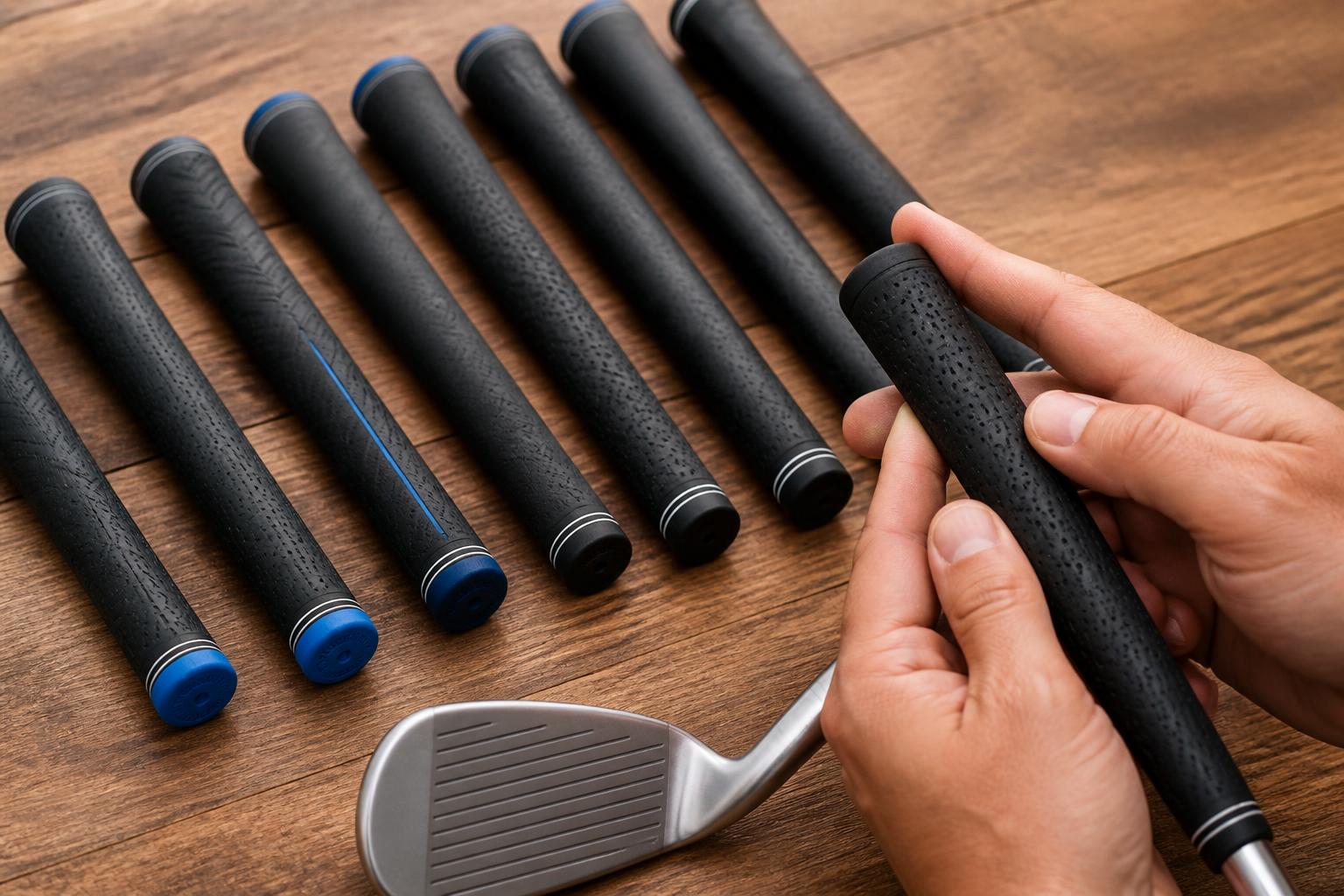
The key distinction is that Winn offers two main families: the softer, cushioned models (like the Dri-Tac and Excel) and firmer, more durable options (like the Tour Wrap and the newer performance lines). They are not interchangeable in feel or lifespan.
Winn Grip Models: How to Choose
Dri-Tac Series
The Dri-Tac is Winn’s most popular line. It features a tacky, cushioned surface that performs well in humid conditions—the “Dri” in the name refers to its moisture-wicking properties.
- Best for: Golfers who want maximum softness and don’t mind replacing grips more often
- Feel: Very soft, almost spongy
- Durability: Low to moderate; expect wear at the thumb area within 20–30 rounds
- Traction: Excellent in wet or humid weather
Excel Series
The Excel is Winn’s middle-ground option. It’s firmer than the Dri-Tac but still softer than most rubber grips. The surface has a subtle texture pattern rather than the smooth tackiness of the Dri-Tac.
- Best for: Golfers who want some cushion but more feedback than the Dri-Tac provides
- Feel: Medium-soft with more surface texture
- Durability: Moderate; better than Dri-Tac but still shorter-lived than rubber
- Traction: Good in dry conditions; less tacky when wet
Tour Wrap Series
The Tour Wrap is a firmer, thinner grip that mimics the feel of a traditional wrap-style grip but with Winn’s polymer material. It’s the closest thing to a conventional rubber grip in the lineup.
- Best for: Golfers who like a traditional feel but want a bit more vibration dampening
- Feel: Firm, with a smooth surface
- Durability: Better than Dri-Tac or Excel, but still not rubber-level
- Traction: Relies on surface texture rather than tackiness
Performance Lines
Winn has released updated versions of its core lines with revised materials and patterns. The Dri-Tac 2.0, for example, uses a dual-layer construction that adds a firmer base layer to improve stability while keeping the soft outer layer.
Decision rule: If you value feel and shock absorption above all else, choose Dri-Tac. If you want a grip that lasts longer and still provides some cushion, choose Excel. If you want a traditional feel with mild dampening, choose Tour Wrap.
Winn vs. Rubber Grips: A Practical Comparison
| Factor | Winn (Dri-Tac example) | Standard Rubber (e.g., Golf Pride Tour Velvet) |
|---|---|---|
| Feel at impact | Very soft, muted | Firm, more feedback |
| Vibration dampening | Excellent | Moderate |
| Durability | Low to moderate | High |
| Wet-weather performance | Good (Dri-Tac) | Varies by model |
| Price per grip | Similar to mid-range rubber | Similar range |
| Installation difficulty | Same process as rubber | Same process |
The trade-off in plain terms: Winn grips give you a softer feel and better shock absorption, but you’ll pay for that comfort with more frequent replacements. Rubber grips last longer but transmit more vibration to your hands.
Sizing and Installation: What to Know
Winn grips come in standard sizes (undersize, standard, midsize, oversize) just like rubber grips. The installation process is identical—you’ll need grip tape, solvent, and a vise with a rubber shaft clamp.
One difference: Winn grips are slightly more delicate during installation. The softer material can tear if you force the grip over the shaft without enough solvent. Use generous solvent and work slowly, especially with Dri-Tac models.
If you’re regripping at home, a complete kit makes the job easier. The Wedge Guys Golf Grip Kits for Regripping Golf Clubs – Professional Quality – Options Include Hook Blade, 15 or 30 Tape Strips, 5 or 8 oz Solvent, Grip Tape Remover, Bench Vise & Rubber Clamp includes the vise, tape, solvent, and removal tools needed for a full set. The kit’s rubber clamp protects softer grips from damage during installation, which matters more with Winn’s polymer material than with standard rubber.
Installation Order and Verification
Follow this sequence when installing Winn grips:
1. Remove old grips with a hook blade, cutting from the butt end toward the shaft. Slit the grip once, then peel it off—don’t try to twist it loose.
2. Strip old tape completely. Leftover tape creates lumps under the new grip that you’ll feel on every swing.
3. Apply fresh tape lengthwise with a slight overlap, then trim the ends flush with the shaft.
4. Flood the tape with solvent and pour a small amount inside the new grip. Cover the grip opening with your palm and shake once to coat the inside.
5. Slide the grip on in one continuous motion. Stop when the butt end sits flush with the shaft end.
6. Verify alignment: The grip’s seam or logo should sit square to your target line. If it’s twisted, you have about 30 seconds to rotate it before the solvent sets.
Success signal: The grip should not twist when you apply normal grip pressure, and the butt cap should sit flush with no gap. If the grip slides or rotates after the solvent dries, you’ll need to remove it and start over.
Stop and escalate: If the grip tears during installation, if you feel a lump or ridge under the tape, or if the grip won’t seat flush after two attempts, stop. Take the club to a local pro shop—forcing a damaged grip onto a shaft can damage the shaft’s finish and make the grip unsafe during the swing.
How Often Should You Replace Winn Grips?
Winn grips wear faster than rubber, but the exact timeline depends on your play frequency, practice habits, and climate.
- Weekly play (1–2 rounds): Expect 6–12 months of good performance
- Frequent play (3+ rounds per week): Plan on replacing every 4–6 months
- Practice-heavy golfers: The wear at the thumb and lower hand areas will show first; replace when the surface loses its tackiness or develops smooth spots
Signs it’s time to replace:
- The grip feels slick or slippery even when your hands are dry
- Visible wear or smooth patches at the thumb area
- The grip has lost its original shape or feels compressed
- You’re gripping tighter to compensate for reduced traction
Verification test: After cleaning a grip with mild soap and water, dry it completely and hold the club with normal grip pressure. If your hands slide even slightly during a practice swing, the grip has lost its tackiness and needs replacement. A fresh Winn grip should feel secure with light pressure alone.
Common Mistakes Golfers Make with Winn Grips
1. Choosing the wrong model for their climate. If you play in humid conditions, the Dri-Tac’s moisture-wicking properties are a real advantage. If you play mostly in dry, hot weather, the Excel or Tour Wrap may serve you better and last longer.
2. Assuming all Winn grips feel the same. The difference between Dri-Tac and Tour Wrap is dramatic. Try a single grip on one club before committing to a full set.
3. Using too little solvent during installation. The soft polymer material binds to tape quickly. Use more solvent than you think you need, and slide the grip on in one smooth motion.
4. Ignoring grip size. Winn’s softer material compresses more than rubber, so a standard-size Winn grip can feel slightly smaller than a standard rubber grip. If you’re between sizes, consider going up a size.
5. Mixing brands across the set. If you’re testing Winn grips, put them on a few clubs and compare them directly against your current grips. Don’t install a full set based on how one grip feels in the store.
6. Cleaning them with harsh solvents. The soft polymer surface can break down with alcohol-based cleaners or grip solvents. Use mild soap and water, and dry the grip thoroughly before your next round.
Who Should Use Winn Grips
Winn grips make sense if:
- You have joint pain or hand fatigue and want maximum vibration dampening
- You play in humid or wet conditions and need reliable traction
- You prefer a soft feel and don’t mind replacing grips more often
- You’re willing to pay a slight premium for comfort
Winn grips may not be the right choice if:
- You play or practice daily and want maximum durability
- You prefer firm feedback and a traditional feel
- You’re on a tight budget and want to minimize long-term grip costs
- You have a very aggressive grip pressure—the soft material may compress unevenly
Making the Switch: A Practical Approach
Winn grips solve a specific problem: hand fatigue and harsh feel at impact. They do this very well, but the softness that makes them comfortable also makes them less durable than traditional rubber grips.
Start with one grip on your most-used club—your wedge or 7-iron—and play a few rounds with it. Compare the feel against your current grips, and track how it wears over a month. That single-club test will tell you more than any spec sheet about whether Winn grips are right for your game.
If you decide to commit, install them properly with a full regripping kit, and budget for more frequent replacements than you’re used to with rubber grips. The comfort may be worth the trade-off—but only you can make that call.

Michael Reeves is a PGA Professional with over 20 years of experience in competitive golf and instruction. A former Division I collegiate player at the University of Texas, he competed on the mini-tours before transitioning to full-time coaching and golf journalism. He has been a certified PGA teaching professional since 2005 and has worked with players at every level, from absolute beginners to collegiate champions.
His writing has appeared in Golf Digest, Golf Magazine, and The Left Rough. At GolfHubz, Michael leads the editorial team, overseeing fact-checking and ensuring every answer meets the same standard he demands on the lesson tee: clear, evidence-based, and immediately useful.
When he’s not writing or teaching, Michael plays to a +1.4 handicap at his home club in Austin, Texas. He has attended over 40 major championships as a journalist and fan, and has played more than 200 courses across 15 countries.
You can reach Michael at [email protected] or follow his occasional swing analysis posts on the site.