SuperStroke Putter Grip Size Chart
Putter grip size changes how your hands sit on the club, how much wrist action you use, and how consistently you square the face at impact. SuperStroke grips come in a range of diameters and lengths, and picking the wrong one can undo the benefits of their no-taper design. This guide breaks down the size chart, what the numbers mean, and how to match a size to your stroke.
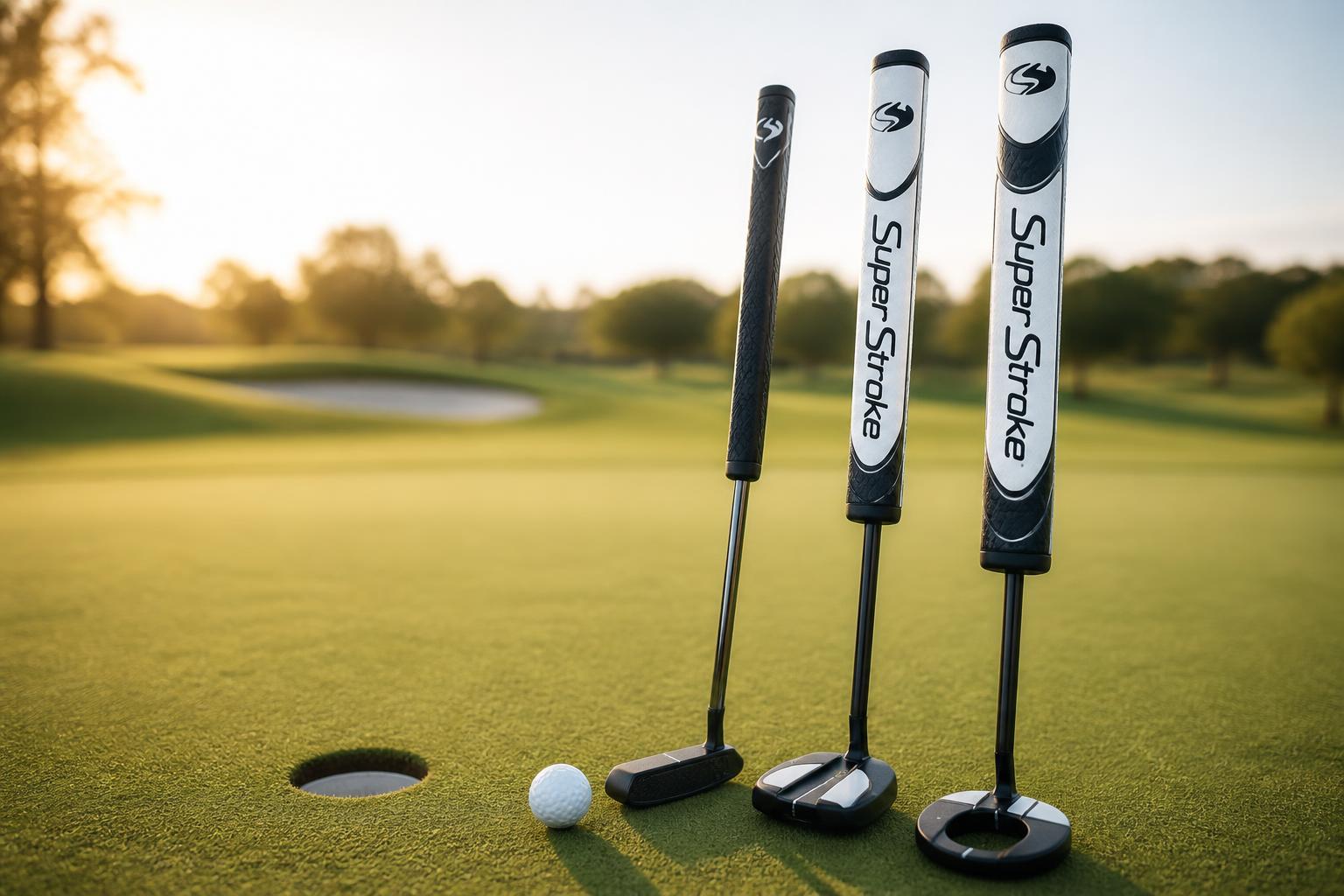
Why Grip Diameter Changes Your Stroke
SuperStroke grips are built around a parallel (no-taper) design. Unlike traditional grips that get thinner toward the top, these stay the same width from top to bottom. That design removes the variable of grip pressure changes through the stroke, but it only works if the diameter fits your hands.
Two things happen when the grip is too small:
- Your hands overwork, leading to wrist breakdown through impact.
- You squeeze tighter to control the club, which tenses the forearms and reduces pendulum motion.
When the grip is too large:
- You lose feel for the clubhead.
- Players with stronger hands often see the face get left open at impact.
The goal is a grip that lets your hands sit naturally without tension, with the palms opposing each other and the putter face square.

What this means for your next move: If you’re currently missing short putts left or right, or you feel like you’re steering the putter instead of swinging it, grip size is a reasonable first suspect. Before you buy a new putter or overhaul your stroke, try a different grip size — it’s a $30–$40 experiment that can fix issues you might otherwise attribute to your technique.
SuperStroke Size Chart: Diameters and Lengths
SuperStroke groups its grips by diameter and length. The core measurement is the core size (the opening at the butt end), but the number that matters for fit is the outer diameter — the actual thickness you hold.
| Grip Series | Diameter (inches) | Length (inches) | Core Size | Best For |
|---|---|---|---|---|
| Traxion 1.0 | 0.98 | 10.5 | 0.58 | Players who prefer a traditional, thinner grip |
| Traxion 2.0 | 1.00 | 10.5 | 0.58 | Average hand size, moderate wrist action |
| Traxion 3.0 | 1.10 | 10.5 | 0.58 | Larger hands or players who want less wrist action |
| Traxion 5.0 | 1.28 | 10.5 | 0.58 | Very large hands or heavy wrist players |
| Zenergy 1.0 | 0.98 | 10.5 | 0.58 | Traditional feel, more wrist hinge |
| Zenergy 2.0 | 1.00 | 10.5 | 0.58 | Standard fit for most golfers |
| Zenergy 3.0 | 1.10 | 10.5 | 0.58 | Reduced wrist action, more stability |
| Zenergy 5.0 | 1.28 | 10.5 | 0.58 | Maximum stability, minimal wrist |
| Pistol GT 1.0 | 0.98 | 10.5 | 0.58 | Players who want a slight pistol shape |
| Pistol GT 2.0 | 1.00 | 10.5 | 0.58 | Standard fit with pistol contour |
| Pistol GT 3.0 | 1.10 | 10.5 | 0.58 | Larger hands, pistol shape for alignment |
Important note on core size: SuperStroke grips use a 0.58-inch core for standard putter shafts. If your putter has an oversized shaft (common on some modern mallets), you may need a 0.58 core with a shim or a grip designed for oversized shafts. Verify your shaft diameter before ordering.
How to verify your shaft size: Remove the current grip or check the manufacturer’s spec sheet for your putter model. If you can’t find specs online, measure the shaft butt with calipers — it should read 0.58 inches for standard, 0.60 inches for some older models, and larger on certain counterbalanced putters. Ordering a 0.58-core grip for a 0.60 shaft will stretch the grip and can lead to it twisting or slipping within a few months.
How to Choose Your Size: A Decision Framework
Skip the guesswork. Work through these steps in order.
Step 1: Measure Your Hand Size
Use a simple ruler. Place your hand flat, palm up, and measure from the tip of your middle finger to the base of your palm (the wrist crease).
- Under 6.5 inches: Start with a 1.0 or 2.0 series
- 6.5 to 7.5 inches: Start with a 2.0 or 3.0 series
- Over 7.5 inches: Start with a 3.0 or 5.0 series
This is a starting point, not a final answer. Hand size alone doesn’t tell you how much wrist action you have.
Step 2: Identify Your Stroke Type
Your stroke type is the bigger factor.
- Wristy stroke (more hinge): You break your wrists noticeably on the backswing. You need a larger grip (3.0 or 5.0) to quiet the hands. The SuperStroke Zenergy Tour 3.0 Golf Putter Grip with No Taper Enhanced SPYNE Technology, New Multi-Zone Texturing and Tech-Port, Blue/White is a solid choice here — the 1.10-inch diameter and embossed SPYNE ridge along the underside help you square the face without relying on wrist rotation.
- Shoulder-driven stroke (minimal wrist): You keep your hands quiet and swing with your shoulders. A smaller grip (1.0 or 2.0) preserves feel and lets you maintain the pendulum motion without over-gripping.
Step 3: Test the “Pressure Rule”
When you hold the grip with your normal putting grip pressure (a 3 or 4 out of 10), your middle fingers should not dig into your palm. If they do, the grip is too small. If your fingers don’t wrap around enough to make contact with the palm at all, the grip is too large.
This test works better than any measurement chart because it accounts for finger length, palm width, and grip pressure simultaneously.
The trade-off to know: Moving up a size (say, from 2.0 to 3.0) will quiet your hands, but it will also deaden feel on lag putts. Some players report losing 10–20% of their distance control after jumping two sizes. If you’re between sizes, ask yourself what you miss more: the putts inside 10 feet (go larger) or the 30-foot lag putts (go smaller).
Grip Series Comparison: Traxion vs. Zenergy vs. Pistol GT
The size numbers are similar across series, but the surface texture and shape differ.
Traxion Series: Features a textured surface pattern designed for feedback and tackiness. The SuperStroke Traxion Tour 1.0 Golf Putter Grip, Advanced Surface Texture that Improves Feedback and Tackiness, Minimize Grip Pressure with a Unique Parallel Design, Digi Camo/Tan uses a soft polyurethane outer layer over a firm rubber core. The texture helps if you tend to grip too tightly — the surface gives you sensory feedback that you’re squeezing.
Zenergy Series: Uses multi-zone texturing — strategically placed raised areas in high-sensory zones (fingertips and palms) to optimize feedback without adding bulk. The SPYNE technology on the underside is an embossed ridge that helps with face alignment. This series is a good middle ground if you want feedback but prefer a smoother overall feel than the Traxion.
Pistol GT Series: Adds a subtle pistol shape at the top of the grip, which helps players who like a reference point for hand placement. The size numbers correspond to the same diameters as the other series, but the shape changes how the grip fills your palms.
Where the series differ in practice: The Traxion’s aggressive texture can feel abrasive for players who wear golf gloves on hot days or have sensitive skin. The Zenergy is the safest default if you’re unsure — its multi-zone texture is noticeable but not intrusive. The Pistol GT is the only one that changes hand placement, so if you’ve never used a pistol grip before, expect a brief adjustment period of 2–3 rounds while your hands learn the new reference point.
Common Mistakes When Choosing a SuperStroke Grip
Mistake 1: Buying the same size as your old grip.
Your previous grip was probably tapered, meaning it was thinner at the top. A SuperStroke 2.0 at 1.00 inches will feel larger than a traditional grip with the same labeled size because there’s no taper. Go down a size if you liked the feel of a thin traditional grip.
Mistake 2: Ignoring the 0.58 core requirement.
Most putter shafts are 0.58 inches at the butt end, but some older models and certain mallets use 0.60 or larger. A 0.58 core grip will not fit properly on a 0.60 shaft without stretching, which can create a loose fit over time. The grip may feel secure initially but can start twisting during the second season as the rubber relaxes.
Mistake 3: Choosing based on hand size alone.
A player with 8-inch hands who uses a pure shoulder stroke may prefer a 2.0 for feel, while a player with 6-inch hands who has a very wristy stroke may need a 3.0 to calm the hands. Stroke type dominates hand size in most cases.
Mistake 4: Overlooking grip length.
SuperStroke grips are 10.5 inches, which is longer than standard putter grips (typically 8-10 inches). This longer profile encourages a more consistent hand position because there’s more surface area to grip. If you choke down on your putter, the extra length works in your favor. If you grip at the very top, the extra length is harmless but adds a small amount of weight.
Installation Notes and Fitting Verification
SuperStroke grips use an air installation method that makes them easy to remove and swap. If you’re testing sizes, buy one grip, install it with air, and test it for a few rounds. If it’s wrong, remove it and try another size. This is the most practical way to confirm your fit.
A note on grip pressure: A common mistake is testing a grip while holding the putter too tightly. When you test, use your normal putting pressure — not a death grip. The grip will feel different at proper pressure than it does when you squeeze.
How to confirm the fit is right: After installing, take the putter to a practice green and hit 20 putts from 6 feet. If you make 15+ and the putter feels like an extension of your arms, you’re in the right size. If you’re pushing putts right, the grip may be too large — your hands can’t release naturally. If you’re pulling putts left, the grip may be too small and your hands are overactive. This on-green test is more reliable than any chart because it measures real outcomes, not just feel.
If you’re between sizes: Choose the larger one if you tend to get “handsy” under pressure (short putts, fast greens). Choose the smaller one if you have good rhythm but want more feel for distance control on long putts.
What can go wrong if you pick wrong: A grip that’s one size off won’t ruin your putting, but it will cost you strokes in specific situations. Too large means you’ll struggle with distance control on lag putts and may develop a push pattern. Too small means you’ll miss more short putts under pressure when your hands get active. SuperStroke grips are among the easiest to swap, so the cost of testing is low — one grip and 10 minutes with an air compressor.
Frequently Asked Questions
What size SuperStroke grip do most golfers use?
The 2.0 (1.00-inch diameter) is the most common size for average hand sizes and moderate wrist action. The 3.0 (1.10-inch) is the next most popular, especially among players who want extra stability.
Does a larger putter grip reduce wrist action?
Yes. A larger grip fills the palms more fully, which reduces the range of motion in the wrists. This is why players with excessive wrist hinge often benefit from moving to a 3.0 or 5.0.
Can I install a SuperStroke grip on any putter?
Most putters use a 0.58-inch shaft butt, which matches SuperStroke’s core size. If your putter has an oversized shaft, you’ll need to verify compatibility or use a shim. SuperStroke grips are designed for installation with air or solvent.
How long do SuperStroke grips last?
With regular play, expect 1-2 seasons of use before the surface texture wears down. The polyurethane outer layer degrades faster than rubber, especially in hot climates. If the grip starts feeling slick or shiny, it’s time to replace it.
Is the Pistol GT worth trying if I’ve never used a pistol grip?
If you struggle with inconsistent hand placement, the pistol shape provides a tactile reference point. It’s a low-risk experiment because SuperStroke grips are easy to remove and reinstall with air.

Michael Reeves is a PGA Professional with over 20 years of experience in competitive golf and instruction. A former Division I collegiate player at the University of Texas, he competed on the mini-tours before transitioning to full-time coaching and golf journalism. He has been a certified PGA teaching professional since 2005 and has worked with players at every level, from absolute beginners to collegiate champions.
His writing has appeared in Golf Digest, Golf Magazine, and The Left Rough. At GolfHubz, Michael leads the editorial team, overseeing fact-checking and ensuring every answer meets the same standard he demands on the lesson tee: clear, evidence-based, and immediately useful.
When he’s not writing or teaching, Michael plays to a +1.4 handicap at his home club in Austin, Texas. He has attended over 40 major championships as a journalist and fan, and has played more than 200 courses across 15 countries.
You can reach Michael at [email protected] or follow his occasional swing analysis posts on the site.