Midsize Grip Size Chart
If you’re shopping for a midsize golf grip, you already know the standard size feels too thin. The real question is whether midsize is the right step up, or whether you should go further to jumbo. This chart and the decision rules below will help you match grip size to your hand measurement, swing tendencies, and any pain or tension issues you’re dealing with.
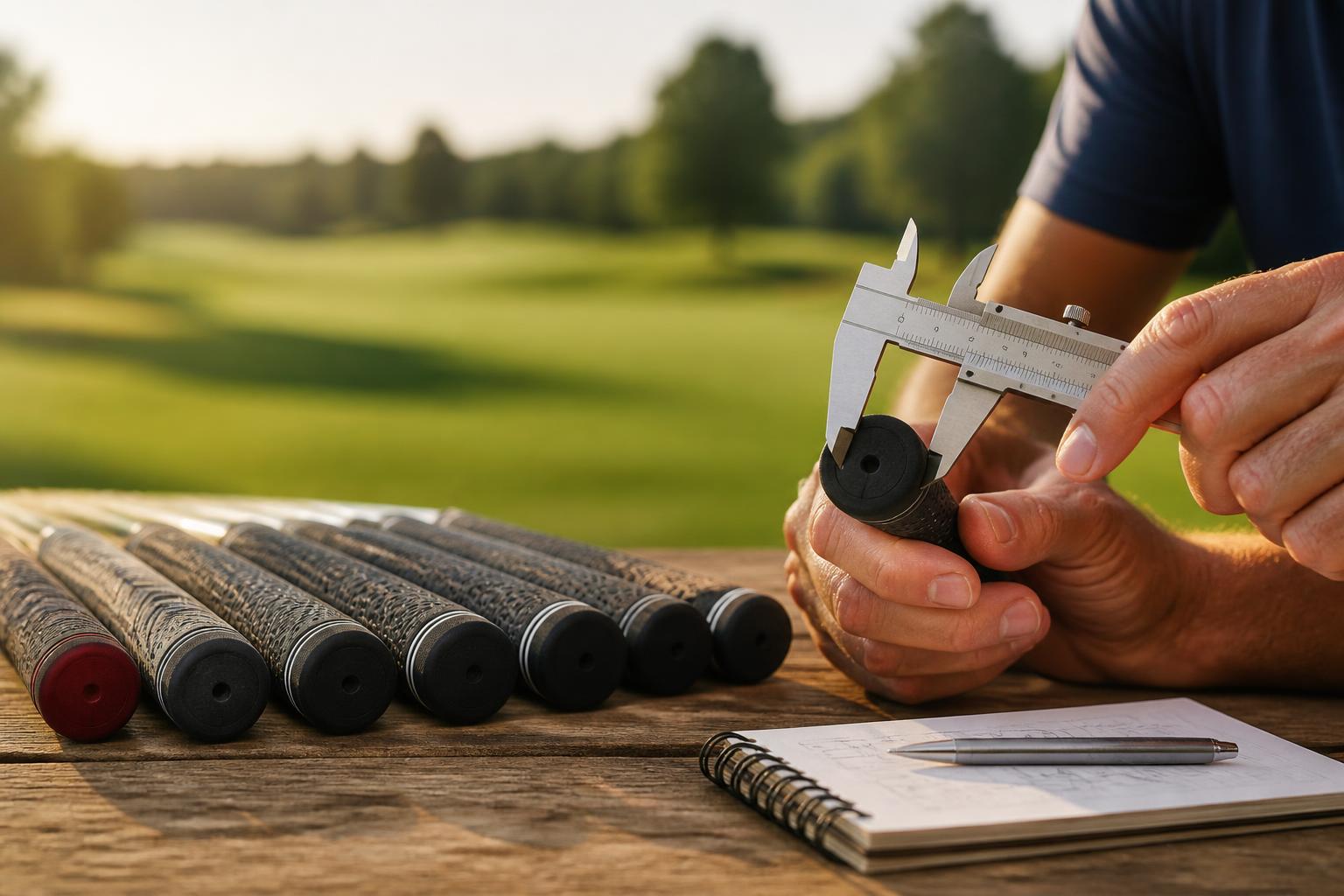
How Grip Sizes Are Measured
Golf grips are categorized by their internal diameter at the butt end, measured in inches. The grip’s outer diameter—what you actually feel in your hands—depends on both the core size and the thickness of the grip material.
| Grip Size | Butt Diameter (approx.) | Core Size (typical) |
|---|---|---|
| Undersize | 0.580″ | 0.580″ |
| Standard | 0.600″ | 0.580″ or 0.600″ |
| Midsize | 0.600″ + 1/16″ buildup | 0.580″ or 0.600″ |
| Jumbo / Oversize | 0.600″ + 1/8″ or more | 0.580″ or 0.600″ |
The key detail: midsize grips are not a separate core size. They are standard-core grips built up with extra material. That means you can also create a midsize feel by adding tape wraps to a standard grip, though a dedicated midsize grip distributes the extra thickness more evenly.
What this means for your purchase: If you already have standard grips on your clubs, you have two paths to midsize. You can either buy dedicated midsize grips (which cost roughly $8–$12 per grip plus installation) or ask your club fitter to add 2–4 layers of build-up tape under your existing standard grips. The tape method is cheaper and reversible, but it changes the grip’s feel slightly—the surface becomes firmer because the underlying core doesn’t expand evenly. If you want the full cushioning benefit, especially for arthritis or hand fatigue, a dedicated midsize grip is the better investment.
Hand Measurement: The Starting Point
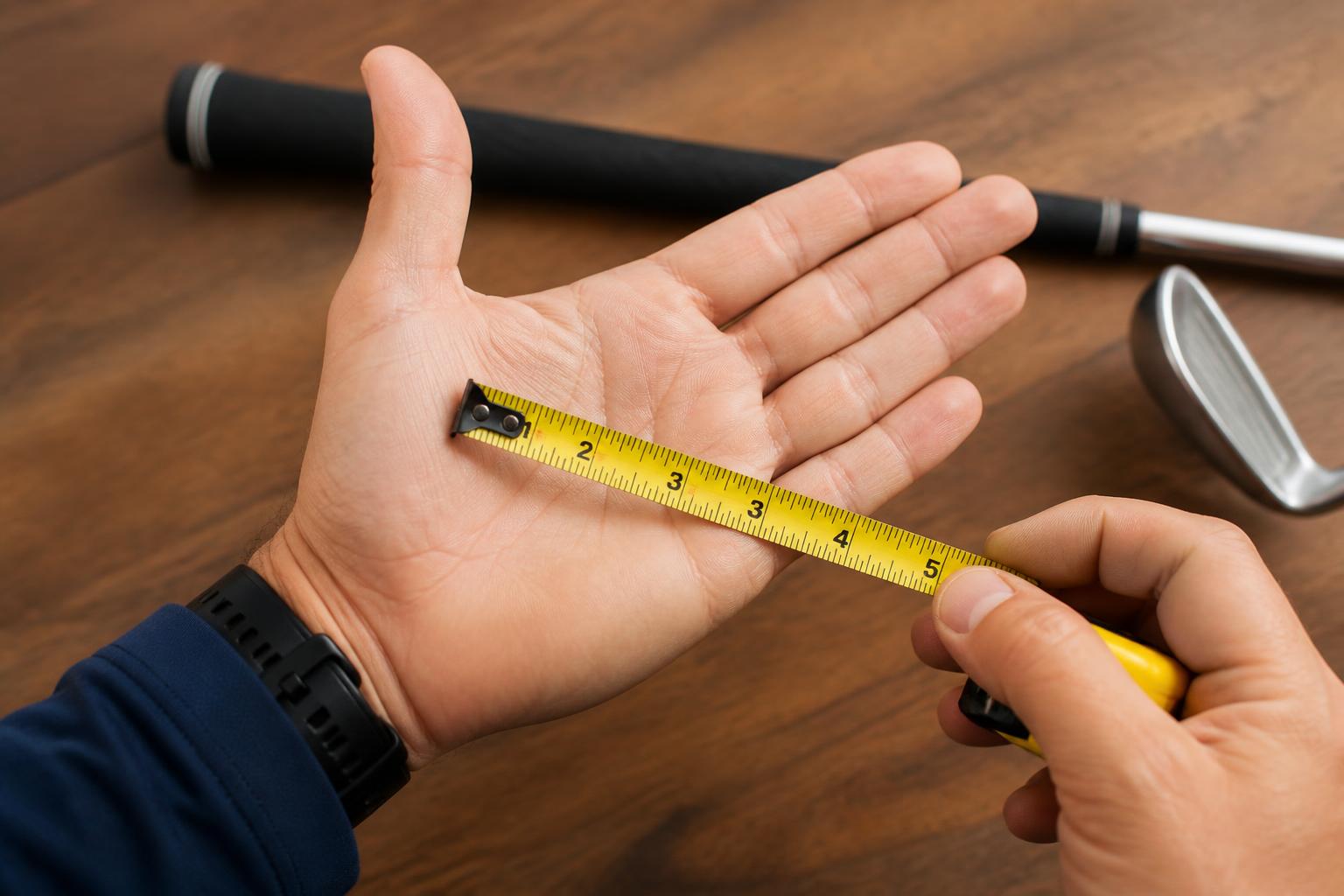
Measure from the tip of your middle finger to the crease where your palm meets your wrist. Use a cloth tape measure for accuracy.
| Hand Length | Recommended Size |
|---|---|
| Under 7 inches | Standard or undersize |
| 7 to 8.5 inches | Midsize |
| Over 8.5 inches | Midsize or jumbo (test both) |
This measurement is a starting point, not a verdict. A golfer with 7.5-inch hands who prefers a lighter grip pressure may still prefer standard. A golfer with 7-inch hands who fights arthritis may need midsize for comfort. Use the chart to narrow your options, then confirm with feel.
How to verify your measurement: Don’t rely on a ruler held against your palm—the angle changes the reading. Use a flexible cloth tape measure, start at the very tip of your middle finger, and run it straight down to the crease where your palm meets your wrist. Measure twice, because a half-inch error moves you into a different size category. If you don’t have a cloth tape, use a piece of string and then measure the string against a ruler.
Swing Tendencies That Point to Midsize
Hand size matters, but how you swing matters just as much. Midsize grips solve specific problems that standard grips can make worse:
- You slice or push the ball right. A grip that’s too small lets the club twist in your hands at impact, leaving the face open. Midsize helps stabilize the club through the hitting zone.
- You grip too tightly. If your knuckles are white at address, the extra surface area of a midsize grip lets you hold on with less forearm tension. This is the most common reason golfers switch and stay.
- You have arthritis or hand fatigue. More material means more cushion and less impact shock. This is a comfort play, not a performance play, and it works.
- You play in wet conditions. The larger diameter gives you more surface contact, which helps maintain control when grip traction drops.
Midsize is not the fix for a hook. If you’re turning the ball over too much, a smaller grip can actually help you release the club more freely. Don’t assume bigger is better for every miss.
The trade-off to watch for: The same stability that helps you stop slicing can also deaden your feel for the clubhead. Some golfers report that midsize grips make the club feel “numb” on short shots and putts. If you’re a player who relies on feel around the greens, consider keeping your wedges and putter at standard size while going midsize on your irons and woods. This hybrid approach is common among better players and costs nothing extra to test.
Midsize vs. Jumbo: Where to Draw the Line
The jump from midsize to jumbo is significant—roughly another 1/16″ in diameter. Here’s how to decide:
| Factor | Midsize | Jumbo |
|---|---|---|
| Hand length | 7–8.5 inches | 8.5+ inches |
| Grip pressure | High | Very high |
| Hand pain | Moderate | Severe arthritis |
| Swing speed | Normal to fast | Slower swing speed |
| Feel preference | Firm but stable | Maximum cushion |
A practical test: hold a midsize grip and a jumbo grip side by side. If the jumbo feels like you’re holding a tennis racket, stick with midsize. If the midsize still feels thin in your fingers, go jumbo.
Where golfers get this wrong: The most common mistake is skipping straight to jumbo because a friend recommended it for a slice. Jumbo grips reduce clubhead feel more dramatically than midsize, and for golfers with normal hand size (under 8.5 inches), jumbo can actually create a new problem: you can’t release the club fast enough through impact, which leads to a block or a push that feels worse than the original slice. If you’re between sizes, the safer error is midsize—you can always add tape wraps to build up to jumbo, but you can’t easily remove material from a grip that’s too large.
How to Test Before You Commit
You don’t need to regrip your whole set to find your size. Try these methods:
1. Hit a few balls with a single midsize grip on your 7-iron or wedge. Pay attention to whether your hands feel less tense after 10 swings.
2. Check your grip pressure after a shot. If you’re still squeezing hard, you may need jumbo.
3. Look at your glove wear. Heavy wear on the heel pad or palm suggests the grip is too small and you’re over-gripping to compensate.
4. Ask about a grip fitting station at your local shop. Many have a board with sample grips in every size so you can feel the difference without buying anything.
How to confirm the fit on your actual club: If you’re testing a single midsize grip, install it on the club you hit most often in practice—usually a 7-iron. After 10–15 swings, check two things: the color of your knuckles (they should not be white at address) and the wear pattern on your glove. If the wear is concentrated on the heel pad, the grip is still too small. If the wear is on the fingers, the grip may be too large and forcing you to hold on with your fingertips. The right size distributes pressure evenly across the palm and fingers.
Common Mistakes When Switching to Midsize
- Skipping the hand measurement. Guessing “I have big hands” leads to jumbo when midsize would have been the better fit. Measure first.
- Changing all clubs at once. If you’re unsure, start with one club. Play a few rounds. Then commit to the full set.
- Ignoring the weight change. Midsize grips weigh more than standard. This shifts the club’s swing weight slightly, which can affect tempo. If you’re sensitive to feel, you may need to adjust the club’s counterweight or accept a slightly heavier feel.
- Assuming midsize fixes a swing flaw. If you slice because of an over-the-top move, a bigger grip won’t correct your path. It will only reduce the twisting at impact.
The weight problem in practice: A standard grip weighs roughly 45–50 grams. A midsize grip from the same line typically adds 10–15 grams. That may not sound like much, but it shifts the club’s balance point closer to the butt end, which makes the head feel lighter. Golfers with a smooth tempo often don’t notice. Golfers with a fast, aggressive transition sometimes report that the club feels “whippy” or that they lose track of the clubhead. If you fall in the second group, look for a midsize grip made from lighter materials—some options cut the weight penalty in half.
Midsize Grip Options Worth Knowing
If you’ve decided midsize is your size, a few products handle the category well for different reasons:
Golf Pride CPX Golf Club Grip – Quilted Texture Grip & Soft, Tacky Feel for Comfort & Control – Less Tension & More Power with Plus4 Technology – Jumbo uses a quilted texture pattern that provides traction without a sticky, tacky surface that wears out quickly. The Plus4 technology means the lower hand is built up slightly more than the upper hand, which can help reduce grip pressure for golfers who tend to squeeze with their trailing hand. It’s a solid choice if you want a softer feel and less hand tension.
JumboMax JMX Ultralite Medium Oversize Golf Grips, 25% Lighter, Black / Red, White, Blue – Set of 1 is a different approach. These grips are 20–25% lighter than standard grips, which means you get the larger diameter without adding swing weight to the club. This matters if you’re concerned about the weight increase that typically comes with going up a grip size. The lighter construction helps maintain clubhead awareness, so you still feel where the club is during the swing.
For golfers who want the largest possible grip without the weight penalty, the JumboMax Golf Grips JMX Ultralite Tapered Golf Club Grips, Oversize Golf Grips 25% Lighter Than Standard, Black W/RWB – Set of 1 Large/LG (+11/32) takes the oversize concept further. The +11/32″ buildup is noticeably larger than a standard midsize. If you’re between midsize and jumbo, this tapered option gives you a larger lower-hand diameter while keeping the upper hand slightly smaller, which can help with release.
Which one fits your situation: If your primary issue is hand fatigue or arthritis, the Golf Pride CPX’s softer compound and Plus4 lower-hand buildup directly address grip pressure. If your concern is swing weight and you don’t want the club to feel heavier, the JumboMax Ultralite line is engineered specifically for that trade-off. If you’ve already tried midsize and it still feels thin in your lower hand, the tapered JumboMax Large gives you a middle ground between midsize and full jumbo without committing to the largest option.
Final Sizing Checklist
Before you order, run through this:
- [ ] Measured hand length (middle fingertip to wrist crease)
- [ ] Confirmed your typical miss (slice/push = consider midsize; hook = be cautious)
- [ ] Tested a single midsize grip on one club
- [ ] Checked grip pressure after 10+ swings
- [ ] Considered weight change and swing weight impact
- [ ] Compared midsize vs. jumbo side by side
Midsize grips are the right call for most golfers with 7-inch-plus hands who feel they have to squeeze the club to control it. The size chart gets you in the ballpark; the feel test confirms the fit. If you’re still unsure after testing, err on the side of midsize over jumbo—it’s easier to add a tape wrap later than to remove material from a grip that’s too large.

Michael Reeves is a PGA Professional with over 20 years of experience in competitive golf and instruction. A former Division I collegiate player at the University of Texas, he competed on the mini-tours before transitioning to full-time coaching and golf journalism. He has been a certified PGA teaching professional since 2005 and has worked with players at every level, from absolute beginners to collegiate champions.
His writing has appeared in Golf Digest, Golf Magazine, and The Left Rough. At GolfHubz, Michael leads the editorial team, overseeing fact-checking and ensuring every answer meets the same standard he demands on the lesson tee: clear, evidence-based, and immediately useful.
When he’s not writing or teaching, Michael plays to a +1.4 handicap at his home club in Austin, Texas. He has attended over 40 major championships as a journalist and fan, and has played more than 200 courses across 15 countries.
You can reach Michael at [email protected] or follow his occasional swing analysis posts on the site.