Bridgestone Tour B Golf Ball Specs
The Bridgestone Tour B line is the brand’s premium tour ball family, designed for players with higher swing speeds who want tour-level spin and control. Unlike a single do-it-all ball, the Tour B series splits into four models—X, XS, RX, and RXS—each tuned for a different combination of swing speed and spin preference. Here’s how they break down.
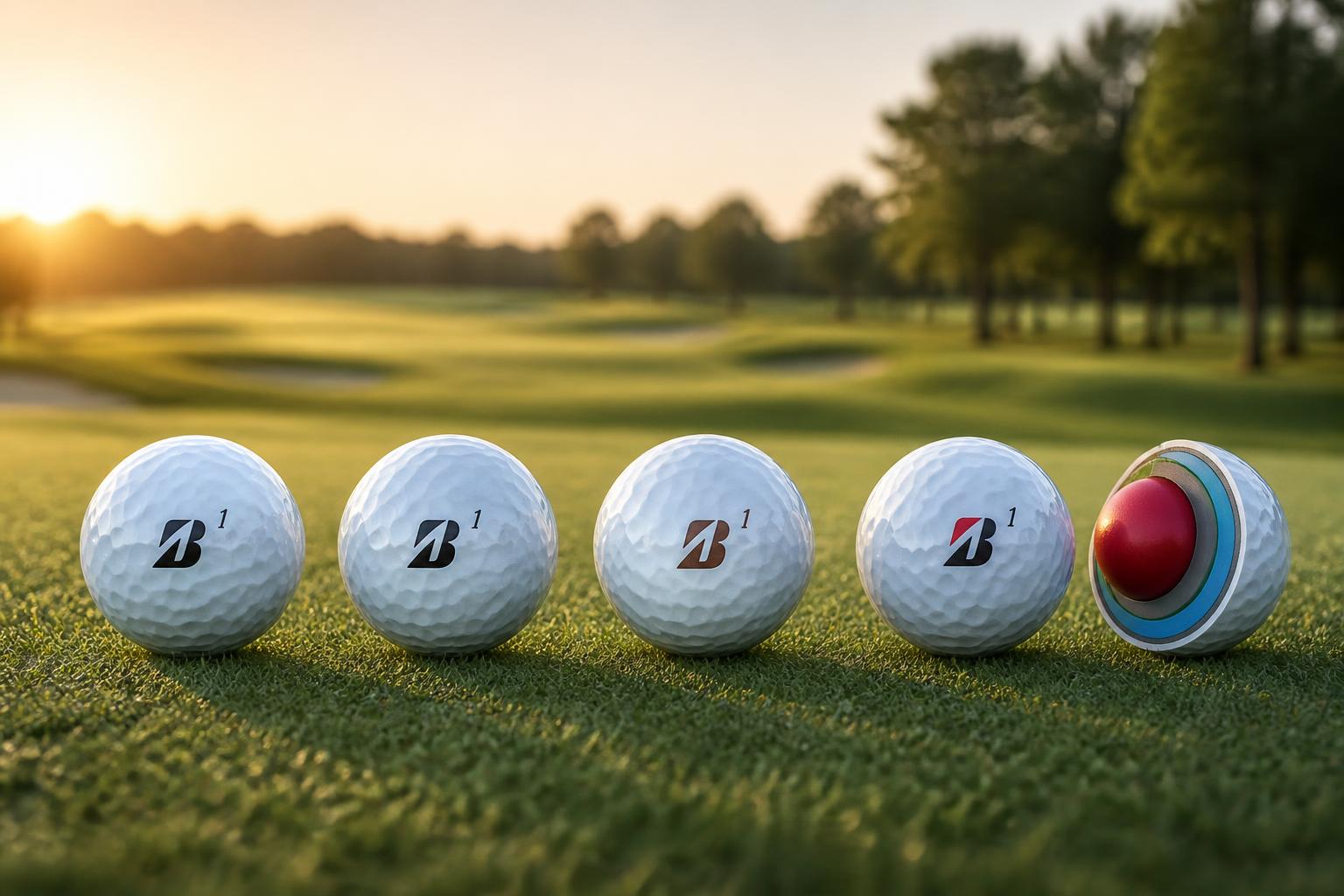
The Four Models and Who They’re For
Bridgestone builds the Tour B lineup around two core questions: How fast do you swing, and how much spin do you need around the greens? The answers point you to one of these four balls.
| Model | Target Swing Speed | Primary Characteristic |
|---|---|---|
| Tour B X | Over 105 mph | Maximum distance with higher compression |
| Tour B XS | Over 105 mph | Maximum spin and soft feel |
| Tour B RX | Under 105 mph | Distance with moderate spin |
| Tour B RXS | Under 105 mph | Soft feel with maximum spin |
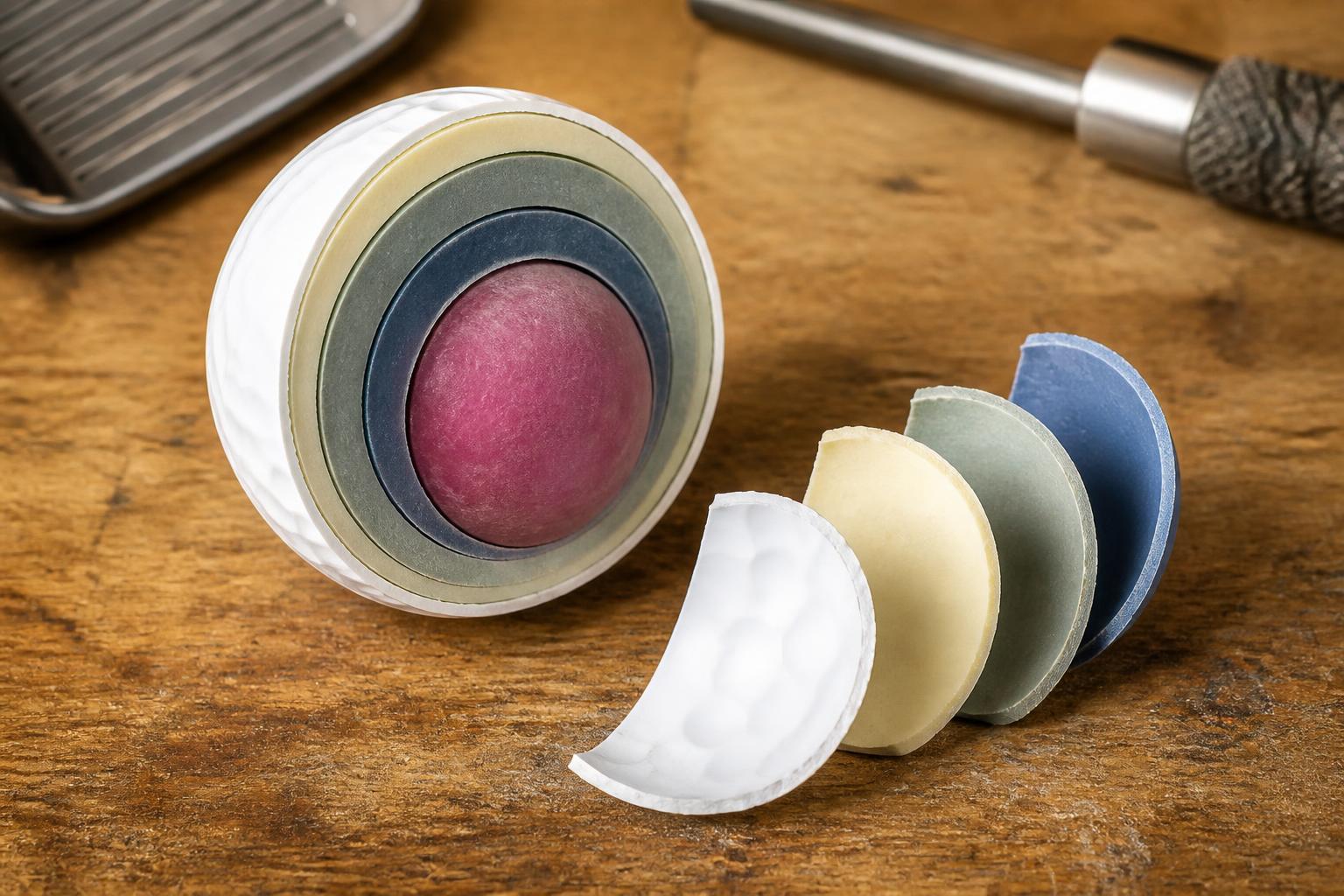
The X and XS share the same high-compression core design but differ in cover and spin profile. The RX and RXS do the same for slower swing speeds.
Tour B X: Built for Speed
The Bridgestone Golf Tour B X White is the highest-compression ball in the lineup. Bridgestone markets it specifically for players with swing speeds over 105 mph—that’s roughly the range of a golfer who hits driver 280 yards or more.
The key tech here is what Bridgestone calls VeloSurge core-mantle integration. In plain terms, the core and mantle layer are engineered to work as one unit rather than separate pieces. The result is higher ball speed off the driver face without the “rock” feel you might expect from a high-compression ball.
This is the ball Tiger Woods has played, along with Jason Day, Kurt Kitayama, Chris Gotterup, and Matt Kuchar on tour. That tour validation matters if you want a ball that performs under tournament pressure, but it also means the X is not forgiving of slower swing speeds—if you can’t compress it, you’ll lose distance rather than gain it.
Choose the X if: You swing fast, want maximum driver distance, and still need enough spin to hold greens with mid-irons.
Tour B XS: Same Speed, More Spin
The XS shares the X’s high-compression core and 105+ mph swing speed requirement, but the similarities end there. The XS uses a softer urethane cover and a different dimple pattern designed to grab the clubface more aggressively on short shots.
For a concrete example: on a half-wedge shot from 50 yards, the XS will typically stop within a few feet of its pitch mark, while the X might release out a few more feet. If you’re the kind of player who likes to throw darts at pins and rely on spin to stop the ball, the XS is the better fit.
The trade-off is real. The XS generally flies slightly lower and spins more off the driver, which can cost you a few yards of roll-out compared to the X. That’s the classic spin-versus-distance trade-off, and Bridgestone positions these two balls as opposite ends of that spectrum for fast swingers.
Choose the XS if: You swing over 105 mph, you’re confident in your ball-striking, and you want maximum stopping power into greens.
Tour B RX and RXS: For Sub-105 mph Swing Speeds
The RX and RXS use a lower compression core than the X and XS. Bridgestone designs these for players whose swing speed sits under 105 mph—most amateur golfers fall into this category.
The RX is the distance-first option for this group. Its softer core compresses more easily at lower swing speeds, which means you get more energy transfer into the ball. For a player swinging around 95 mph, the RX typically launches higher and carries farther than the X would, because the X’s firmer core never fully compresses at that speed.
The RXS takes the same lower-compression core and pairs it with the softer cover for maximum spin. It’s the closest thing in the Tour B line to a “tour feel” ball for players who don’t swing fast enough to play the XS. If you value soft feel around the greens and don’t want to give up distance off the tee, this is the one.
Choose the RX if: You swing under 105 mph and want maximum distance with decent greenside control.
Choose the RXS if: You swing under 105 mph and prioritize soft feel and spin over raw distance.
How to Pick Between the Four
Here’s a simple decision tree you can use at the shop or when ordering online:
1. Know your swing speed. Get on a launch monitor if you can. Most golf retailers have one. If you’re between 100-110 mph, you’re on the borderline—test both the X and RX to see which compresses better for you.
2. Decide your greenside priority. Do you want the ball to stop quickly, or do you prefer to play run-out shots? Spin players should lean XS or RXS; distance players should lean X or RX.
3. Consider your typical miss. High-handicap players who miss off-center will find the RX and RXS more forgiving because the softer core doesn’t punish mishits as harshly.
One common mistake: buying the X because Tiger plays it, then wondering why you’re losing distance. The Tour B X is a specialized tool for a specific swing speed. If you don’t have that speed, the RX line will almost certainly perform better for you.
Specs Comparison at a Glance
| Spec | Tour B X | Tour B XS | Tour B RX | Tour B RXS |
|---|---|---|---|---|
| Compression | High | High | Medium | Medium |
| Swing Speed Target | 105+ mph | 105+ mph | Under 105 mph | Under 105 mph |
| Cover | Urethane | Softer Urethane | Urethane | Softest Urethane |
| Spin Profile | Low-moderate | High | Moderate | High |
| Feel | Firm | Soft | Firm-moderate | Softest |
Note that Bridgestone doesn’t publish exact compression numbers for these balls, so treat “high” and “medium” as relative categories rather than precise measurements.
What the Specs Mean for Your Next Purchase
If you’re currently playing a Tour B X but your driver carry sits around 240 yards, you’re likely leaving distance on the table. The X’s high compression requires club speed you probably don’t have, and the ball won’t deform enough at impact to transfer energy efficiently. Switching to the RX line typically adds carry distance for these players because the softer core compresses more fully at moderate swing speeds.
Before you buy a full dozen, verify your swing speed at a local fitting bay or golf retail store with a launch monitor. Most stores offer this free, and it takes about five minutes. If your driver swing speed reads 102 mph, you’re in the borderline zone—buy a sleeve of both the X and RX and compare them on the course. The numbers on paper won’t tell you which one feels right for your game.
The Mismatch Trap: When Tour B Isn’t Right
The Tour B line has a specific failure mode: players buy it for the tour pedigree, then wonder why their short game suffers. The X and XS are firm, high-compression balls that require clean contact to generate spin. If you tend to catch chips and pitches slightly thin or off the toe, these balls will roll out more than you expect—the opposite of the “stop on a dime” behavior you paid for.
The RX and RXS are more forgiving, but they still assume you have a repeatable swing. If you’re shooting over 100, a softer distance ball like the Bridgestone Golf e12 HiLaunch Double Dozen or the Bridgestone Golf e6 Soft Yellow will likely serve you better at a lower price. Those balls are designed to reduce side spin and help with launch, which matters more than tour-level spin when you’re still developing consistency.
Final Considerations Before You Buy
The Tour B line sits at a premium price point, and the balls are designed for players who notice the difference between spin profiles. If you’re a casual golfer who plays a few times a year, a softer distance ball like the e12 HiLaunch or e6 Soft will give you more help at a lower cost.
But if you’re a serious player who can feel the difference between a ball that spins and one that doesn’t, the Tour B line is worth the investment. Start with the model that matches your swing speed, then experiment with the spin variant to see which one fits your short game.
The right ball won’t fix a swing flaw, but it will remove one variable from the equation—and for golfers chasing consistency, that’s worth a lot.

Michael Reeves is a PGA Professional with over 20 years of experience in competitive golf and instruction. A former Division I collegiate player at the University of Texas, he competed on the mini-tours before transitioning to full-time coaching and golf journalism. He has been a certified PGA teaching professional since 2005 and has worked with players at every level, from absolute beginners to collegiate champions.
His writing has appeared in Golf Digest, Golf Magazine, and The Left Rough. At GolfHubz, Michael leads the editorial team, overseeing fact-checking and ensuring every answer meets the same standard he demands on the lesson tee: clear, evidence-based, and immediately useful.
When he’s not writing or teaching, Michael plays to a +1.4 handicap at his home club in Austin, Texas. He has attended over 40 major championships as a journalist and fan, and has played more than 200 courses across 15 countries.
You can reach Michael at [email protected] or follow his occasional swing analysis posts on the site.