Scotty Cameron Putter Specs Chart
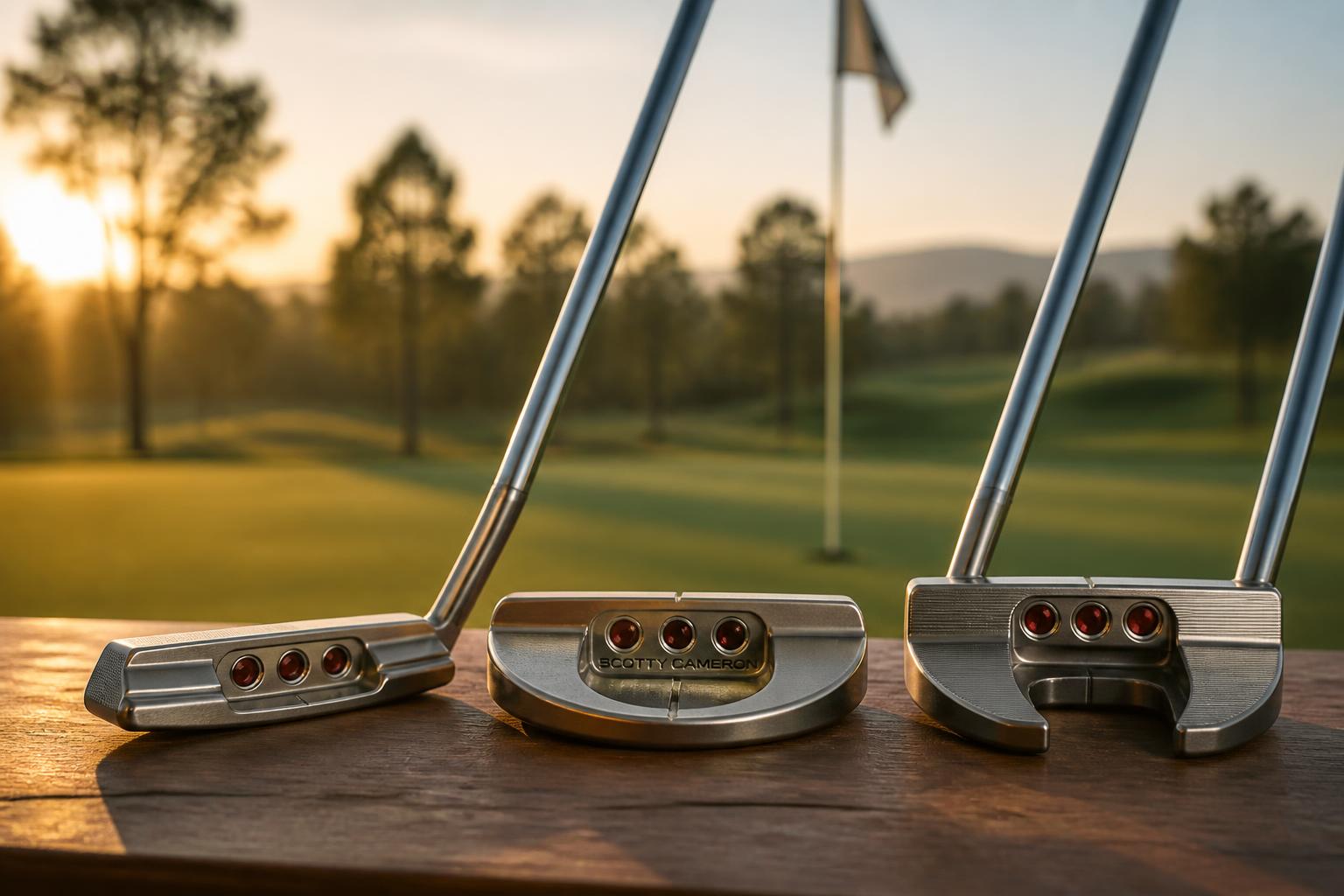
Scotty Cameron putters are known for three things: milled faces, precise head weights, and a neck style for nearly every stroke type. But the lineup spans multiple families—blades, mallets, and mid-mallets—and the specs change between models and years. This guide breaks down the current and recent Scotty Cameron putter specs so you can match a head shape and neck configuration to your stroke.
Why Specs Matter More Than the Name
The Scotty Cameron brand carries a premium reputation, but the actual specifications determine whether a putter fits your game. Two putters with the same head shape can feel completely different based on neck style, head weight, and shaft length.
The key specs to check before buying:
- Head weight – Heavier heads (360g+) suit slower greens or shorter strokes; lighter heads (340–350g) suit faster greens or longer strokes.
- Neck style – Determines toe flow vs. face balance. This is the single biggest fitting factor.
- Loft – Standard is 3.5 degrees, but some models differ.
- Lie angle – Standard is 70 degrees across most models.
- Length – Standard offerings are 33″, 34″, and 35″, with custom options available.
- Material – Most current models use 303 stainless steel or 6061 aluminum (in multi-material mallets).
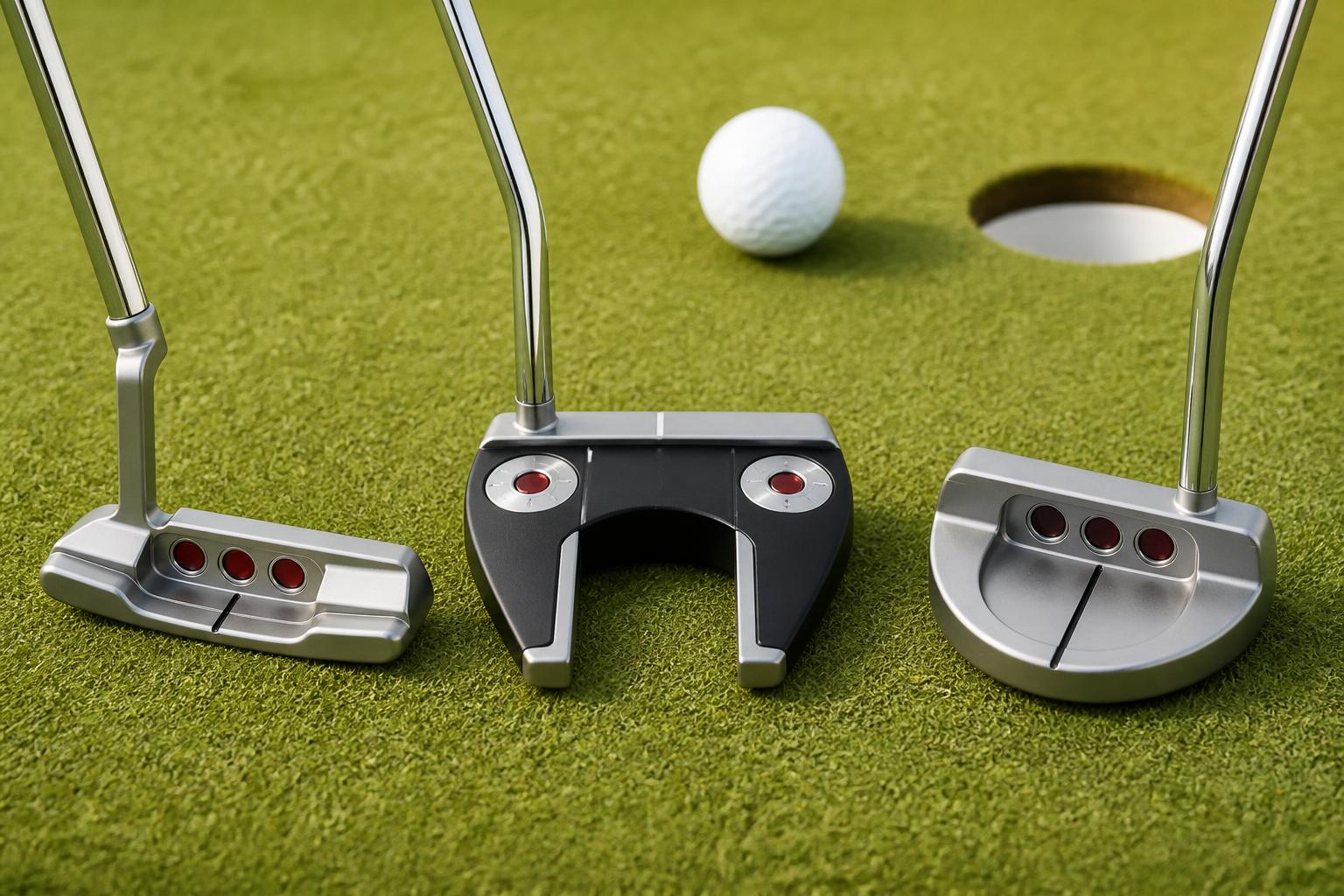
What this means for your next move: If you’re shopping, start with neck style and head weight before looking at anything else. Those two specs determine whether the putter will match your stroke. Loft and lie are adjustable by a fitter, but you can’t easily change a neck style or add 20g of head weight without sending the putter back to the factory.
Head Shapes and What They Do
Scotty Cameron putters fall into three broad head shape categories. Each one changes how the putter behaves through impact.
Blade Putters (e.g., Newport, Newport 2)
Blades are the classic Scotty Cameron shape—a compact head with a plumber’s neck or similar hosel. They offer maximum feel feedback and suit players with a slight arc in their stroke.
- Newport – Slight toe flow, suits a moderate arc.
- Newport 2 – Slightly more toe flow than the standard Newport, with a more squared-off toe.
- Newport 2.5 – Features a different neck configuration for a touch less toe flow.
Current blade models typically weigh 340–350g in the head. The 2024–2025 Super Select line uses 303 stainless steel with a milled face and a heavier sole plate for stability.
The trade-off: Blades give you the most feedback, but they’re the least forgiving. If your strike point wanders toward the toe or heel, you’ll lose distance control and see more offline starts. A blade is the right choice only if you consistently find the center of the face.
Mid-Mallets (e.g., Squareback, Fastback)
Mid-mallets combine a blade-like face with a wider, more forgiving body. They’re a middle ground for players who want some forgiveness without the full mallet footprint.
- Squareback – A compact mid-mallet with a single bend shaft in most configurations. Weighs around 360g in recent models.
- Fastback – Slightly larger than the Squareback, with a rounded back. Also around 360g.
The 2025 US Model] Titleist Scotty Cameron Studio Style Putter 2025 Model SCOTTY CAMERON Studio Style Fastback 34 Inch uses 303 soft stainless steel, which is a change from the harder 6061 aluminum used in some previous multi-material models. This material shift gives a softer feel at impact while keeping the mid-mallet forgiveness.
The trade-off: Mid-mallets are heavier than blades, which means they require a slightly firmer stroke tempo. If you’re coming from a 340g blade, the jump to 360g can feel sluggish for the first few rounds. Plan for an adjustment period of 2–3 practice sessions before judging the fit.
Full Mallets (e.g., Phantom Series)
Full mallets are where Scotty Cameron pushes the most technology. The Phantom series uses multi-material construction—stainless steel face and body with aluminum sole plates and wing weights.
- Phantom 5 – A mid-mallet with a slant neck, moderate toe flow.
- Phantom 7 – A wider mallet with a single bend shaft, nearly face-balanced.
- Phantom 11 – A large mallet with twin-milled sight lines and an arrow-shaped alignment aid.
The Scotty Cameron Phantom 11 Putter 34″ (Mallet, Mid-Bend) 2024 weighs in around 365g in the head and uses a mid-bend shaft for a slight toe flow. The twin-milled sight lines with the arrow endpoint give you two alignment options: point the arrow at the target, or align the center of the leading edge.
Phantom series putters generally range from 350g to 370g depending on the model and length. The heavier head weight helps stabilize the putter through impact, which is the main reason players switch from a blade to a mallet.
The trade-off: The heavier head and larger footprint reduce feel feedback. If you rely on touch to judge distance on fast greens, a 370g mallet can feel numb compared to a 340g blade. Some players describe it as “dead” off the face even though the ball rolls the same distance. That’s a feel preference, not a performance flaw—but it matters for your confidence.
Neck Styles and Stroke Type
The neck is the most important spec for fitting. It controls how much the face opens and closes during your stroke.
| Neck Style | Toe Flow | Best For | Common Models |
|---|---|---|---|
| Plumber’s neck | High toe flow | Strong arc strokes | Newport, Newport 2 |
| Slant neck | Moderate toe flow | Slight arc strokes | Phantom 5, some Special Select models |
| Single bend | Face-balanced | Straight back-straight through | Phantom 7, Squareback |
| Mid-bend | Slight toe flow | Slight arc, more stability | Phantom 11, Fastback |
| Jet neck | Low toe flow | Minimal arc | Select models, custom orders |
Decision rule: If your stroke has a noticeable arc, choose a plumber’s neck or slant neck. If you use a straight back-and-through stroke, choose a single bend. If you’re not sure, a mid-bend or slant neck is the safest middle ground.
How to verify your stroke type: Set up a gate drill with two tees just wider than your putter head. Make 10 practice strokes and watch the putter head path. If the toe rotates open on the backstroke and closes through impact, you have an arc stroke. If the face stays square to the target line throughout, you’re straight back-and-through. This takes five minutes and tells you which neck family to shop.
Loft, Lie, and Length Specs
Most Scotty Cameron putters come with these standard specs:
- Loft: 3.5 degrees (some models at 3 degrees)
- Lie: 70 degrees
- Length options: 33″, 34″, 35″ (custom lengths available)
The 3.5-degree loft is designed to match the forward press most players have at address. If you have a steep angle of attack, you may need more loft. If you have a shallow stroke, less loft can help the ball roll sooner.
Common mistake: Buying a putter at the same length as your old one without checking lie angle. If the lie is off, the face points left or right of your target line. A putter that’s too upright or too flat will cause pushes or pulls even with a perfect stroke.
How to check lie angle at home: Set the putter in its address position on a flat surface and look at the sole. If the toe is elevated off the ground, the lie is too upright. If the heel is elevated, it’s too flat. You want the sole to sit flush. This check takes 10 seconds and can save you from buying a putter that needs a lie adjustment.
Weight Differences Between Models
Head weight varies more than most players expect. Here’s a rough guide to current and recent models:
| Model Family | Head Weight Range | Material |
|---|---|---|
| Special Select blades | 340–350g | 303 stainless steel |
| Super Select blades | 340–350g | 303 stainless steel |
| Studio Style (2025) | 350–360g | 303 soft stainless steel |
| Phantom mallets | 355–370g | Multi-material (steel + aluminum) |
| Fastback / Squareback | 350–365g | 303 stainless steel |
Heavier heads help on slow greens because they require less effort to get the ball rolling. Lighter heads give more feel on fast greens. If you’re switching from a blade to a mallet, expect a weight jump of 15–25g.
The mismatch risk: If you buy a 370g Phantom and your current putter is 340g, your distance control will be off for the first several rounds. You’ll leave putts short because your brain is calibrated to the lighter head. Conversely, dropping from 370g to 340g often causes players to blow putts past the hole. Budget for a transition period before deciding the putter doesn’t work.
How to Read a Scotty Cameron Spec Sheet
When you’re looking at a spec chart, check these numbers in order:
1. Head weight – Determines feel and required stroke tempo.
2. Neck style – Determines toe flow and face balance.
3. Length – Affects lie angle and your posture.
4. Loft – Affects launch and roll.
5. Material – Affects feel and durability.
If a spec sheet lists a putter at 34″ with a 350g head and a plumber’s neck, you know it’s a blade-style putter with moderate toe flow and a standard weight. That’s a good fit for a player with a slight arc who prefers traditional feel.
Verification step: Before you buy, cross-check the spec sheet against the actual putter. Weigh it on a kitchen scale if you’re buying used. Measure the length from the sole to the grip cap. Confirm the neck style visually—a plumber’s neck and a slant neck look similar at a glance but behave differently. These checks take two minutes and prevent buying a putter that doesn’t match the listing.
Common Spec Mistakes to Avoid
Ignoring the neck style. This is the most common fitting error. Players buy a putter because it looks good, then wonder why it doesn’t roll straight. The neck determines how the putter behaves in your hands.
Assuming all blades are the same weight. The Newport and Newport 2 have different head weights in some generations. Always check the specific model year.
Buying a mallet for forgiveness without checking the weight. Some mallets are surprisingly light. The Phantom 5, for example, is lighter than the Phantom 11. If you want maximum stability, choose the heavier model.
Not accounting for shaft length changes. If you cut a putter down from 35″ to 33″, the head weight feels heavier and the lie angle changes. Scotty Cameron offers head weight adjustments for this reason.
What can go wrong if you skip these checks: A putter with the wrong neck style will produce consistent pushes or pulls that no amount of practice can fix. A head weight mismatch will wreck distance control for weeks. A lie angle that’s off by even 2 degrees will have you aiming compensation instead of at the target. These aren’t minor tweaks—they’re fundamental fit issues.
What to Check Before You Buy
- Confirm the head weight matches your green speeds and stroke tempo.
- Match the neck style to your stroke type (arc vs. straight).
- Verify the length fits your setup posture.
- Check the material—303 stainless steel feels softer than 6061 aluminum.
- If you’re buying used, confirm the model year because specs change between generations.
The Scotty Cameron Scotty Cameron Pivot Tool is a small accessory that helps with alignment and setup, but it doesn’t change the putter’s specs. It’s a useful addition if you want a consistent pre-shot routine, but it won’t fix a head weight or neck mismatch.
Making the Final Call
The specs chart is the starting point, not the whole story. Two putters with identical numbers can feel different because of sole weighting, face milling depth, and shaft material. Use the specs to narrow your options, then test the shortlist on a putting green to confirm the feel matches the numbers. If you’re between two models, the neck style should be the deciding factor—it has the biggest impact on how the putter performs in your hands.
If the specs point to a clear fit—right neck style, appropriate weight, correct length—buy with confidence. If you’re torn between two options, pick the one with the neck style that matches your stroke. That’s the spec you can’t easily change later.

Michael Reeves is a PGA Professional with over 20 years of experience in competitive golf and instruction. A former Division I collegiate player at the University of Texas, he competed on the mini-tours before transitioning to full-time coaching and golf journalism. He has been a certified PGA teaching professional since 2005 and has worked with players at every level, from absolute beginners to collegiate champions.
His writing has appeared in Golf Digest, Golf Magazine, and The Left Rough. At GolfHubz, Michael leads the editorial team, overseeing fact-checking and ensuring every answer meets the same standard he demands on the lesson tee: clear, evidence-based, and immediately useful.
When he’s not writing or teaching, Michael plays to a +1.4 handicap at his home club in Austin, Texas. He has attended over 40 major championships as a journalist and fan, and has played more than 200 courses across 15 countries.
You can reach Michael at [email protected] or follow his occasional swing analysis posts on the site.