Taylormade Qi10 Hybrid Loft Chart
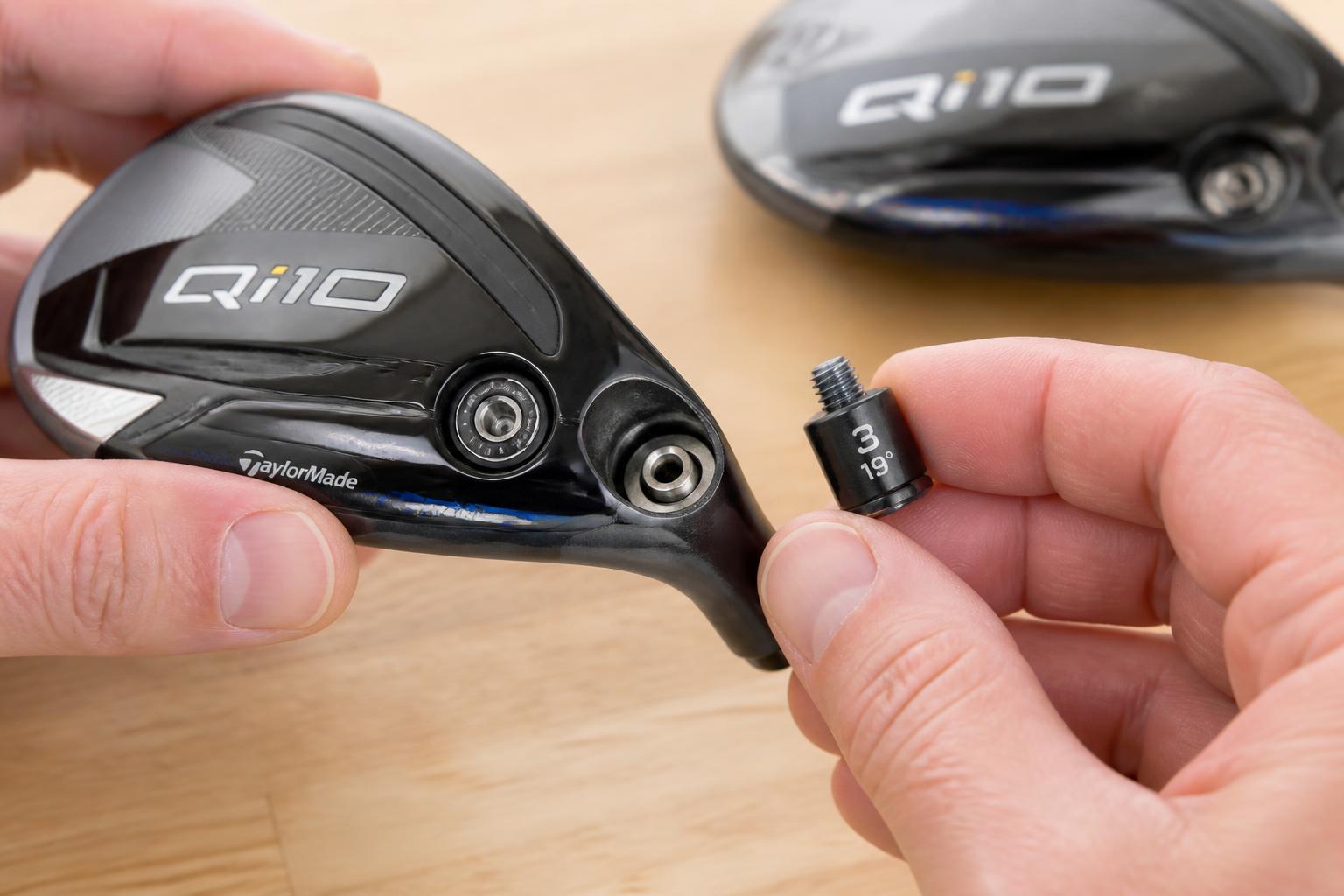
The TaylorMade Qi10 hybrid comes in four standard lofts—19°, 22°, 25°, and 28°—with the 19° and 22° models featuring a 1.5° loft sleeve that lets you adjust up or down. That means the 19° hybrid can play anywhere from 17.5° to 20.5°, giving you real flexibility at the top of your bag.
Here’s the full breakdown of what’s available, how the adjustability works, and which loft makes sense for your game.
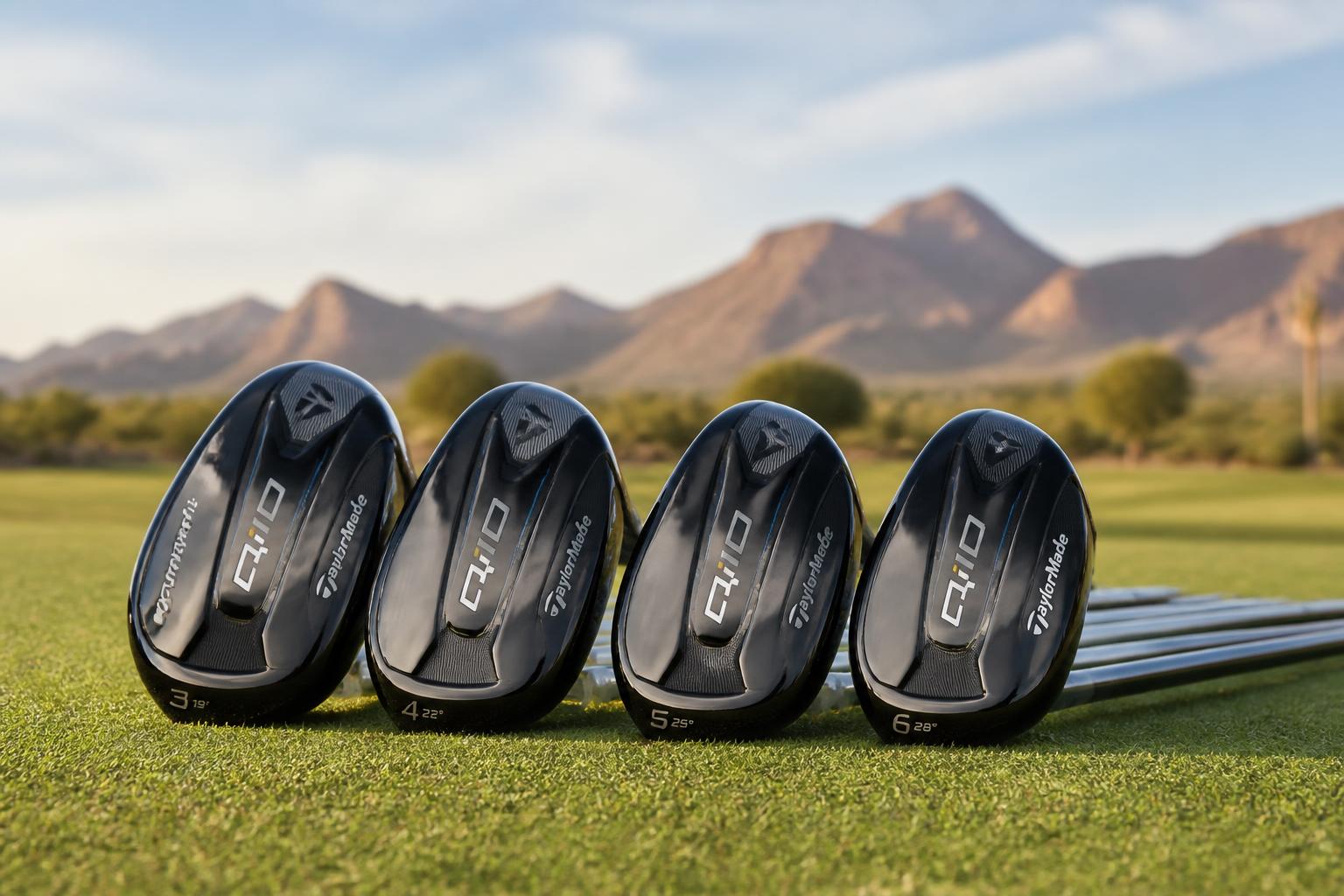
TaylorMade Qi10 Hybrid Loft Options
| Loft | Adjustable? | Loft Range | Best For |
|---|---|---|---|
| 19° | Yes (1.5° sleeve) | 17.5° – 20.5° | Players replacing a 3-iron or 5-wood |
| 22° | Yes (1.5° sleeve) | 20.5° – 23.5° | Players replacing a 4-iron or 7-wood |
| 25° | No | Fixed | Players replacing a 5-iron |
| 28° | No | Fixed | Players replacing a 6-iron |
The 19° and 22° models come with TaylorMade’s adjustable loft sleeve. The 25° and 28° versions are fixed-loft, so what you see is what you get.
Applicability boundary: This loft chart applies to the standard Qi10 hybrid and the Qi10 Max hybrid, which share the same loft options. It does not apply to the Qi10 Tour model, which has a different sole design and is aimed at better players—if you’re looking at the Tour version, verify its loft offerings separately, as they differ from the standard lineup.
How the Loft Sleeve Works on the Qi10
The adjustable sleeve on the 19° and 22° Qi10 hybrids uses TaylorMade’s standard 1.5° loft adjustment system. You can set it to standard loft, 1.5° stronger, or 1.5° weaker—three total settings.
Here’s the practical part: changing the loft also changes the face angle slightly. When you weaken the loft, the face sits slightly open at address. When you strengthen it, the face sits slightly closed. This matters if you already fight a hook or a slice.
Decision rule: If you tend to miss left, weakening the loft (which opens the face) can help. If you tend to miss right, strengthening the loft can help square the face up.
The sleeve does not change lie angle on the Qi10 hybrid—it’s loft-only adjustment. If you need lie angle changes, that’s a bending job for a clubfitter.
Verification step: To confirm your sleeve is set where you think it is, look at the indicator mark on the sleeve collar. The setting is printed on the hosel—align the mark with the “STD,” “HIGH,” or “LOW” indicator before tightening. If you bought the club used and aren’t sure what setting it’s in, take it to a fitter with a loft gauge; they can confirm the actual loft in about two minutes.
Which Loft Replaces Which Iron
The Qi10 hybrid lineup is designed to slot in where your longer irons get difficult to hit. Here’s the standard replacement pattern:
- 19° hybrid replaces a 3-iron (or a 5-wood if you want more control off the deck)
- 22° hybrid replaces a 4-iron
- 25° hybrid replaces a 5-iron
- 28° hybrid replaces a 6-iron
A common setup is carrying both a 19° and a 22° Qi10 hybrid, then going into a 5-iron or 25° hybrid depending on your preference.
Evidence example: A golfer who struggles to get a 4-iron airborne consistently will typically see higher launch and more forgiveness from a 22° hybrid. The Qi10’s low-forward weight placement helps keep spin down while the face is designed to preserve ball speed on off-center hits—which is exactly where most 4-iron strikes go wrong.
Practical implication: If you currently carry a 4-iron and hit it well, a 22° hybrid may actually fly farther than your iron despite the same loft. The longer shaft and hotter face add distance, so you might create a gap you didn’t have before. Plan for the hybrid to be a distance replacement, not a like-for-like swap.
Stock Shafts and How They Affect Loft Performance
The Qi10 hybrid comes stock with either the Mitsubishi Tensei Blue 80 (graphite) or the KBS Tour Hybrid 85 (steel), depending on your flex and order configuration.
The Tensei Blue is a mid-launch, mid-spin shaft that pairs naturally with the 19° and 22° lofts. The KBS steel option tends to produce a slightly lower, more penetrating flight—useful if you’re using the hybrid primarily as a fairway finder or stinger club.
If you’re between lofts, shaft choice can tip the decision. For example, if you’re deciding between the 19° and 22° and you’re playing the Tensei Blue, the 22° will launch noticeably higher. With the KBS steel, the 22° plays closer to a traditional 4-iron flight.
Trade-off to watch: The KBS steel shaft adds roughly 30–40 grams of weight compared to the Tensei Blue. That extra weight can help players with aggressive transitions control the clubhead, but it also lowers launch for players with moderate swing speeds. If you’re a slower swinger, the steel shaft in a 25° or 28° hybrid can make the club feel heavy and hard to release—you may be better off with graphite even if you play steel in your irons.
Loft Gapping Strategy for the Qi10
The biggest mistake golfers make with hybrids is creating a gap problem at the top of the bag. Here’s how to check yours:
1. Write down your current club lofts from your 5-iron through your 3-wood or driver.
2. Identify the gap you’re trying to fill. If your 5-iron is 24° and your 5-wood is 18°, a 22° hybrid sits nearly perfectly between them.
3. Check for overlaps. If your 5-wood is 19° and your 3-iron is 20°, adding a 19° hybrid creates a redundant club. You’d be better served by the 22°.
Common mistake: Buying a 19° hybrid when you already have a 5-wood at 18° or 19°. You end up with two clubs that fly nearly identical distances, and you lose a slot that could be a wedge or an extra fairway wood.
Better approach: Use the adjustable sleeve on the 19° or 22° to fine-tune your gaps. If your 5-wood is 18° and your 5-iron is 24°, the 22° hybrid set 1.5° weak (to 23.5°) creates a tight 5° gap between clubs.
Failure mode to avoid: Don’t assume your distances will space evenly just because the lofts do. A 19° hybrid and a 22° hybrid might be 3° apart in loft, but the actual distance gap could be 15–20 yards—or as little as 8 yards—depending on your swing speed and launch. Test both clubs on a launch monitor before committing to a gapping plan.
Qi10 vs. Qi10 Max: Loft Differences
TaylorMade also offers the Qi10 Max hybrid, which is the more forgiving, draw-biased version of the same club. The loft options are identical—19°, 22°, 25°, and 28°—but the Max model has a different internal weight structure.
The standard Qi10 is the more workable option with a neutral-to-slightly-fade bias. The Qi10 Max is designed for players who want more help getting the ball airborne and reducing a slice.
Decision rule: If you hit down on your hybrids and take divots, the standard Qi10 will give you better turf interaction and control. If you tend to sweep the ball or struggle with launch, the Max version is the better fit—even at the same loft.
Mismatch warning: The Max model’s draw bias is built into the head, not the sleeve. If you already hook the ball, the Max version can turn a manageable draw into a hard hook, especially in the 25° and 28° fixed-loft models where you can’t adjust the face angle. In that case, the standard Qi10 is the safer choice.
How to Set Up Your Qi10 Hybrid for Your Swing
The loft sleeve gives you three settings, but which one should you actually use? Here’s a practical decision framework:
Use standard loft if:
- Your current gaps are already working
- You hit the hybrid consistently with your normal swing
- You don’t want to change face angle behavior
Strengthen the loft (1.5° less) if:
- You’re seeing the ball balloon or fly too high
- You need to close a gap between the hybrid and your next club down
- You want a slightly more closed face at address to fight a slice
Weaken the loft (1.5° more) if:
- You need more height and carry
- You’re hitting the hybrid too low or with too much roll
- You want a slightly open face to fight a hook
Evidence example: A player carrying a 16.5° 4-wood and a 24° 5-iron might take the 22° Qi10 and set it 1.5° strong to 20.5°. That creates a 4° gap to the 4-wood and a 3.5° gap to the 5-iron—tight, usable spacing that covers 200–230 yards without overlap.
Verification step: After adjusting the sleeve, hit at least 10 shots with the new setting before judging it. The face angle change can feel different at address for the first few swings, and players often misjudge a setting change after just two or three balls. Give it a full small bucket before deciding to switch back.
Common Loft-Related Mistakes to Avoid
Mistake 1: Ignoring the face angle change. When you adjust the sleeve, you’re not just changing loft—you’re changing how the club sits at address. A golfer who weakens the loft and then aims left to compensate for the open face will create a new miss.
Mistake 2: Buying the same loft as your current iron. A 22° hybrid is not a replacement for a 22° 4-iron in terms of launch and distance. The hybrid will launch higher and carry farther for most players because of the longer shaft and more forgiving face. You need to account for that distance jump, not assume the lofts match perfectly.
Mistake 3: Overlapping with your fairway wood. If your 5-wood is already 19°, a 19° hybrid is almost certainly redundant. You’ll hit them similar distances, and you’ll lose a bag slot. Go with the 22° instead.
Mistake 4: Not testing the 25° and 28° fixed lofts. These are the easiest hybrids to hit in the lineup, but many golfers skip them because they think hybrids are only for replacing 3- and 4-irons. If you struggle with your 5- or 6-iron, the 25° or 28° Qi10 might be the highest-value addition to your bag.
Mistake 5: Assuming the sleeve fixes everything. The 1.5° adjustment range is useful, but it won’t fix a fundamentally wrong loft choice. If you need a 25° hybrid and buy a 19°, weakening it to 20.5° still leaves you 4.5° short of your target. The sleeve is for fine-tuning, not for making a club fit a role it wasn’t designed for.
Fitting Considerations Before You Buy
If you’re between two lofts, here’s the tiebreaker:
- Go stronger if your miss is thin and low, or if you already hit your irons plenty high.
- Go weaker if your miss is fat, or if you need more help getting the ball in the air.
- Consider your typical course conditions. Firm, windy conditions favor stronger lofts with lower flight. Soft, calm conditions reward weaker lofts with more carry and stopping power.
The Qi10 hybrid’s stock shaft lengths also vary by loft. The 19° plays around 40.5 inches, the 22° around 40 inches, and the 25° and 28° progressively shorter. If you’re between lofts, the shorter shaft of the weaker loft also adds control—sometimes that’s worth more than raw distance.
Verification step before buying: If you’re replacing an existing hybrid or iron, compare the shaft length of your current club to the Qi10 loft you’re considering. A 19° Qi10 at 40.5 inches is roughly the same length as most 5-woods—if you struggle with fairway woods off the deck, that extra length might cause the same issues. The 22° at 40 inches is a more manageable step down.
Trade-off to consider: The 25° and 28° fixed-loft models don’t have the adjustable sleeve, which means you also lose the face angle adjustment. If you’re someone who likes to tinker with settings, the fixed lofts will feel limiting. But if you want a set-and-forget club, the simplicity is an advantage—there’s nothing to accidentally knock out of adjustment.
Final Thoughts on Choosing Your Qi10 Loft
The 19° and 22° are the most popular Qi10 hybrid lofts because they replace the hardest irons to hit. The 25° and 28° are underrated options for players who want more forgiveness through the middle of the bag.
Start by mapping your existing gaps, then use the adjustable sleeve on the 19° or 22° to fine-tune. If you’re replacing a 5- or 6-iron, the fixed-loft options are simpler and just as effective. The right loft is the one that gives you a confident, repeatable shot—not the one that looks best on a spec sheet.

Michael Reeves is a PGA Professional with over 20 years of experience in competitive golf and instruction. A former Division I collegiate player at the University of Texas, he competed on the mini-tours before transitioning to full-time coaching and golf journalism. He has been a certified PGA teaching professional since 2005 and has worked with players at every level, from absolute beginners to collegiate champions.
His writing has appeared in Golf Digest, Golf Magazine, and The Left Rough. At GolfHubz, Michael leads the editorial team, overseeing fact-checking and ensuring every answer meets the same standard he demands on the lesson tee: clear, evidence-based, and immediately useful.
When he’s not writing or teaching, Michael plays to a +1.4 handicap at his home club in Austin, Texas. He has attended over 40 major championships as a journalist and fan, and has played more than 200 courses across 15 countries.
You can reach Michael at [email protected] or follow his occasional swing analysis posts on the site.