Project X Shaft Flex Chart
Project X shafts are among the most popular aftermarket options in golf, but their flex labeling doesn’t always line up with what you might expect from other brands. If you’re shopping for a Project X shaft and wondering which flex actually fits your swing, this chart and the notes below will get you sorted.
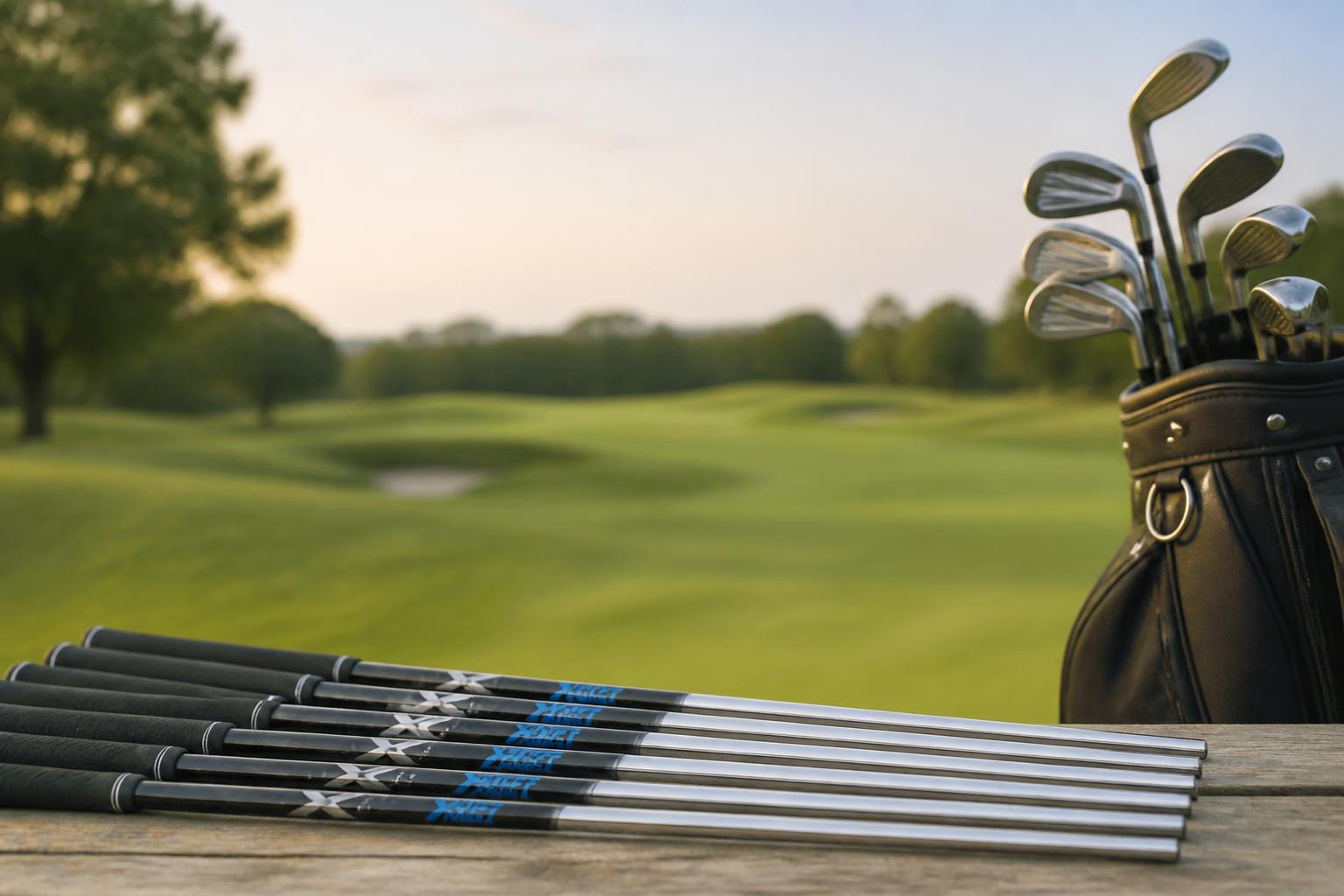
The Project X Flex Chart
Project X uses a numbering system that can feel confusing at first. Here’s how their standard iron and wedge shaft flexes break down:
| Flex Label | Project X Model | Approx. Swing Speed (Driver) | Typical 6-Iron Carry (Men) |
|---|---|---|---|
| 5.0 | Regular | 85–95 mph | 150–165 yards |
| 5.5 | Stiff | 90–100 mph | 160–175 yards |
| 6.0 | Stiff+ | 95–105 mph | 170–185 yards |
| 6.5 | X-Stiff | 100–110 mph | 180–195 yards |
| 7.0 | Tour X-Stiff | 105+ mph | 190+ yards |
Important: These swing speed ranges are starting points, not hard rules. Tempo, transition, and how you load the shaft matter just as much as raw speed.

For their wood shafts (HZRDUS line, which shares the Project X family), the flex naming shifts to text labels: Regular, Stiff, X-Stiff, and Tour X-Stiff. The HZRDUS Smoke and RDX lines also add weight-based profiles, so two Stiff shafts can feel completely different depending on the weight class.
What the Numbers Actually Mean
Project X’s flex numbers come from their frequency-matching system. A 5.5 isn’t “half a flex stiffer than 5.0” in the way you might think. The number reflects the shaft’s bend profile as measured by a frequency machine, not a simple linear scale.
What this means in practice:
- 5.0 and 5.5 play close to a traditional Regular and Stiff, respectively.
- 6.0 is where Project X starts to feel firmer than most standard Stiff shafts from other brands.
- 6.5 is a true X-flex, not a “soft stepped” stiff.
- 7.0 is a tour-level shaft that most amateurs will struggle to load properly.
One common mistake: golfers coming from a stock stiff shaft (like a True Temper Dynamic Gold S300) assume 6.0 is the direct equivalent. It’s not. The Project X 6.0 plays noticeably firmer in the mid-section, which means you need a more aggressive transition to get the same feel.
How to Choose Based on Your Swing
Smooth Tempo, Moderate Speed
If your driver swing sits around 90–95 mph and you have a smooth, rhythmic tempo, the 5.5 is your starting point. The 5.0 is worth trying if you’re on the lower end of that range or prefer a softer feel through impact.
Aggressive Transition, Average Speed
Here’s where Project X differs from other shafts. If you have a quick, aggressive transition but only swing 95 mph, the 6.0 might actually be a better fit than the 5.5. The firmer mid-section resists the extra load from your transition, which helps keep the clubface stable through impact.
High Speed, Need Control
At 100+ mph driver speed, the 6.5 is the standard recommendation. The 7.0 is for players who generate 110+ mph and want minimal shaft deflection. If you’re between flexes, err toward the stiffer option only if your transition is aggressive. If your tempo is smooth, the 6.0 may give you more feel without sacrificing control.
The “Between Flexes” Problem
Project X doesn’t offer a 5.75 or 6.25, so you can’t split the difference. Instead, look at weight. A heavier shaft in the softer flex can feel firmer than a lighter shaft in the stiffer flex. For example, a 120g 5.5 will often play closer to a 110g 6.0 in terms of overall feel.
Project X vs. Other Shaft Brands
Project X shafts are known for a few characteristics that set them apart:
- Low-to-mid launch: They generally produce a flatter, more penetrating ball flight than Dynamic Gold.
- Firm mid-section: This is the defining trait. It resists bending, which helps aggressive swingers but can feel “boardy” to smooth tempo players.
- Consistent weight: Project X shafts are weight-matched more tightly than most competitors, which is why tour players often use them for iron sets.
If you’re coming from a Nippon or KBS shaft, expect Project X to feel stiffer in the mid-section at the same flex label. If you’re coming from Dynamic Gold, the Project X will launch slightly higher with less spin.
Common Mistakes When Reading Flex Charts
Mistake 1: Only looking at swing speed. Two golfers at 95 mph can need different flexes if one has a smooth tempo and the other has a violent transition. The chart gives you a range, not a prescription.
Mistake 2: Ignoring shaft weight. A 6.0 in 120g plays differently than a 6.0 in 110g. The heavier version will feel firmer and produce a lower launch. If you’re between flexes, adjust weight before you adjust flex.
Mistake 3: Assuming the flex number matches another brand. Project X 6.0 is not the same as a Dynamic Gold S300 or a KBS Tour Stiff. The frequency numbers don’t translate across brands.
Mistake 4: Forgetting about the driver shaft. Project X’s HZRDUS wood shafts use a different flex scale than their iron shafts. A HZRDUS Stiff is closer to a 6.0 iron shaft, not a 5.5. If you’re building a full bag, don’t assume the flex labels align.
What About Soft-Stepping or Hard-Stepping?
If you’re between flexes, your club fitter might suggest soft-stepping (installing the shaft one club longer than standard) or hard-stepping (installing one club shorter). This is a legitimate option with Project X shafts because their frequency matching makes the results predictable.
- Soft-step once: The shaft plays about a third of a flex softer. A 6.0 soft-stepped plays close to a 5.5–6.0 hybrid.
- Hard-step once: The shaft plays about a third of a flex firmer. A 6.0 hard-stepped plays close to a 6.0–6.5 hybrid.
This works well if you like the weight and profile of a specific shaft but need a slightly different flex. It’s a common tour-level trick that’s worth discussing with a fitter.
How to Verify Your Fit
Flex charts are a starting point, not a final answer. The only reliable way to know if a Project X shaft fits you is to hit it.
- Use a launch monitor to check ball speed, launch angle, and spin. Pay attention to dispersion, not just carry distance.
- Compare two flexes side by side. Hit the 5.5 and 6.0 with the same head and same weight. The difference in feel and dispersion will tell you more than any chart.
- Check your miss. If you’re losing shots left with a stiffer shaft, you may not be loading it enough. If you’re fading or slicing with a softer shaft, you may be overpowering it.
Shaft fitting is about matching the shaft to your swing, not forcing your swing to match a chart. The numbers above give you a solid starting point, but the final decision comes down to how the shaft feels and performs for you.
Project X shafts are a proven option for golfers who want a firm, stable feel and a penetrating ball flight. Use the chart to narrow your options, then let your own swing data make the final call.

Michael Reeves is a PGA Professional with over 20 years of experience in competitive golf and instruction. A former Division I collegiate player at the University of Texas, he competed on the mini-tours before transitioning to full-time coaching and golf journalism. He has been a certified PGA teaching professional since 2005 and has worked with players at every level, from absolute beginners to collegiate champions.
His writing has appeared in Golf Digest, Golf Magazine, and The Left Rough. At GolfHubz, Michael leads the editorial team, overseeing fact-checking and ensuring every answer meets the same standard he demands on the lesson tee: clear, evidence-based, and immediately useful.
When he’s not writing or teaching, Michael plays to a +1.4 handicap at his home club in Austin, Texas. He has attended over 40 major championships as a journalist and fan, and has played more than 200 courses across 15 countries.
You can reach Michael at [email protected] or follow his occasional swing analysis posts on the site.