Golf Pride MCC Grip Guide
The Golf Pride MCC (Multi Compound) grip combines a firm, corded upper section with a softer rubber lower section. It’s built for golfers who want all-weather stability from cord without losing the feel of a traditional rubber grip. This guide breaks down how it performs, how it compares to other Golf Pride models, and whether it fits your game.
The Two-Material Design and How It Works
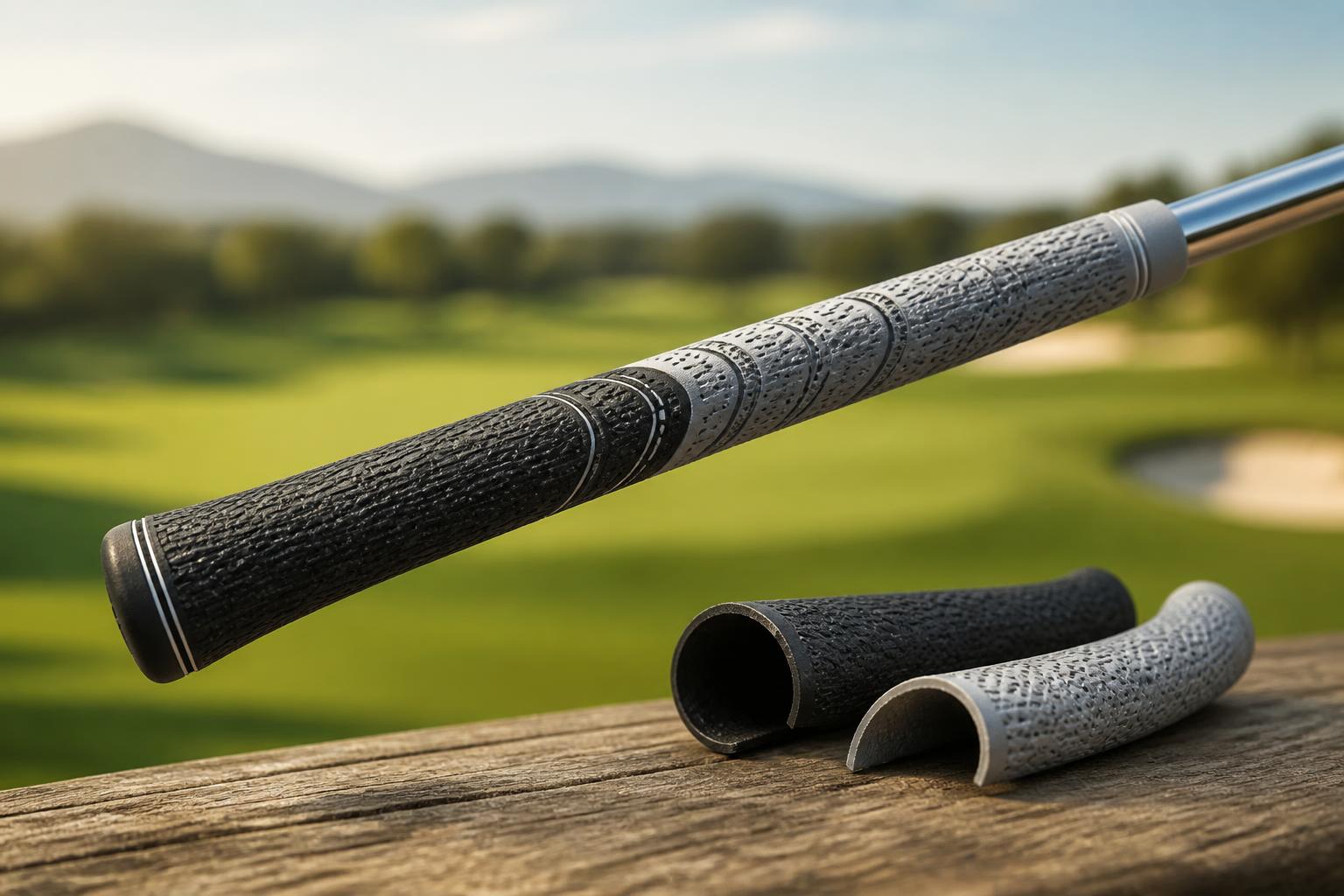
The MCC uses a two-material construction. The upper half—where your lead hand sits—features brushed cotton cord that keeps the club secure in humid or wet conditions. The lower half uses a softer, pebbled rubber compound that delivers more feel and feedback through your trailing hand.
That split design is the MCC’s core identity. You get cord-level traction where you need it most and rubber-grip comfort where your lower hand controls the club. The transition between materials is seamless, so you won’t feel a ridge or seam during the swing.
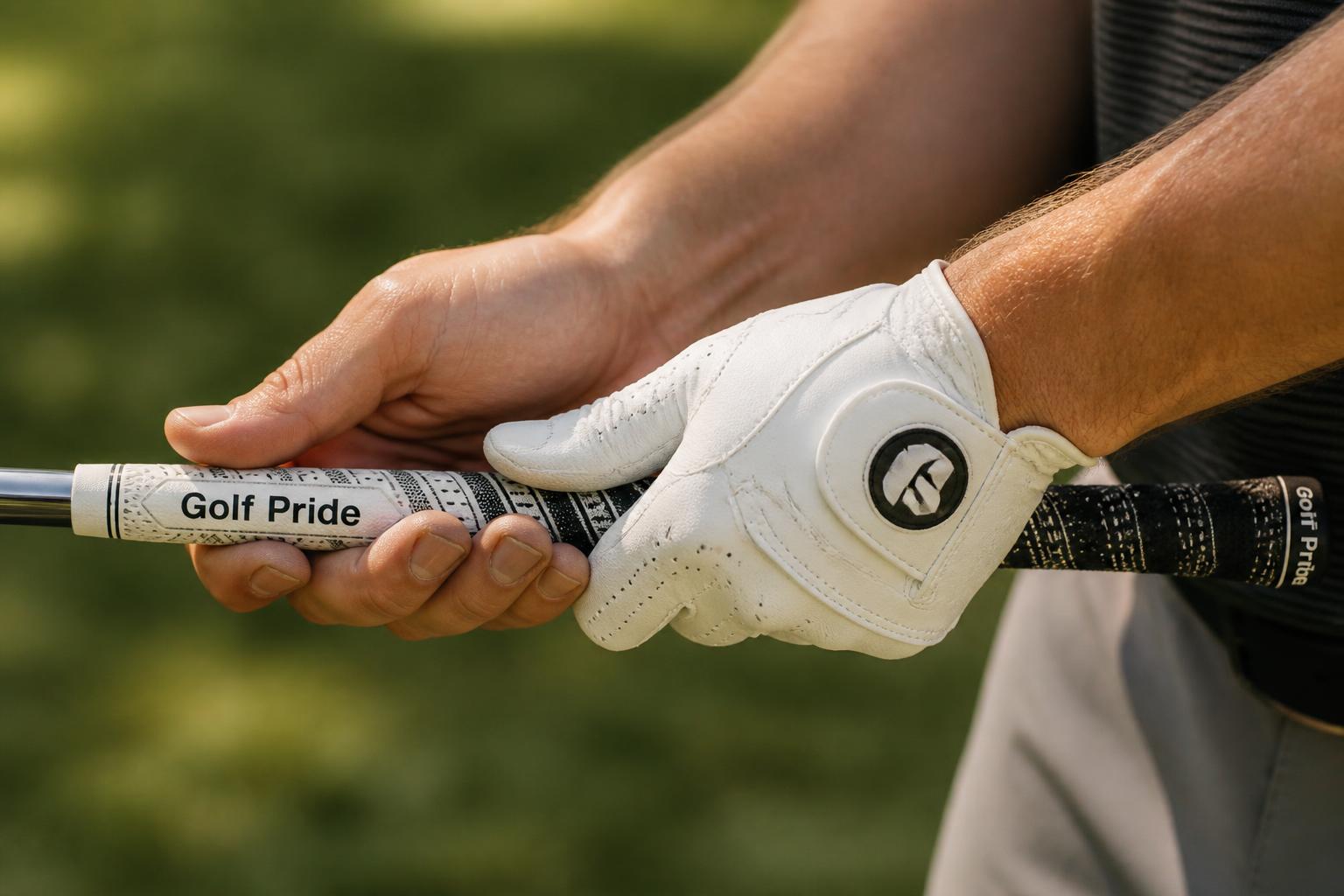
One detail that often surprises first-time users: the cord section is noticeably firmer than standard rubber. If you’re coming from a soft grip like the Golf Pride CP2 Pro Golf Club Grip, the MCC will feel firm in your lead hand for the first few rounds. That firmness translates to stability, but it takes adjustment time.
How the MCC Performs in Real Conditions
The MCC earns its reputation in humid, sweaty, or rainy conditions. The cord upper section channels moisture away from your lead hand, so the club doesn’t twist at impact when your palms start to perspire. Golfers who play summer mornings or coastal courses often notice the difference most—a standard rubber grip gets slicker as the round goes on, while the MCC stays consistent.
The lower rubber section uses a pebbled texture that provides tack without being sticky. This matters for players who like to feel the club head through the swing. The rubber compound gives you feedback on mishits, while the cord above keeps the club stable. That combination is why the MCC has become a default choice for golfers who play in variable weather rather than a single climate.
The durability story is also strong. The cord material resists wear better than standard rubber, especially in high-use clubs like wedges and drivers. Golfers who play multiple times per week often find the MCC outlasts softer grips by a noticeable margin—typically several months longer before the surface starts to smooth out.
That said, the firmness is real. If you have hand sensitivity or arthritis, the MCC’s cord section may feel too harsh. Golfers in that situation should look at softer options like the CP2, which uses a high-tack rubber compound designed for comfort and reduced tension.
MCC vs. Tour Velvet: Which Golf Pride Grip Is Better?
The Golf Pride MCC and the Tour Velvet are two of Golf Pride’s most common grips, but they serve different purposes.
| Feature | MCC | Tour Velvet |
|---|---|---|
| Upper hand material | Brushed cotton cord | Rubber with subtle texture |
| Lower hand material | Pebbled rubber | Rubber |
| Best for | Humid/wet conditions, sweaty hands | Dry conditions, consistent feel |
| Feel | Firmer in the upper hand | Softer and more uniform |
| Durability | Cord resists wear well | Good, but rubber wears faster in high-use clubs |
Choose the MCC if you need extra traction in the lead hand or play in variable weather. Choose the Tour Velvet if you prefer a uniform, softer feel and mostly play in dry conditions. Neither is objectively better—it depends on your hand moisture level and local climate.
A useful test: if you find yourself wiping your hands on your pants before every shot during summer rounds, the MCC is likely the better fit. If you rarely notice grip slippage and prefer a consistent feel from top to bottom, the Tour Velvet will serve you well.
MCC vs. MCC4: What’s the Difference?
The MCC4 is a variation of the MCC with one key change: the lower hand section uses Golf Pride’s Plus4 technology. That means the lower half is slightly larger in diameter, simulating the feel of four extra wraps of tape under the grip.
- MCC: Standard diameter throughout. The lower hand feels the same size as the upper hand.
- MCC4: The lower hand is slightly thicker, which can reduce grip pressure and promote a lighter hold in the trailing hand.
If you tend to grip the club too tightly with your trailing hand, the MCC4’s larger lower section can help you relax. If you prefer a uniform thickness, stick with the standard MCC. The cord upper section is identical on both models.
A practical note: the MCC4’s larger lower hand can also serve as a middle ground if you’re between grip sizes. Instead of committing to a full midsize grip, the MCC4 gives you extra girth only where your lower hand sits.
One thing to watch for: the MCC4 changes how the club sits in your hands at address. The thicker lower section can make the club feel slightly more “held” than “gripped,” which some golfers love and others find distracting. If you’re on the fence, try one MCC4 on a wedge or 7-iron before committing to a full set.
Do Any Pros Use MCC Align Grips?
Yes. The MCC Align version features a raised ridge along the underside of the grip that helps golfers place their hands in the same position every time. Several tour professionals have used MCC Align grips, particularly players who value repeatable hand placement.
The Align ridge is subtle—not a large bump, but a firm line you can feel without looking at the club. If you struggle with inconsistent grip placement from shot to shot, this feature helps build a more repeatable setup. It works during normal play, not just practice.
One thing to consider: the Align ridge changes the feel slightly in the lower hand. Some golfers notice it immediately; others forget it’s there after a few swings. If you’re sensitive to grip texture, try it before committing to a full set.
The Align version is especially useful for golfers who fight a hook or slice caused by grip rotation through impact. The ridge gives you a physical reference point to confirm your hands are in the same position every time, which removes one variable from the swing.
Who Should Use the MCC Grip?
The MCC fits well for:
- Golfers who play in humid, rainy, or sweaty conditions
- Players who want cord-level traction without full-cord harshness
- Golfers who prefer a firmer feel in the lead hand
- Anyone who wants a durable grip that resists wear from frequent play
It’s less ideal for:
- Golfers who prefer a soft, cushioned feel (consider the CP2 instead)
- Players with arthritis or hand sensitivity who need maximum shock absorption
- Those who play exclusively in dry conditions and want maximum tack
Installation and Sizing Notes
The MCC is a standard-size grip, but the cord upper section is more difficult to install than a standard rubber grip. The cord material doesn’t stretch as easily, so installation requires more solvent and a steady hand. If you’re regripping clubs yourself, allow extra time and use plenty of solvent to avoid tearing the cord.
The grip comes in standard and midsize options. If you’re between sizes, the MCC4’s slightly larger lower hand can be a good middle ground without committing to a full midsize grip.
Stop and escalate: If you’re regripping at home and the cord section starts to tear, fray, or separate from the rubber during installation, stop immediately. A damaged cord section won’t seat properly and can shift during the swing. Take the club to a professional fitter or pro shop rather than forcing the grip on—a torn MCC is not safe to play.
Verification step: After installation, grip the club normally and check that the seam between cord and rubber sits flush with no gaps. Then hold the club with just your lead hand and twist gently. If the grip rotates or feels loose over the shaft, the tape or solvent application failed—remove the grip and redo the installation before playing.
Common Mistakes When Switching to the MCC
- Assuming it feels like a Tour Velvet: The cord upper section is firmer and less tacky than the Tour Velvet. Give it a few rounds before judging.
- Ignoring the Align version: If you have a consistent grip issue, the Align ridge can help. Don’t overlook it just because it’s a different model.
- Choosing the MCC4 without testing: The larger lower hand changes the feel of the club. If you’re happy with your current grip pressure, the standard MCC is the safer choice.
- Skipping the break-in period: The cord section softens slightly with use. Don’t judge the grip entirely on the first range session.
- Installing without enough solvent: The cord material absorbs solvent quickly. If you skimp, the grip can bind mid-installation and leave air pockets. Use more solvent than you think you need.
FAQ
Are MCC Golf Pride grips good?
Yes. The MCC is a well-regarded hybrid grip that combines cord traction in the upper hand with a softer rubber lower hand. It’s especially effective for golfers who play in humid conditions or struggle with sweaty hands.
Which Golf Pride grip is better, the MCC or Tour Velvet?
It depends on your needs. The MCC offers more traction and stability in the lead hand, while the Tour Velvet provides a softer, more uniform feel. Choose the MCC for wet or humid conditions and the Tour Velvet for dry conditions with a consistent feel.
Do any pros use MCC align grips?
Yes, some tour professionals use the MCC Align version, which features a raised ridge on the underside of the grip to promote consistent hand placement. It’s a practical tool for golfers who want a repeatable grip position.
What is the difference between the MCC and MCC4 grips?
The MCC has a uniform diameter, while the MCC4 has a slightly larger lower hand section that simulates four extra wraps of tape. The MCC4 is designed to reduce grip pressure in the trailing hand, while the standard MCC offers a consistent thickness throughout.
The MCC solves a specific problem: maintaining a secure hold in less-than-ideal conditions. If you play in heat, humidity, or rain, or if you want a firmer, more stable feel in your lead hand, it’s worth trying. If you prefer a softer, uniform grip, the Tour Velvet or CP2 may be a better match. The MCC is a proven design that has earned its place on golf bags at every level of the game.

Michael Reeves is a PGA Professional with over 20 years of experience in competitive golf and instruction. A former Division I collegiate player at the University of Texas, he competed on the mini-tours before transitioning to full-time coaching and golf journalism. He has been a certified PGA teaching professional since 2005 and has worked with players at every level, from absolute beginners to collegiate champions.
His writing has appeared in Golf Digest, Golf Magazine, and The Left Rough. At GolfHubz, Michael leads the editorial team, overseeing fact-checking and ensuring every answer meets the same standard he demands on the lesson tee: clear, evidence-based, and immediately useful.
When he’s not writing or teaching, Michael plays to a +1.4 handicap at his home club in Austin, Texas. He has attended over 40 major championships as a journalist and fan, and has played more than 200 courses across 15 countries.
You can reach Michael at [email protected] or follow his occasional swing analysis posts on the site.