Bushnell Rangefinder Comparison Chart: V, Phantom, Wingman
If you’re shopping for a Bushnell rangefinder, the lineup splits into three families: the V series (Tour V5, V6, V7 Shift), the Phantom series, and the Wingman series. They serve different purposes, and picking the wrong one means paying for features you won’t use or missing the ones you need.
Here’s how they compare, what each line does best, and which one fits your game.
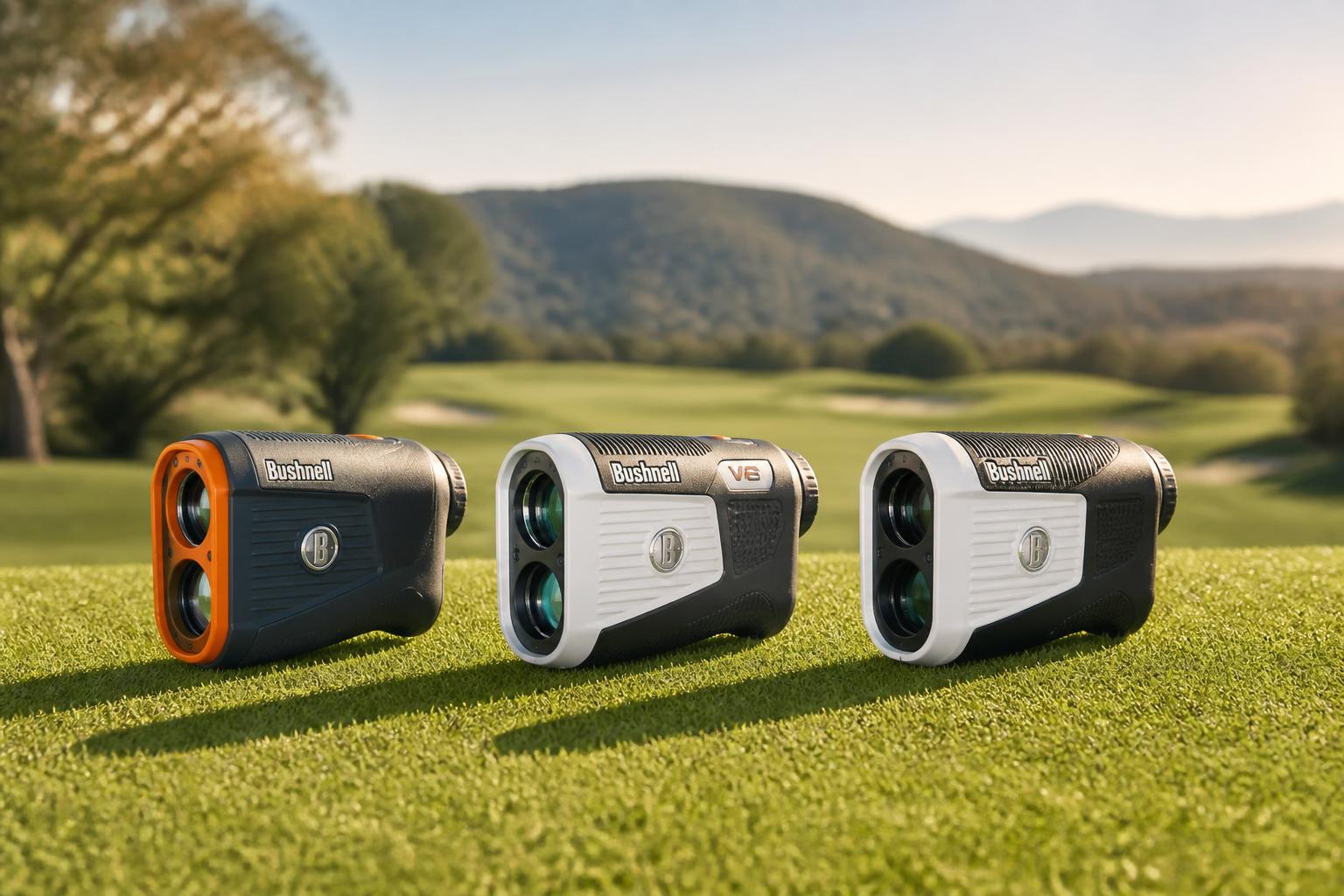
The Three Lines Compared
| Line | Primary Use | Key Feature | Best For |
|---|---|---|---|
| V Series | Golf laser rangefinder | Pinseeker with JOLT vibration, slope options | Golfers who want precise yardages to the pin |
| Phantom | Golf GPS | Full-color touchscreen, preloaded courses | Golfers who want front/middle/back numbers and hazard distances |
| Wingman | Golf speaker + GPS | Audio yardages, speaker for music/calls | Golfers who want distance calls without looking at a screen |
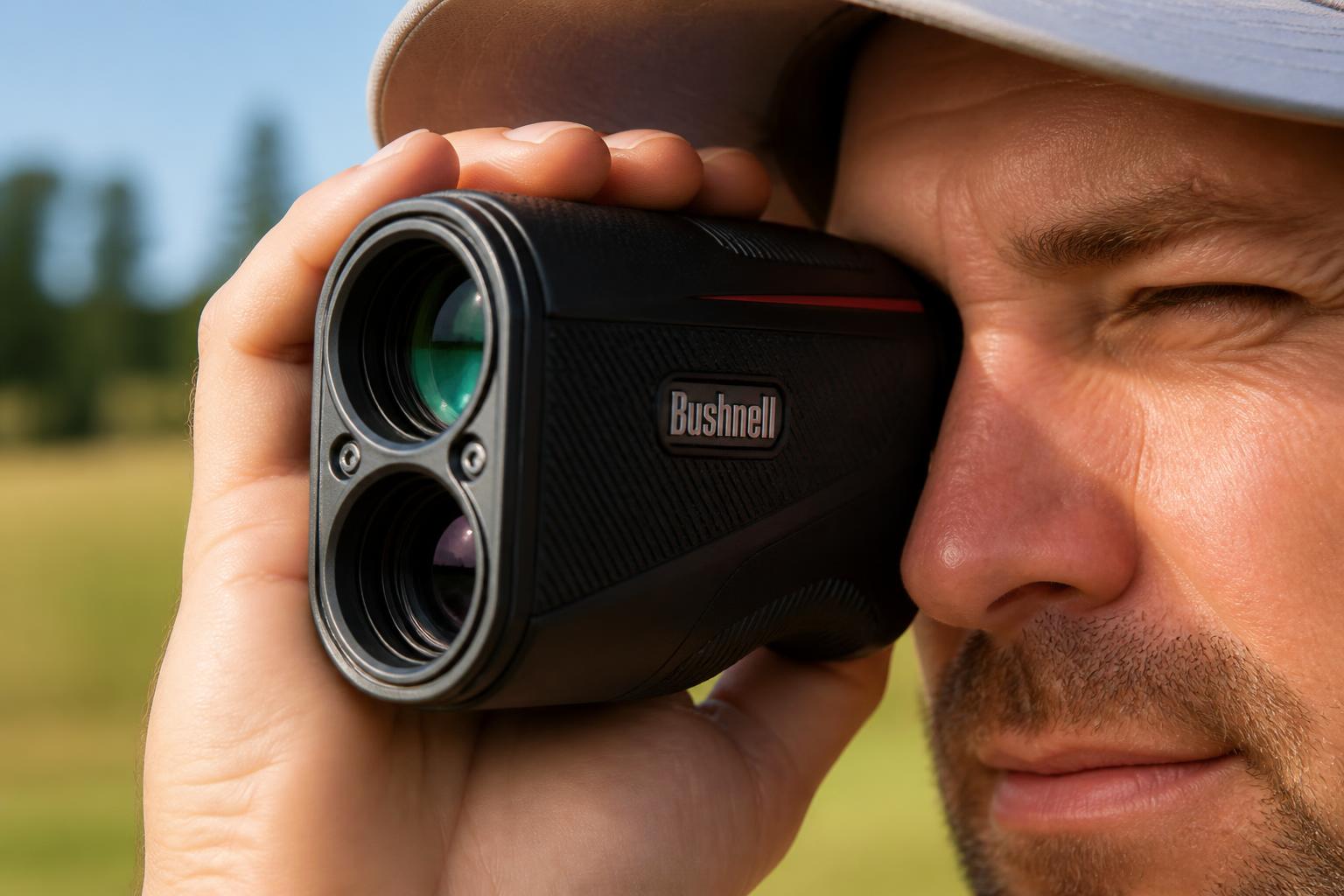
Each line solves a different problem. The V series measures exactly where the laser points. The Phantom knows where you are on the course and gives you distances to greens and hazards. The Wingman tells you the numbers out loud.
V Series: The Laser Rangefinder Line
The V series is Bushnell’s core laser rangefinder family. Current models include the Tour V5, V5 Shift, V6 Shift, and the newer Bushnell Golf Tour V7 Shift Laser Rangefinder.
What makes the V series different:
- Pinseeker with Visual JOLT — When the laser locks onto the pin, the device vibrates and a red ring flashes around the display. You get both a physical and visual confirmation, which matters when the flag is sitting in front of trees or a gallery.
- Slope vs. non-slope models — The “Shift” models include slope compensation that adjusts for elevation changes. Non-slope models (like the standard V5) are tournament-legal for most events. If you play competitive golf, check your local rules before buying a slope model.
- BITE magnetic mount — The integrated magnet attaches the device to a cart bar. It’s a small convenience, but it means you don’t have to clip the rangefinder to your bag or stuff it in a pocket between shots.
The BUSHNELL GOLF V5 Patriot Pack Golf Laser Rangefinder is the non-slope option in this line. It gives you Pinseeker, Visual JOLT, and the magnetic mount without the slope circuitry. If you don’t play in tournaments, the slope version is more useful day-to-day because it tells you “plays-like” distance, not just line-of-sight distance.
The V7 Shift adds a dual-color OLED display — green for slope-adjusted yardage, red for actual distance. That color split means you can see both numbers at once instead of toggling between modes. It also has Yardage Range Recall, which shows your last measured distance with one button press.
Who should buy the V series: Golfers who want exact pin distance, especially on approach shots into greens with trouble short or long. Lasers ignore GPS error and give you the number to the flagstick itself, not the middle of the green.
Phantom Series: The GPS Line
The Phantom series is Bushnell’s GPS approach. Instead of a laser, it uses satellite positioning to place you on a map of the course. The screen shows front, middle, and back green distances, plus yardages to hazards.
What makes the Phantom different:
- Full-color touchscreen — You get a hole map, not just numbers. This helps with course management: you can see where the bunkers are, where the water is, and where the green actually sits.
- Preloaded courses — No need to manually map anything. The device knows the course you’re on and updates automatically as you move.
- No laser needed — You don’t have to aim at anything. Just look at the screen and get your numbers.
The trade-off: GPS devices give you distances to the green and hazards, but they can’t tell you the exact distance to the flagstick. If the pin is tucked front-left and the green is 40 yards deep, GPS gives you the green depth but not the pin position. A laser does both.
Who should buy the Phantom: Golfers who want quick numbers without the aiming process, and players who value hazard distances more than exact pin yardages. It’s also easier to use in bad light or fog, where a laser might struggle to lock onto a distant flag.
Wingman Series: The Audio GPS Line
The Wingman is a Bluetooth speaker that mounts to the cart and gives you audio yardages. It pairs with the Bushnell Golf app, which uses GPS to calculate distances, then speaks them to you through the speaker.
What makes the Wingman different:
- Audio distance calls — You hear “174 to the front, 152 to the pin” without looking at a screen. This keeps your eyes on the course and your hands on the club.
- Speaker functionality — It plays music and handles phone calls. The BITE magnetic mount keeps it attached to the cart bar.
- Speaker + GPS combo — You get two functions in one device, which saves cart space and reduces the number of gadgets you need to charge.
The trade-off: The Wingman depends on the app and a phone connection. If your phone dies or the app crashes, you lose your distances. It also doesn’t give you exact pin yardages — it uses GPS data, so you’re getting green and approximate pin numbers, not laser precision.
Who should buy the Wingman: Golfers who play most rounds in a cart, want music on the course, and prefer hearing distances over reading them. It’s also a good option for golfers who wear glasses and find it awkward to look through a rangefinder eyepiece.
How to Choose: Decision Rules
Choose the V series (laser) if:
- You want exact distance to the flagstick
- You play courses with blind approach shots or tucked pins
- You’re okay with aiming and pressing a button on every shot
- You play tournament golf (get the non-slope model)
Choose the Phantom (GPS) if:
- You want front/middle/back numbers quickly
- You value hazard distances for course management
- You prefer a screen over a viewfinder
- You don’t need exact pin position
Choose the Wingman (audio GPS) if:
- You ride in a cart most of the time
- You want music or podcasts during your round
- You prefer hearing distances over reading them
- You’re comfortable relying on your phone’s battery and the app
What Your Choice Actually Means on the Course
The practical difference between these lines shows up in specific situations. On a par-3 with a shallow green and water short, a laser user knows exactly how many yards to the pin and can club accordingly. A GPS user gets the middle-of-the-green number and has to guess whether the pin is playing shorter or longer. That’s the difference between a 7-iron and an 8-iron on a hole where the green is only 20 yards deep.
Conversely, on a blind tee shot over a hill, the Phantom’s hazard distances tell you what’s carrying the crest and what’s short of it. A laser can’t help you there because you can’t see the target. The Wingman gives you both hands-free, but only if you’re comfortable trusting the app’s numbers without visual confirmation.
The mismatch to watch for: If you buy a Wingman expecting laser-level precision, you’ll be frustrated on approach shots. If you buy a V series expecting course management data, you’ll be aiming at trees and bunkers you can’t fully identify. Match the tool to the information gap you actually have on the course.
Are Bushnell Rangefinders Worth It?
Bushnell is the most recognized brand in golf rangefinders, and their devices carry a premium price. Whether they’re “worth it” depends on how often you play and how much you value precise yardages.
If you play once a month, a budget rangefinder or a GPS app on your phone might be enough. If you play weekly or more, the durability, optics, and Pinseeker technology in the V series justify the cost for most golfers. The JOLT vibration alone is worth considering — it removes the guesswork of whether you actually hit the flag or something behind it.
The V7 Shift’s dual-color OLED display is a meaningful upgrade over older models. Seeing slope-adjusted yardage in green and actual distance in red at the same time speeds up decisions, especially on holes with significant elevation change.
How to verify before you buy: Check the course list for the Phantom or Wingman to confirm your home course is preloaded. Bushnell’s course database covers most US courses, but a few smaller or newer courses occasionally miss the list. If your course isn’t there, the GPS features are useless to you, and you should lean toward the V series instead. You can check the course database on Bushnell’s website before committing.
How to Work a Bushnell Rangefinder
Basic operation is the same across the V series:
1. Power on — Press and hold the fire button on top.
2. Aim — Look through the viewfinder and place the reticle on the target (flag, tree, bunker edge).
3. Fire — Press the button. The device scans for the target.
4. Confirm — With Pinseeker, the device vibrates and shows a red ring when it locks onto the flag.
5. Read the distance — The number displays in the viewfinder. On slope models, you’ll see both actual and adjusted yardage.
Common mistake: Aiming at the flag but hitting a tree behind it. If you’re not getting a lock, aim slightly lower on the flagstick or look for a reflective surface. Flags with prisms lock easier than plain cloth flags.
Slope models: When slope mode is on, the device adjusts for elevation. Turn it off for tournament play if your event prohibits slope. Check your local rules — regulations vary; verify locally before relying on any device in competition.
If the device won’t power on or won’t lock: Check the battery first. Most Bushnell rangefinders use a CR2 battery, and a weak battery causes erratic behavior before it dies completely. If the display is dim or the laser won’t fire, replace the battery before troubleshooting anything else. If a fresh battery doesn’t fix it, the unit likely needs service.
FAQ
Are Bushnell rangefinders worth it?
For golfers who play regularly and want reliable, precise yardages, Bushnell rangefinders are generally worth the premium. The Pinseeker technology and JOLT vibration reduce the chance of misreading a target, and the devices hold up well over multiple seasons. Casual golfers may find a cheaper alternative sufficient.
What is the best range finder for the money?
The Bushnell Tour V5 Patriot Pack offers the core features most golfers need — Pinseeker, Visual JOLT, and a magnetic mount — at a lower price than the V7 Shift. If you want slope adjustment, the V5 Shift adds that capability for a modest increase. For the money, the V5 line delivers the essential Bushnell experience without the flagship price.
Which Bushnell range finder is the best?
The V7 Shift is the most advanced model in the current lineup, with the dual-color OLED display and Yardage Range Recall. If you want the latest technology and don’t mind the higher price, it’s the top choice. If you don’t need slope, the standard V5 is the best value.
How to work Bushnell range finder?
Press and hold the fire button to power on, aim the reticle at your target, and press the button again to measure. The device will vibrate and flash a red ring when it locks onto the flag. On slope models, the display shows both actual and adjusted yardage. Turn slope mode off for tournament play if required.

Michael Reeves is a PGA Professional with over 20 years of experience in competitive golf and instruction. A former Division I collegiate player at the University of Texas, he competed on the mini-tours before transitioning to full-time coaching and golf journalism. He has been a certified PGA teaching professional since 2005 and has worked with players at every level, from absolute beginners to collegiate champions.
His writing has appeared in Golf Digest, Golf Magazine, and The Left Rough. At GolfHubz, Michael leads the editorial team, overseeing fact-checking and ensuring every answer meets the same standard he demands on the lesson tee: clear, evidence-based, and immediately useful.
When he’s not writing or teaching, Michael plays to a +1.4 handicap at his home club in Austin, Texas. He has attended over 40 major championships as a journalist and fan, and has played more than 200 courses across 15 countries.
You can reach Michael at [email protected] or follow his occasional swing analysis posts on the site.