Vice Golf Balls Guide
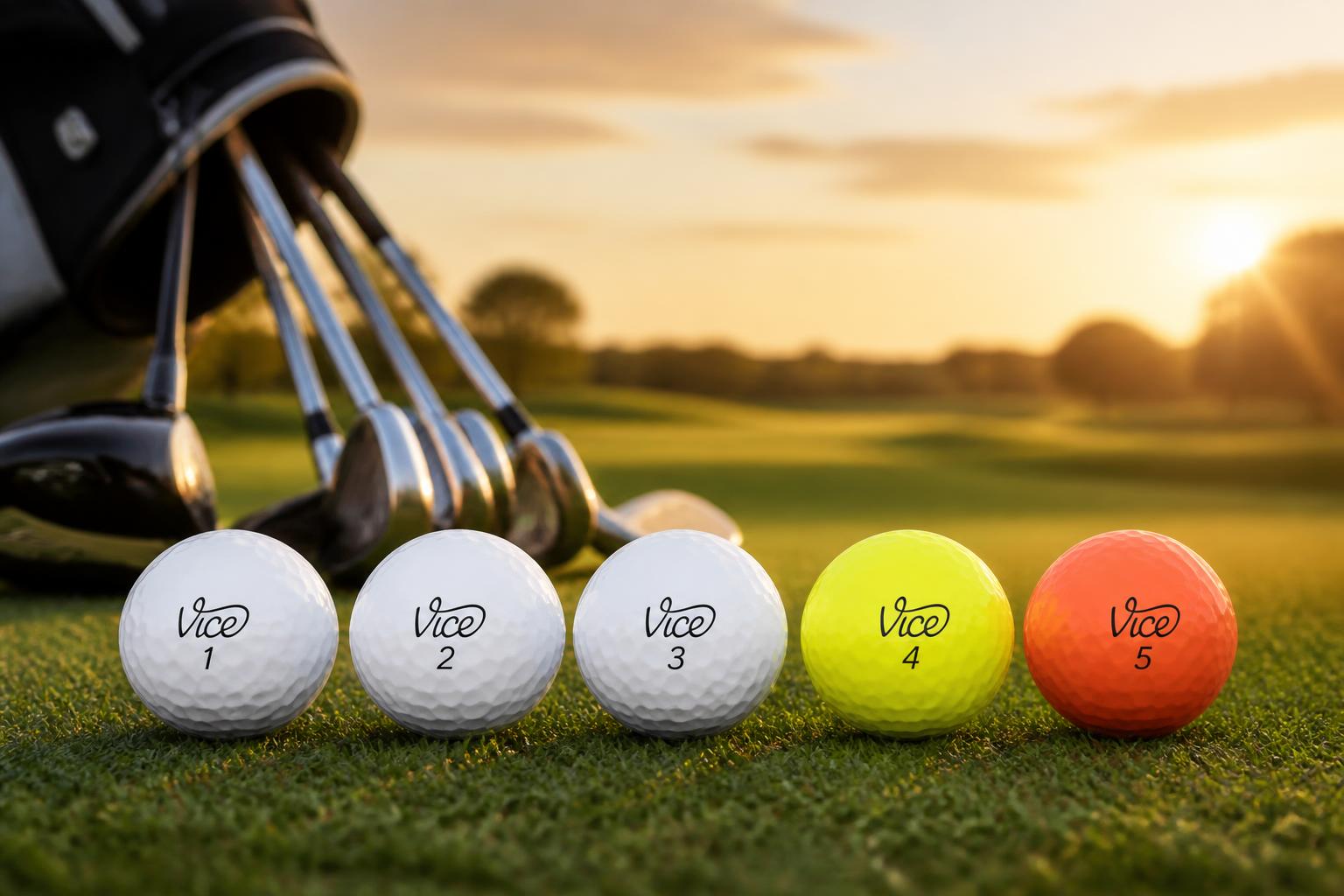
Vice Golf sells direct to consumers, which keeps prices below the big brands—but the lineup still requires some decoding. Five core models, plus seasonal limited editions, span everything from beginner-friendly distance balls to demanding four-piece tour options. Pick the wrong tier and you’ll lose distance, spin, or both. Here’s how to match the construction to your swing.
The Five Core Models, Decoded
Vice’s current lineup breaks down by construction, and construction determines performance:
| Model | Construction | Compression | Best For |
|---|---|---|---|
| Pro Air | 2-piece | Low | High handicaps, swing speeds under 90 mph |
| Tour | 3-piece | Mid | Mid handicaps, balanced play |
| Pro Soft | 3-piece | Low-mid | Mid handicaps, soft feel priority |
| Pro | 3-piece | Mid-high | Low to mid handicaps, all-around |
| Pro Plus | 4-piece | High | Low handicaps, 100+ mph swing speed |
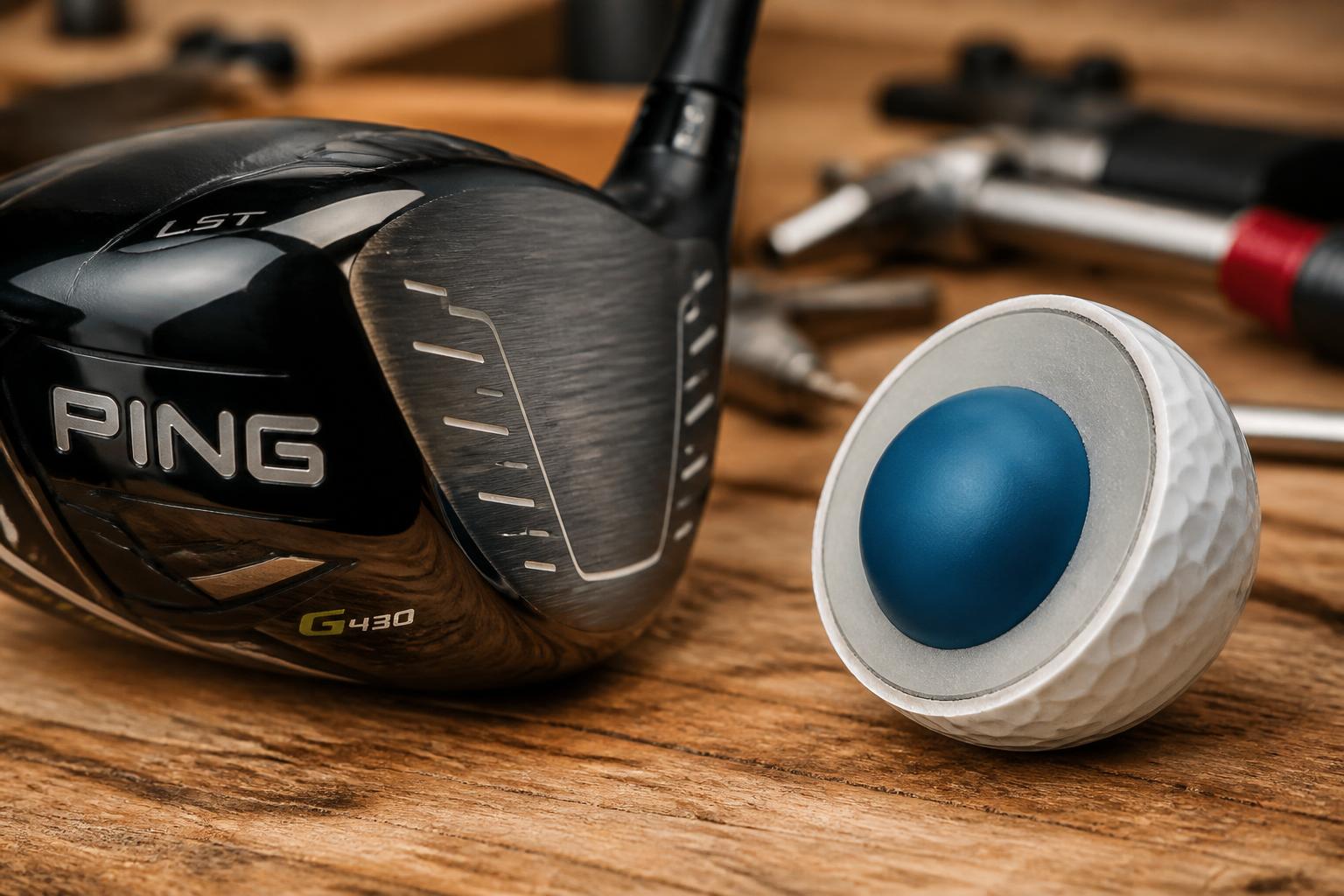
The compression rating is the single most useful spec on this chart. Lower compression balls compress more easily at slower swing speeds, which means more distance and less harsh feel. Higher compression balls require faster swings to activate their performance layers.
Pro Air: Built for Launch, Not Spin
The Pro Air is Vice’s only 2-piece ball, and it exists for one reason: get the ball in the air and keep it straight. The low-compression core produces high launch and reduced driver spin, which directly helps players who slice or who simply don’t generate enough clubhead speed to compress a firmer ball.
Who should play it: Golfers with driver swing speeds under 90 mph, high handicappers, and anyone who loses more strokes to offline drives than to missed greens. The trade-off is predictable—less spin means less stopping power on approach shots, so expect rollout on greens.
Who should skip it: Low handicappers and anyone with a 100+ mph swing speed. You’ll over-compress this ball, and the lack of greenside spin will cost you strokes on approach shots and chips.
The failure mode to watch for: If you’re a mid-handicapper with a 95 mph swing speed and you pick the Pro Air for extra distance, you’ll notice the ball feels dead off the clubface and won’t hold greens. That’s not a bad ball—it’s a mismatch.
Tour vs. Pro Soft: Two Paths for Mid Handicaps
These two 3-piece balls target similar players but solve different problems.
The Tour is the balanced option. It uses a cast urethane cover—the same material found on tour-level balls—but with a mid-compression core that keeps spin rates manageable. You get solid iron spin, decent driver distance, and a feel that’s firm but not harsh. If you’re a mid handicapper who wants one ball that does everything reasonably well, this is the default pick.
The Pro Soft is exactly what the name suggests. Lower compression, noticeably softer feel, and a spin profile tuned to reduce hooks and slices. It’s the better choice if you’re sensitive to feel or if your miss is a curve ball you can’t control.
The decision rule: If you want maximum feel and forgiveness, choose Pro Soft. If you want a firmer feel and more spin around the greens, choose Tour. Both are legitimate for mid handicaps, but they’re not interchangeable.
One concrete difference you’ll notice: On a half-wedge shot from 50 yards, the Tour will check up within a few feet of its pitch mark. The Pro Soft will release a few yards past. That’s the spin trade-off in action.
Pro and Pro Plus: The Tour-Level Tier
The Pro is Vice’s 3-piece tour ball. It uses a larger, firmer core than the Tour model, which produces higher ball speed and lower driver spin. Around the greens, the urethane cover delivers the spin you need to stop shots quickly. For single-digit handicaps who don’t need maximum spin, this is often the smarter buy than the Pro Plus—it’s more forgiving on mishits while still performing at a high level.
The Pro Plus is the 4-piece flagship. The extra layer lets Vice fine-tune the spin profile: low spin off the driver, high spin with wedges and short irons. The Reactiv core technology is designed to adapt to impact—firmer on hard swings, softer on delicate shots. This is the ball for players who shape shots and rely on spin to hold firm greens.
Who should play Pro Plus: Low handicaps with driver swing speeds above 100 mph who want maximum greenside control. If you’re not consistently breaking 85, the Pro Plus is likely more ball than you need.
Who should play Pro instead: Low handicaps who want tour-level performance with more forgiveness, or players whose swing speed sits in the 90–100 mph range.
The verification test for this tier: Hit a full wedge shot and watch the ball’s first bounce. If it takes one small hop and stops within a foot, the spin profile is working. If it releases 5+ feet past the pitch mark, you’re not generating enough spin to justify the Pro Plus over the Pro.
Limited Editions and Color Options
Vice frequently releases limited-edition colorways of its Pro and Pro Plus models. The Vice Pro Plus Drip Version Golf Balls (Drip Lime/Black) and the Vice Golf Limited Edition Pro Plus Golf Balls (Shade Yellow Orange) are examples of this practice. These use the same construction as the standard models—the color is cosmetic, not performance-altering.
The practical benefit of colored balls is visibility. Yellow and orange are easier to track in the air and find in rough or leaves. If you play in fall conditions or courses with heavy rough, the color upgrade is worth considering. Just don’t pay a premium expecting different performance.
How to Choose: A Decision Framework
Work through these four questions in order:
1. What’s your driver swing speed?
- Under 90 mph → Pro Air
- 90–100 mph → Tour or Pro Soft
- 100+ mph → Pro or Pro Plus
2. What’s your handicap?
- 15+ → Pro Air or Pro Soft
- 8–15 → Tour or Pro Soft
- Under 8 → Pro or Pro Plus
3. What matters more: distance or greenside spin?
- Distance → Pro Air or Pro
- Spin → Pro Soft or Pro Plus
4. What feel do you prefer?
- Soft → Pro Soft
- Firm → Tour or Pro
- Firm with maximum spin → Pro Plus
If you land between two models, buy a dozen of each and test them side by side. The performance differences are noticeable within a round, not after months of play.
Common Mistakes When Buying Vice Balls
Buying the Pro Plus because it’s the “best” model. The Pro Plus is designed for high swing speeds and low handicaps. If you don’t fit that profile, you’ll actually lose distance and control because you can’t compress the ball properly. The ball doesn’t make the player—the fit does.
Ignoring the compression rating. Vice publishes compression data for each model. Lower compression (Pro Air, Pro Soft) suits slower swing speeds. Higher compression (Pro, Pro Plus) suits faster swings. Match the number to your swing, not your ego.
Assuming all urethane balls perform the same. The Tour, Pro, and Pro Plus all have urethane covers, but their spin profiles differ significantly. The Tour is more forgiving, the Pro is balanced, and the Pro Plus is demanding but rewarding.
Overlooking the junior market. If you’re buying for a young golfer, the Vice Junior Golf Club Set (Ages 7-10 (49-53″)) shows the brand’s commitment to younger players. Junior balls aren’t just scaled-down versions—they use lighter cores and softer covers so kids can actually compress them.
When to Stop Guessing and Get Fitted
If you’ve gone through the decision framework and still can’t tell whether you need the Tour or the Pro, stop guessing. A professional club fitting—most golf shops offer ball fittings for $50–100, often credited toward a purchase—will measure your launch angle, spin rate, and ball speed with multiple models. That data removes the guesswork.
You should also stop self-selecting if you’re a low handicapper who has never played a 4-piece ball. The Pro Plus requires a specific swing profile to perform. If you’re not generating 100+ mph clubhead speed, the extra layer doesn’t activate, and you’re playing a harder, less forgiving ball for no benefit.
The escalation threshold: If you’ve tested two models side by side for three rounds and can’t identify a clear winner in distance, spin, or feel, that’s not a failure of the test—it means the difference between those models doesn’t matter for your game. Pick the cheaper one and move on. The marginal performance difference isn’t worth the mental energy.
Vice Balls Beyond the Core Lineup
Vice also sells a range of accessories and junior equipment. The Vice Junior Golf Club Set (Ages 7-10 (49-53″)) is designed for young players, with lighter club heads and age-appropriate lengths. For juniors, the same rule applies as for adults: match the equipment to the swing speed, not to what the pros play.
Vice’s pricing model means you’re getting tour-level urethane balls at a fraction of the cost of major brands. The trade-off is that you need to know your specs before buying, because the lineup spans from beginner-friendly to demanding tour-level equipment.
Start with your swing speed and handicap, work through the feel and spin priorities, and test between two models if you’re unsure. The right Vice ball won’t fix a broken swing, but the wrong one will make a decent swing look worse than it is.

Michael Reeves is a PGA Professional with over 20 years of experience in competitive golf and instruction. A former Division I collegiate player at the University of Texas, he competed on the mini-tours before transitioning to full-time coaching and golf journalism. He has been a certified PGA teaching professional since 2005 and has worked with players at every level, from absolute beginners to collegiate champions.
His writing has appeared in Golf Digest, Golf Magazine, and The Left Rough. At GolfHubz, Michael leads the editorial team, overseeing fact-checking and ensuring every answer meets the same standard he demands on the lesson tee: clear, evidence-based, and immediately useful.
When he’s not writing or teaching, Michael plays to a +1.4 handicap at his home club in Austin, Texas. He has attended over 40 major championships as a journalist and fan, and has played more than 200 courses across 15 countries.
You can reach Michael at [email protected] or follow his occasional swing analysis posts on the site.