KBS Shaft Specs Chart: Tour & C-Taper
If you’re comparing steel iron shafts, KBS Tour and KBS C-Taper are two of the most common options in fitting carts and aftermarket builds. Both come from the same company, but they deliver different ball flights, spin rates, and feel profiles. This guide breaks down the specs that matter and helps you decide which one fits your swing.
KBS Tour vs. C-Taper: The Core Difference
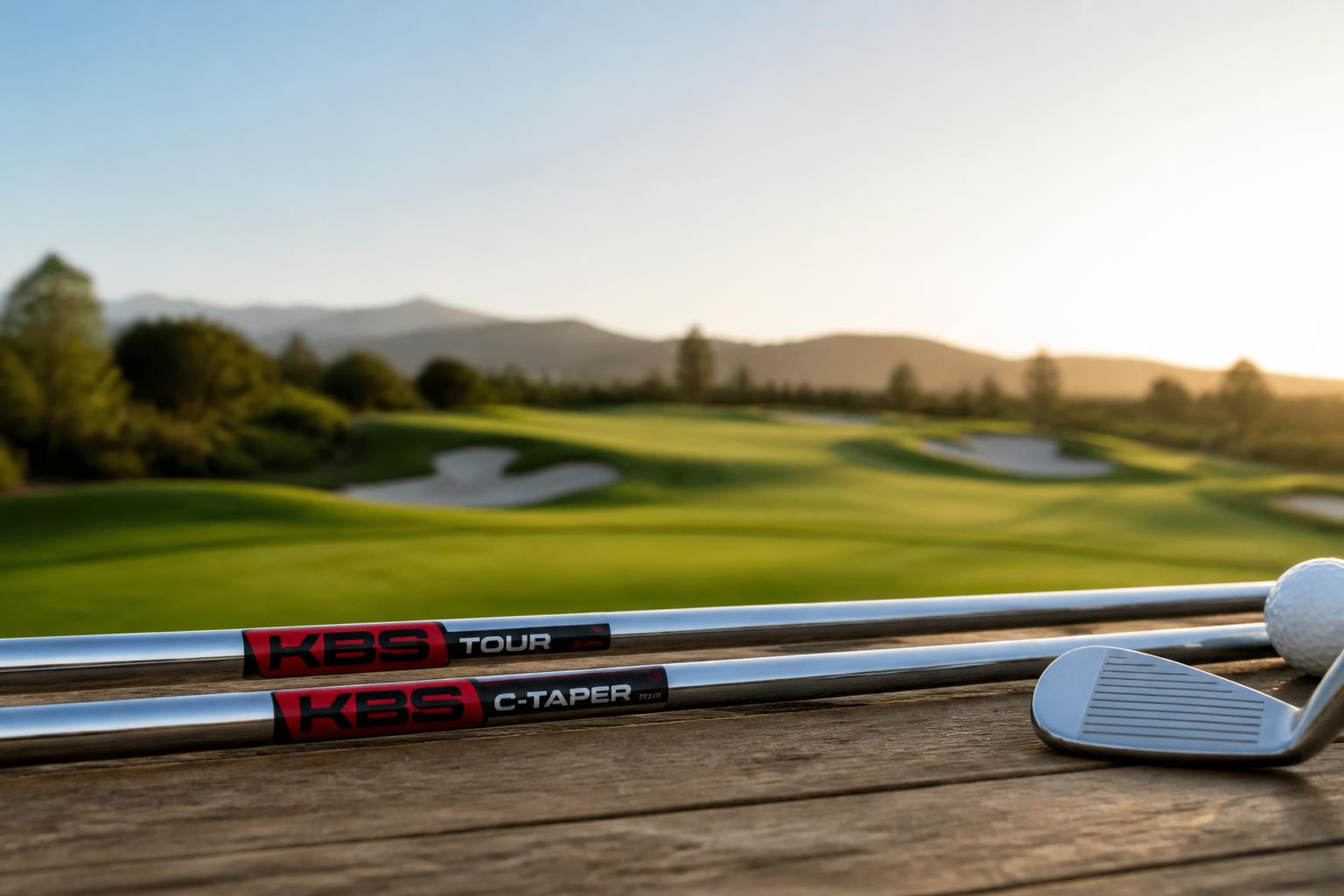
KBS Tour is the smoother, higher-launching option. It’s designed for players who want a lively feel and a mid-to-high ball flight with controlled spin. Think of it as the all-rounder that suits a wide range of swing speeds.
C-Taper is the stiffer-feeling, lower-launching option. It uses a thicker butt section and a steeper taper profile to reduce tip deflection. That translates to a lower, more penetrating ball flight with less spin. It’s built for players who already generate plenty of height and want to bring it down.
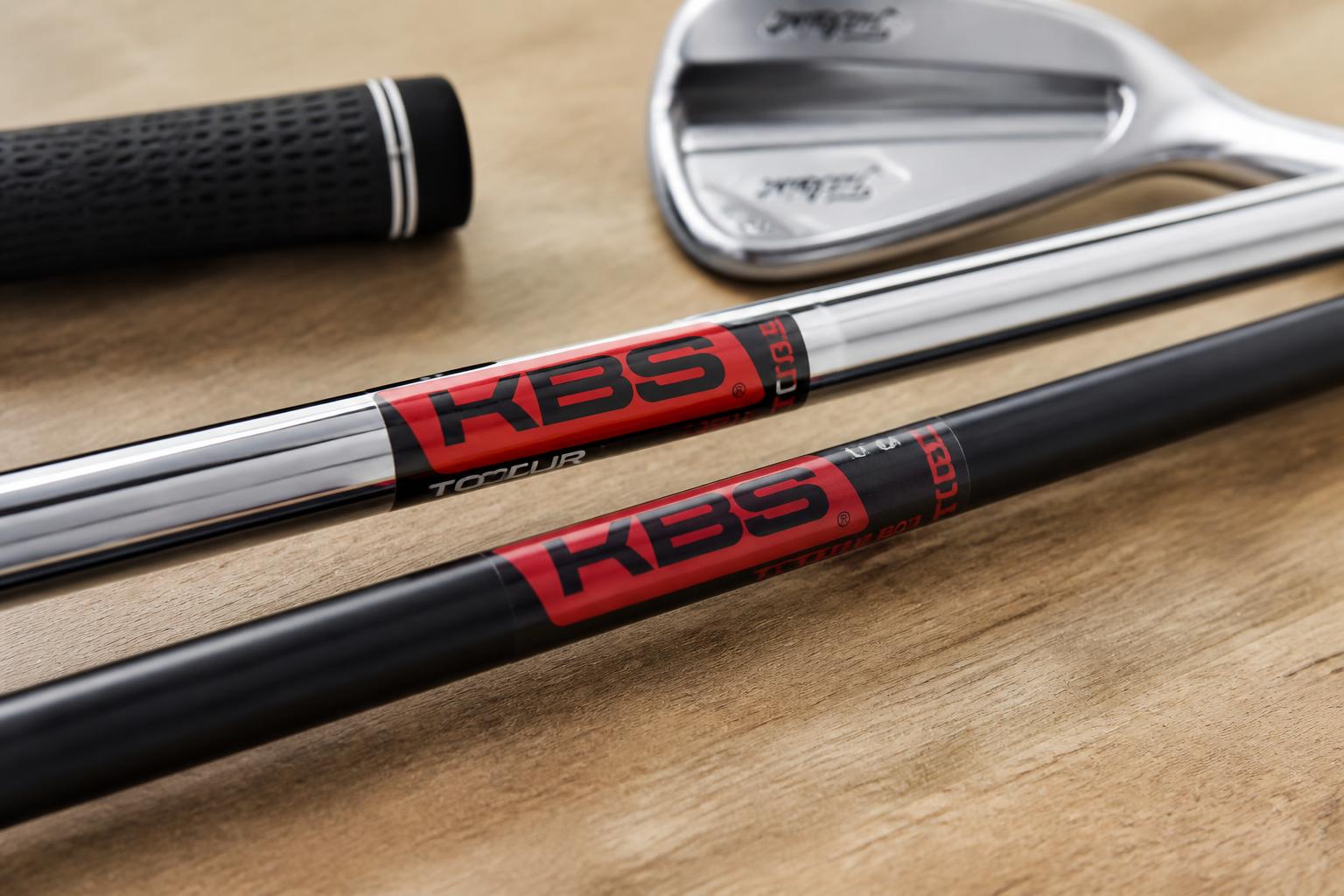
Quick decision rule: If you hit the ball too low or want more help getting it airborne, Tour is the safer pick. If you struggle with ballooning shots or want a tighter trajectory, C-Taper is worth testing.
KBS Tour Specs Chart
KBS Tour comes in a 120-gram steel version and a 130-gram option for players who want extra heft. The flex options run from Regular through X-Stiff, with Stiff being the most common fitting choice for mid-swing-speed players.
| Flex | Weight (grams) | Launch | Spin | Tip Size |
|---|---|---|---|---|
| Regular (R) | 110 | Mid-High | Mid | .355 taper / .370 parallel |
| Stiff (S) | 120 | Mid-High | Mid | .355 taper / .370 parallel |
| X-Stiff (X) | 130 | Mid | Mid-Low | .355 taper / .370 parallel |
The .355 taper tip is the standard for most forged irons and many players’ cavity backs. The .370 parallel version exists for heads that require parallel-tip shafts. Check your iron head’s spec sheet before ordering.
What the weight means for your swing: The 120-gram Stiff is the baseline for most male golfers with driver swing speeds between 90 and 100 mph. If you’re on the slower end of that range, the 110-gram Regular will help you maintain clubhead speed late in the round. If you swing harder than 105 mph with a driver, the 130-gram X-Stiff gives you the stability to keep the face square through impact.
KBS C-Taper Specs Chart
C-Taper uses a constant-taper design, which means the shaft gets progressively stiffer from butt to tip in a more aggressive way than Tour. The weights run heavier, and the flexes are designed for faster swingers.
| Flex | Weight (grams) | Launch | Spin | Tip Size |
|---|---|---|---|---|
| Regular (R) | 110 | Mid | Mid-Low | .355 taper / .370 parallel |
| Stiff (S) | 120 | Mid-Low | Low | .355 taper / .370 parallel |
| X-Stiff (X) | 130 | Low | Low | .355 taper / .370 parallel |
The C-Taper Lite version is a separate product line that runs about 10-15 grams lighter per flex. If you want the C-Taper trajectory but don’t have the swing speed for the standard 120-gram Stiff, the Lite version is the bridge option.
The kick point matters more here: C-Taper has a higher kick point than Tour. That’s the primary reason it launches lower. If you’re a sweeper who takes shallow divots, the higher kick point helps keep the ball down. If you’re a steep, aggressive driver of the iron, C-Taper can feel boardy — test before you commit to a full set.
How to Read the Flex Numbers
KBS uses a frequency-weighted flex system, which means the flex rating is based on how the shaft performs under load, not just static weight. That’s why a KBS Tour Stiff at 120 grams feels different from a competitor’s Stiff at 120 grams.
Here’s what you need to know:
- KBS Stiff plays true to flex for most golfers with a smooth tempo.
- KBS X-Stiff is noticeably firmer than many other X-Stiff shafts on the market.
- C-Taper Stiff feels closer to X-Stiff in other brands due to the constant-taper design.
If you’re between flexes, err toward the softer option with KBS. The shafts are designed to load and release, and going too stiff will kill your ball speed.
Fitting Considerations: Which Shaft for Your Game?
Choose KBS Tour if:
- You have a smooth, rhythmic tempo
- You want help launching the ball higher
- You prefer a softer, more active feel at impact
- Your iron play produces too much spin or too low a trajectory
Choose KBS C-Taper if:
- You have an aggressive, fast tempo
- You hit the ball too high and want to flatten trajectory
- You want less spin for tighter shot dispersion
- You prefer a firmer, more stable feel through impact
One common mistake: Players with slower swing speeds often pick C-Taper because they want “more control.” That’s backwards. C-Taper’s low launch and low spin will cost you carry distance if you can’t generate enough clubhead speed. If your 6-iron swing speed is under 80 mph, stick with Tour or look at the C-Taper Lite.
Real-World Performance Notes
The KBS Tour Iron Shafts – Stiff Flex – .355 Taper Tip (9I – S – 120g) is the most common single-shaft purchase for golfers testing a KBS setup. It’s a good starting point if you’re replacing one iron to test before committing to a full set.
For players who want the heavier feel, the KBS Tour Iron Shafts – X-Stiff Flex – .355 Taper Tip (7I – X – 130g) gives you the stability of the 130-gram weight class. This is a niche pick for strong swingers who want maximum head control.
If you’re considering graphite for vibration dampening or swing speed, the KBS TGI Tour 80 Graphite Iron Golf Shaft .355 Taper (Choose Length) (36.5″ 8-Iron) is the graphite counterpart to the Tour steel line. It’s lighter and designed for swing speeds around 75-80 mph with a 6-iron, which is a different profile entirely from the steel options above.
Common Fitting Mistakes to Avoid
Mistake 1: Matching flex to swing speed only. Tempo matters more. A smooth swinger at 100 mph might fit a Stiff flex, while a jerky, aggressive swinger at 90 mph might need Stiff or even X-Stiff to keep the shaft from overloading.
Mistake 2: Ignoring tip size. If your iron heads require .355 taper and you buy .370 parallel shafts, you’ll need shims — and that changes the feel and performance. Always confirm your head’s spec before ordering.
Mistake 3: Buying one shaft to test in the wrong iron. Test with your 6-iron or 7-iron, not your wedge or 4-iron. The longer irons amplify shaft differences, but the mid-irons give you a more representative feel for the full set.
Mistake 4: Assuming C-Taper is “better” because it’s firmer. Firmer is not better. It’s different. If you can’t feel the shaft load and release, you’re leaving distance on the table.
FAQ
What is the difference between KBS Tour and C-Taper?
KBS Tour launches higher with more spin and a softer feel. C-Taper launches lower with less spin and a firmer feel. They serve opposite trajectory needs.
Are KBS shafts taper tip or parallel tip?
Both. KBS offers .355 taper and .370 parallel versions for most models. Check your iron head’s spec sheet before ordering.
What swing speed suits KBS Tour Stiff?
Most golfers with driver swing speeds between 90 and 100 mph fit into KBS Tour Stiff. Tempo matters more than raw speed, so a smooth 95 mph swinger might prefer Regular.
Is C-Taper good for high handicappers?
Generally no. C-Taper’s low launch and low spin require enough clubhead speed to maintain carry distance. High handicappers typically benefit from more launch and spin, not less.
Can I mix KBS Tour and C-Taper in the same set?
You can, but it’s not recommended. The weight and flex profiles are different enough that you’ll feel a mismatch, especially in the longer irons where shaft performance is most noticeable.
KBS Tour and C-Taper are both proven shaft lines, but they solve different problems. Match the shaft to your trajectory issue, not to the brand name, and you’ll get better results than picking based on what the pros play.

Michael Reeves is a PGA Professional with over 20 years of experience in competitive golf and instruction. A former Division I collegiate player at the University of Texas, he competed on the mini-tours before transitioning to full-time coaching and golf journalism. He has been a certified PGA teaching professional since 2005 and has worked with players at every level, from absolute beginners to collegiate champions.
His writing has appeared in Golf Digest, Golf Magazine, and The Left Rough. At GolfHubz, Michael leads the editorial team, overseeing fact-checking and ensuring every answer meets the same standard he demands on the lesson tee: clear, evidence-based, and immediately useful.
When he’s not writing or teaching, Michael plays to a +1.4 handicap at his home club in Austin, Texas. He has attended over 40 major championships as a journalist and fan, and has played more than 200 courses across 15 countries.
You can reach Michael at [email protected] or follow his occasional swing analysis posts on the site.