Callaway Apex Hybrid Loft Chart
Choosing the right hybrid comes down to matching the loft to the gap you need to fill. Callaway’s Apex line has gone through several versions over the years, and each one has its own loft options. Here’s the breakdown of what’s available and how to pick the right one for your bag.
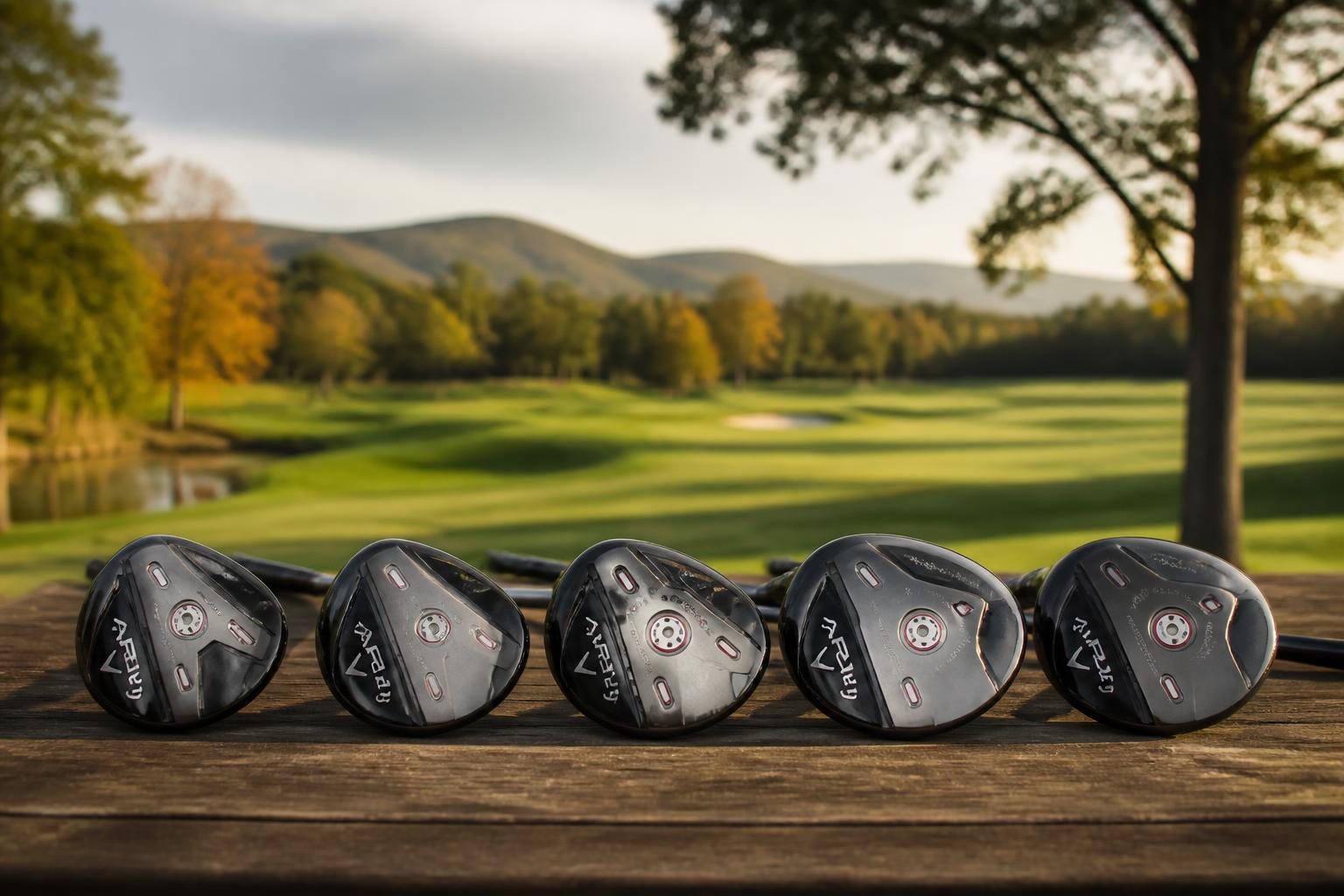
Loft Options by Apex Generation
Callaway has released multiple Apex hybrid models. The lofts have shifted slightly between generations, so check which version you’re looking at before you buy.
| Model | Lofts Available | Stock Lie Angle |
|---|---|---|
| Apex (2019) | 3H (19°), 4H (22°), 5H (25°) | 58.5°–59.5° |
| Apex Pro (2019) | 3H (19°), 4H (22°) | 58.5°–59.0° |
| Apex DCB (2021) | 3H (19°), 4H (22°), 5H (25°) | 58.5°–59.5° |
| Apex UW (2021) | 17°, 19°, 21° | 58.0°–58.5° |
| Apex (2023) | 3H (19°), 4H (22°), 5H (25°), 6H (28°) | 58.5°–60.0° |
Practical takeaway: If you’re buying used, the year matters more than the model name. A 2019 Apex 4H and a 2023 Apex 4H are both labeled 22°, but the 2023 face is hotter and launches slightly higher. Verify the exact specs on the club head or with the seller before committing, especially if you’re filling a specific distance gap.
Which Iron Each Loft Replaces
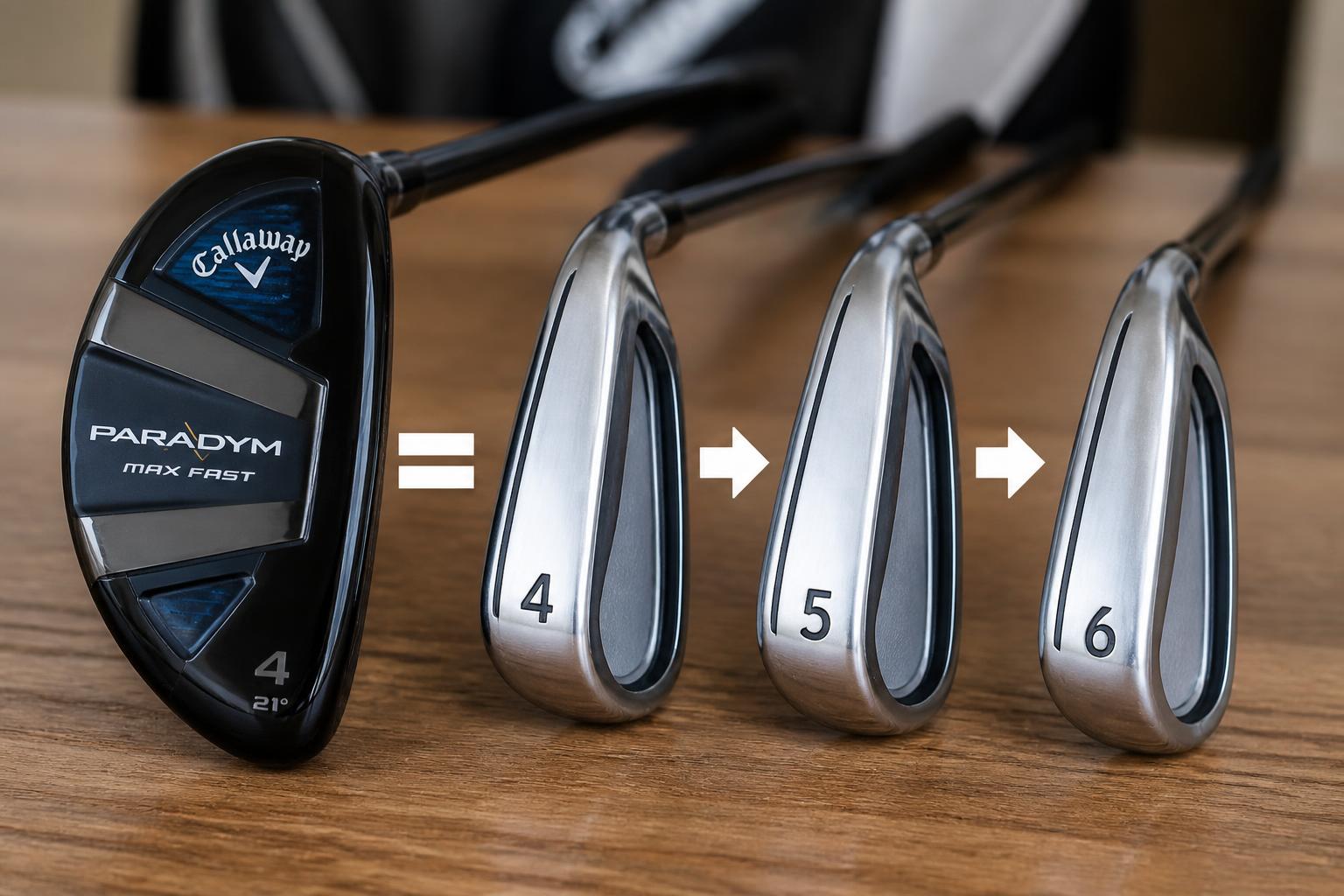
The general rule for hybrid loft-to-iron replacement:
- 19° hybrid replaces a 2-iron or 3-iron
- 22° hybrid replaces a 3-iron or 4-iron
- 25° hybrid replaces a 4-iron or 5-iron
- 28° hybrid replaces a 5-iron or 6-iron
The 2023 Apex added a 6H at 28° specifically for players who want more launch and forgiveness at the long-iron end of the bag. If you struggle with a 5-iron or 6-iron, this is the club that fills that slot.
How to verify your gap: Before buying, check the loft of the iron you’re replacing. Many modern game-improvement irons have stronger lofts—a “4-iron” might actually be 20° or 21°, not the traditional 24°. If that’s the case, a 22° hybrid will overlap with your existing iron instead of filling a gap. Look up your iron set’s specs online or check the loft stamped on the sole, then match accordingly.
Standard Apex vs. Pro vs. DCB vs. UW: Which Loft Chart Applies to You?
The Apex line splits into four distinct categories, and the right loft chart depends on which version fits your game.
Standard Apex: The mainline model. Moderate forgiveness, mid-launch, and a neutral-to-slight draw bias. The 3H through 6H range covers most amateur gaps. This is the safest choice if you’re not sure which version to get—it sits in the middle of the forgiveness/workability spectrum.
Apex Pro: Compact head, lower launch, and less offset. Only available in 3H and 4H because Callaway assumes Pro players want to blend these with their iron set rather than replace the entire long-iron section. If you’re a better ball-striker who wants workability, the Pro’s 19° and 22° options are the ones to look at.
Apex DCB (Deep Center of Gravity): The most forgiving of the three. Slightly larger head and higher launch. The loft options match the standard Apex, but the ball flight will come off higher with more spin. If you’re choosing between the standard Apex and the DCB at the same loft, the DCB is the easier one to get airborne.
Apex UW (Utility Wood): This is a different animal. It’s a hybrid-wood crossover with a shallower face and more volume. The 17°, 19°, and 21° lofts are designed for players who want hybrid forgiveness with wood-like distance off the tee. It’s not a direct iron replacement; it’s a fairway-wood alternative.
The trade-off you need to know: The Pro is the most workable but punishes mishits more than the DCB. If you’re a 12-handicap who occasionally hits thin shots, the Pro’s compact head will cost you more distance on those misses than the standard Apex or DCB would. Don’t buy the Pro just because it looks better at address—buy it only if you consistently strike the center of the face.
Distance Expectations by Loft
These are general ranges for a moderate swing speed (around 90–95 mph driver speed). Your numbers will vary based on swing speed, attack angle, and turf conditions.
| Loft | Carry Distance (men’s average) | Typical Use |
|---|---|---|
| 17° (UW) | 215–230 yards | Tee shots, long par 3s |
| 19° (3H) | 205–220 yards | Long approach, tee on tight holes |
| 21° (UW) | 200–215 yards | Versatile long-iron replacement |
| 22° (4H) | 190–205 yards | Standard 4-iron gap |
| 25° (5H) | 180–195 yards | 5-iron gap, par 3s |
| 28° (6H) | 170–185 yards | 6-iron gap, higher launch |
The key difference between a hybrid and the iron it replaces is not just distance—it’s descent angle. Hybrids come down steeper, which means they stop faster on greens. If you’re deciding between a 4-iron and a 4H at 22°, the hybrid will hold greens better from 190+ yards.
What this means for your bag: If your current hybrid gaps overlap with your irons by more than 15 yards, you’re carrying a redundant club. For example, if your 5-iron carries 185 and your 4H carries 200, that’s a usable gap. But if your 5-iron carries 195 (common with strong-lofted sets), the 22° hybrid becomes a duplicate. In that case, drop the hybrid and keep the iron, or go down to a 19° 3H to create separation.
How to Choose Your Loft: A Decision Framework
Step 1: Identify the gap. Look at the distance gap between your longest iron and your next fairway wood or hybrid. If there’s more than a 15-yard gap, you need a club to fill it.
Step 2: Match the loft to the iron you’re replacing. Don’t just buy a “3H” because that’s what the pros play. If your 4-iron goes 195 yards and your 5-wood goes 225, you need something in the 200–210 range, which points to a 19° or 22° depending on your launch.
Step 3: Consider your miss. If you hit thin shots with long irons, go with the higher-lofted hybrid (e.g., 25° instead of 22°) because the extra loft helps get the ball up even on slight mishits. If you hit the ball high already, a lower loft will help you avoid ballooning.
Step 4: Check your gaps after buying. The loft chart is a starting point, not a guarantee. Hit your new hybrid on a launch monitor and compare the numbers to the club it replaced. If the gap is too small or too large, adjust the loft sleeve (if your model has one) or consider a different loft.
Verification step: Most Apex hybrids come with an adjustable hosel sleeve. Before you commit to a loft, take the club to a demo day or a fitter with a launch monitor and test it at the standard setting first. Then adjust the sleeve one degree stronger or weaker and compare carry distance, peak height, and descent angle. If the adjusted setting produces a tighter gap, keep it. If not, set it back to standard—the sleeve adjustment is not a substitute for the right base loft.
Common Mistakes When Buying an Apex Hybrid
Buying the same loft as your iron. A 22° hybrid is not the same as a 22° iron. The hybrid is longer, hotter off the face, and launches higher. You’ll likely hit it 10–15 yards farther than the iron with the same loft. Plan for that.
Ignoring the shaft. The stock shaft in an Apex hybrid matters more than the head loft. A stiff shaft in a 19° head will play differently than a regular shaft in the same head. If you’re between flexes, err toward the softer flex for hybrids—they’re meant to be swung smoothly, not ripped at.
Assuming all Apex hybrids are the same. The 2019 Apex, the 2021 DCB, and the 2023 Apex all have different face technologies and internal weighting. The 2023 model is hotter off the face and launches slightly higher. If you’re buying used, the year matters.
What can go wrong: If you buy a used Apex hybrid without checking the loft sleeve setting, you might get a club that’s actually playing 1–2 degrees off from what’s stamped on the sole. The adjustable hosel means the previous owner could have set it to a different loft. Check the setting before you buy, or have it verified at a shop. A 19° head set to 17° will launch noticeably lower and may not fill the gap you intended.
Frequently Asked Questions
Are Callaway Apex hybrids good?
Yes, for golfers who want a blend of distance and control. The Apex line uses a forged face and internal weighting that produces high ball speed with a controlled launch. They’re not the most forgiving hybrids on the market—that title goes to models like the Big Bertha B21—but they offer better feel and workability than game-improvement hybrids. They suit mid-to-low handicappers who want hybrid help without giving up shot-shaping ability.
What handicap is Callaway Apex for?
The standard Apex hybrid targets roughly 5–15 handicaps. The Apex Pro is better suited to single-digit handicaps who want a compact head and lower launch. The Apex DCB stretches into the 10–20 handicap range because of its higher launch and added forgiveness. If you’re above a 20 handicap, the Apex line will work, but you’ll get more help from Callaway’s Big Bertha or Rogue ST Max hybrids.
What is the easiest Callaway hybrid to hit?
The Apex DCB is the easiest Apex hybrid to hit. The deep center of gravity raises launch and increases forgiveness on off-center strikes. The head is slightly larger than the standard Apex, which inspires confidence at address. If you want the easiest Callaway hybrid overall (not just in the Apex line), the Big Bertha B21 is the most forgiving, but the DCB is the most player-friendly Apex option.
What Callaway hybrid replaces a 4 iron?
The 22° Apex hybrid (4H) replaces a 4-iron. If your 4-iron is stronger-lofted (around 20°–21°), you may need the 19° 3H to match your distance gaps. The 2023 Apex also offers a 6H at 28° if you want to replace a 5-iron or 6-iron and keep your long-iron set shorter. The exact replacement depends on your iron set’s loft progression, so check your iron specs before buying.

Michael Reeves is a PGA Professional with over 20 years of experience in competitive golf and instruction. A former Division I collegiate player at the University of Texas, he competed on the mini-tours before transitioning to full-time coaching and golf journalism. He has been a certified PGA teaching professional since 2005 and has worked with players at every level, from absolute beginners to collegiate champions.
His writing has appeared in Golf Digest, Golf Magazine, and The Left Rough. At GolfHubz, Michael leads the editorial team, overseeing fact-checking and ensuring every answer meets the same standard he demands on the lesson tee: clear, evidence-based, and immediately useful.
When he’s not writing or teaching, Michael plays to a +1.4 handicap at his home club in Austin, Texas. He has attended over 40 major championships as a journalist and fan, and has played more than 200 courses across 15 countries.
You can reach Michael at [email protected] or follow his occasional swing analysis posts on the site.