Titleist GT Hybrid Loft Chart
The Titleist GT hybrid lineup replaces the previous TSR hybrids with three models — GT1, GT2, and GT3 — each designed for a different player profile. The loft chart below shows stock options, but the real story is in the SureFit hosel adjustability, which lets you fine-tune launch and face angle without changing the head.

Stock Loft Specifications
| Model | Loft | Lie Angle | Length (Graphite) | Swing Weight |
|---|---|---|---|---|
| GT1 | 18° | 58.0° | 40.75″ | D1 |
| GT1 | 21° | 58.5° | 40.25″ | D1 |
| GT1 | 24° | 59.0° | 39.75″ | D1 |
| GT2 | 18° | 58.0° | 40.75″ | D1 |
| GT2 | 21° | 58.5° | 40.25″ | D1 |
| GT2 | 24° | 59.0° | 39.75″ | D1 |
| GT3 | 17° | 57.5° | 41.00″ | D2 |
| GT3 | 19° | 58.0° | 40.50″ | D2 |
| GT3 | 21° | 58.5° | 40.00″ | D2 |
| GT3 | 23° | 59.0° | 39.50″ | D2 |
Specs are for standard graphite builds. Lengths and swing weights vary with custom shaft selections.
SureFit Hosel Adjustability
Every GT hybrid uses the Titleist SureFit hosel, which offers 16 independent loft and lie settings. The stock loft is just your starting point.
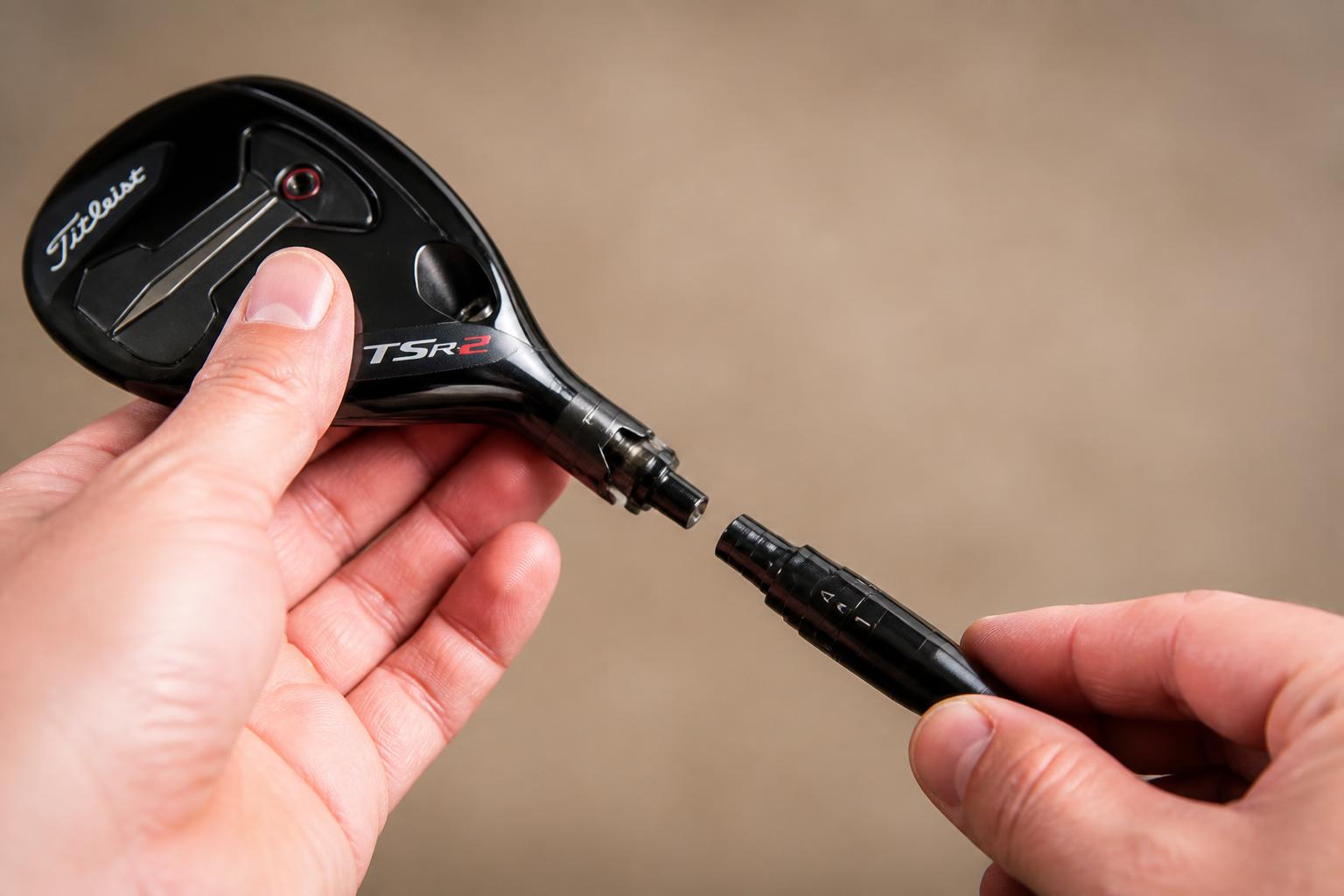
The hosel has two sleeves — an upper and lower ring — each with four positions (A, B, C, D). Here’s what you can do:
- Loft adjustment range: ±1.5° from the stamped loft
- Lie adjustment range: ±1.5° from standard
- Face angle effect: The loft setting also changes face angle slightly, which can influence shot shape
Practical example: If you buy the GT2 21° hybrid but find you’re hitting it too low, set both rings to the “B” position to add roughly 1.0° of loft. That effectively turns it into a 22° club with a slightly more closed face. If you need less loft, the “C” position reduces it.
The GT3 has an additional adjustability feature: a 10-gram and 12-gram sole weight that you can swap to alter swing weight and trajectory. The 12-gram weight in the forward position produces a lower launch; moving the 10-gram weight forward lightens the head for higher swing speed players.
Verifying Your Hosel Setting Before You Hit
Before you take a full swing with a changed setting, confirm the rings are seated correctly. Here’s the check:
1. After reattaching the head, look at the gap between the ferrule and the hosel. It should be even all the way around. If one side is tighter, the rings aren’t seated properly.
2. Hold the club vertically and gently twist the head. There should be zero play or clicking.
3. Confirm the shaft graphics align with the position you intended. Titleist marks the sleeve positions clearly — if the “B” marking isn’t visible through the window, you’ve misaligned the rings.
If the head feels loose or the gap is uneven, loosen the bolt, reseat both rings, and retighten. Hitting with a misaligned hosel can produce a lie angle that’s off by several degrees, which will show up as a persistent hook or push slice that no swing change will fix.
GT1 vs. GT2 vs. GT3: Which Loft Fits Your Game?
The three models aren’t just different lofts — they’re different club designs that happen to share the same loft options.
GT1: Maximum Launch and Forgiveness
The GT1 is a hollow-body hybrid with a shallow face and a deep center of gravity. It’s built for players who need help getting the ball airborne — typically mid-to-high handicap golfers or anyone replacing a long iron they struggle to launch.
- Best loft choices: 21° and 24° for most players; the 18° only if you have above-average clubhead speed
- Stock shaft: Lightweight graphite designed for higher launch
- Who it’s for: Golfers who hit down on hybrids or struggle with a low ball flight
Trade-off to know: The GT1’s shallow face and deep CG produce high launch, but that same design makes it harder to flight shots down in windy conditions. If you regularly play in 15+ mph winds, the GT1’s 24° model can balloon into the breeze, costing you 10–15 yards of carry. The GT2 is the safer choice for wind-prone courses.
GT2: The Balanced All-Rounder
The GT2 is the most traditional shape of the three. It has a moderate face height and a neutral center of gravity, making it work for a wide range of players. If you’re not sure which model to choose, the GT2 is the default.
- Best loft choices: 18° to replace a 4-iron or 5-wood; 21° to replace a 5-iron; 24° to replace a 6-iron
- Stock shaft: Mid-launch graphite with a slightly firmer feel than the GT1
- Who it’s for: Better players who want a hybrid that behaves like a fairway wood but is easier to hit
GT3: Workability and Lower Launch
The GT3 is a compact, player-oriented hybrid with a taller face and a forward center of gravity. It’s designed for golfers who want to shape shots and keep the ball flight down in the wind.
- Best loft choices: 17° and 19° are the most common; the 21° and 23° work for players who want a driving-iron replacement
- Stock shaft: Lower-launching graphite with a heavier feel
- Who it’s for: Low-handicap players who prefer the look of a driving iron but want hybrid forgiveness
Mismatch warning: The GT3’s forward CG lowers launch and spin, but it also reduces forgiveness on off-center hits. If your miss is toward the toe, you’ll lose more distance with the GT3 than with the GT2 — roughly 8–12 yards on a toe strike, compared to 3–5 yards with the GT2. Don’t pick the GT3 solely for its compact look if your ball-striking consistency isn’t there yet.
How to Read the Loft Chart for Bag Gapping
The GT hybrid lofts overlap with both fairway woods and irons, so you need to think about gaps, not just the number on the sole.
Common gapping scenarios:
- 5-wood + 18° hybrid: If your 5-wood is 18°, skip the 18° hybrid and go to the 21°. Otherwise you’ll have two clubs that fly nearly the same distance.
- 4-iron replacement: The 21° GT2 is the most direct swap for a standard 4-iron (21°–22°). You’ll gain about 5–8 yards of carry and a higher launch.
- 5-iron replacement: The 24° GT2 or GT1 replaces a 24°–25° 5-iron. The GT1 will launch higher; the GT2 will fly slightly lower with more roll.
Decision rule: If the hybrid loft is within 1° of your existing iron loft, the hybrid will fly about one club longer due to the longer shaft and hotter face. If the hybrid loft is 2° stronger, expect roughly two clubs of distance gain.
A gap you might not expect: The GT3 17° and GT2 18° are only 1° apart, but the GT3’s forward CG and longer shaft produce a noticeably flatter, lower-spin flight. On a launch monitor, you’ll often see 5–7 yards more roll with the GT3, even though carry distance is nearly identical. If your course has firm, fast fairways, that roll matters. If you’re hitting into soft, wet conditions, the GT2’s higher landing angle is more useful.
Adjusting Your GT Hybrid: Step-by-Step
The SureFit hosel is simple once you understand the ring positions. Here’s how to change settings:
1. Loosen the bolt on the sole of the club using the Titleist SureFit wrench (included with purchase).
2. Pull the head off the shaft. The upper and lower rings will separate.
3. Set the upper ring to your desired loft position. The “A” position is standard loft; “B” adds loft; “C” reduces loft; “D” is the neutral fallback.
4. Set the lower ring to your desired lie position. The same A–D logic applies.
5. Reattach the head, align the shaft graphics, and tighten the bolt until you feel resistance.
Common mistake: Forgetting that the upper ring controls loft and the lower ring controls lie. If you adjust the wrong ring, you’ll change the lie angle and wonder why the ball flight didn’t change.
Warning: The SureFit wrench is torque-limited. Don’t use a regular wrench or you risk stripping the bolt head.
Escalation signal: If you’ve adjusted the hosel and the ball flight still doesn’t match the loft chart, stop making further changes. The issue is likely your swing delivery, not the setting. A 21° hybrid that launches at 12° with 2,500 RPM of spin won’t be fixed by moving to the “B” setting — you’d need a different shaft profile or a higher-lofted head entirely.
Loft Chart vs. Real-World Performance
The stock loft numbers are measured at the sole, not at impact. The effective loft at impact depends on your swing — specifically your angle of attack and whether you tend to flip or hold the club through impact.
For example, a player with a steep angle of attack and a forward-shaft lean at impact will effectively deloft the GT2 21° to around 19°–20°. A sweeper who releases the club early might see the same head play closer to 22°–23°.
What this means for fitting: Don’t buy solely off the stamped loft. If you can, test the club on a launch monitor and compare your actual launch angle and spin to your target numbers. A 21° GT2 that launches at 12° with 2,500 RPM of spin is too low for most players, even if the loft chart says it’s “correct.”
Shaft compatibility check: The GT hybrids use the same SureFit hosel as previous Titleist hybrids, so shafts from TSR and TSi hybrids are compatible. Shafts from fairway woods or drivers will not fit due to different hosel designs. If you’re buying a used shaft, verify it came from a hybrid, not a wood — the tip diameter and hosel depth are different, and forcing a wood shaft into a hybrid head can crack the ferrule.
Frequently Asked Questions
What loft is the Titleist GT hybrid available in?
The GT1 and GT2 come in 18°, 21°, and 24° lofts. The GT3 comes in 17°, 19°, 21°, and 23° lofts. All models feature the SureFit hosel for ±1.5° of additional loft adjustment.
Does the Titleist GT hybrid have adjustable loft?
Yes, every GT hybrid uses the SureFit hosel, which allows you to adjust loft and lie independently across 16 settings. The stamped loft is just the starting point.
What is the difference between the GT1, GT2, and GT3 hybrid lofts?
The loft options overlap, but the club designs differ. The GT1 launches highest with maximum forgiveness, the GT2 is a neutral all-rounder, and the GT3 launches lowest with more workability. Choose your model first, then select the loft based on the club you’re replacing.
Can I use the Titleist GT hybrid to replace a 5-wood?
Yes, but you’ll likely want the 18° model to get similar distance. The hybrid will launch slightly higher and land softer than a 5-wood, which can be an advantage on approach shots into greens.
Does the GT3 hybrid have adjustable weights?
Yes, the GT3 has a 10-gram and 12-gram sole weight that can be swapped to alter swing weight and trajectory. This is separate from the SureFit hosel loft adjustment.
Will the GT hybrid fit a standard Titleist hybrid shaft?
The GT hybrids use the same SureFit hosel as previous Titleist hybrids, so shafts from TSR and TSi hybrids are compatible. Shafts from fairway woods or drivers will not fit due to different hosel designs.
The Titleist GT hybrid lineup covers a wide loft range, but the right choice depends on your swing speed, the club you’re replacing, and your typical ball flight. Start with the stock loft chart, then use the SureFit hosel to fine-tune after you’ve seen your launch numbers on a monitor.

Michael Reeves is a PGA Professional with over 20 years of experience in competitive golf and instruction. A former Division I collegiate player at the University of Texas, he competed on the mini-tours before transitioning to full-time coaching and golf journalism. He has been a certified PGA teaching professional since 2005 and has worked with players at every level, from absolute beginners to collegiate champions.
His writing has appeared in Golf Digest, Golf Magazine, and The Left Rough. At GolfHubz, Michael leads the editorial team, overseeing fact-checking and ensuring every answer meets the same standard he demands on the lesson tee: clear, evidence-based, and immediately useful.
When he’s not writing or teaching, Michael plays to a +1.4 handicap at his home club in Austin, Texas. He has attended over 40 major championships as a journalist and fan, and has played more than 200 courses across 15 countries.
You can reach Michael at [email protected] or follow his occasional swing analysis posts on the site.