Taylormade MG4 Wedge Bounce & Grind Chart
The TaylorMade MG4 wedge lineup comes in more bounce and grind combinations than most golfers expect. That variety is useful, but it also makes choosing the right one harder. This chart and breakdown walks through each option so you can match the sole to your swing type and the conditions you usually play in.

MG4 Bounce Options at a Glance
| Loft | Available Bounce | Grind Type | Best For |
|---|---|---|---|
| 46° | 10° | Standard | Full shots, square-faced approach play |
| 48° | 10° | Standard | Full shots, gap wedge duties |
| 50° | 10° | Standard | Full shots, 100–115 yard range |
| 52° | 10° | Standard | Full shots, versatile face work |
| 54° | 10° / 12° | Standard / High | 10° for full swings; 12° for softer turf |
| 56° | 8° / 10° / 12° | Low / Standard / High | 8° for firm turf; 12° for fluffy lies |
| 58° | 7° / 8° / 10° | Low / Low / Standard | 7° for tight fairways; 10° for all-around |
| 60° | 7° / 8° / 10° | Low / Low / Standard | 7° for hardpan; 10° for bunker play |
Bounce availability varies by loft, so you cannot get every bounce in every loft. That is intentional — TaylorMade pairs the options with the shots each loft is typically used for.
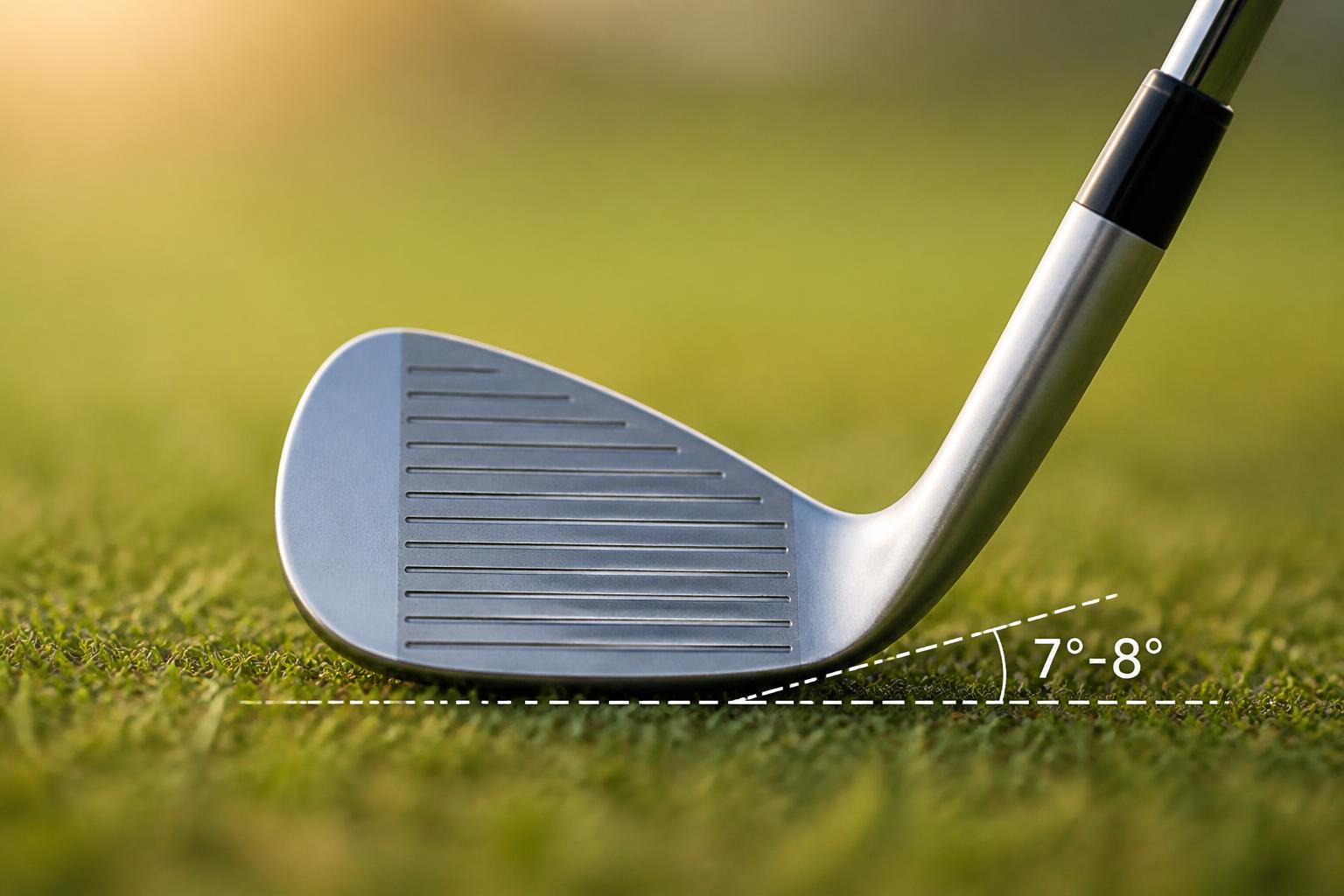
What this means for your purchase: If you are set on a 54° wedge, you only have two choices: 10° or 12°. There is no low-bounce 54° in the MG4 lineup. If you need low bounce at that loft, you will have to look at the 56° models or a different wedge line entirely. Check the chart before you commit to a loft, not after.
Low Bounce (7°–8°): For Firm Turf and Skilled Hands
The low-bounce MG4 wedges (58.07, 58.08, 60.07, 60.08, 56.08) have a narrower sole that sits closer to the ground at address. This design lets the leading edge get under the ball cleanly on tight fairway lies, hardpan, or any surface where the ball is sitting down.
Who should consider low bounce:
- Players with a shallow angle of attack who sweep the ball
- Golfers who play on firm, fast-drying courses
- Those who like to open the face for flop shots without the sole bouncing into the ball
The trade-off: On soft turf or in deep rough, a low-bounce wedge digs. If you take divots or play on courses with heavy rough, the 7° and 8° options will punish you more than help you. A steep swinger who buys a 58.07 expecting more control will instead see fat shot after fat shot — the leading edge digs in before the sole can help.
The TaylorMade Golf MG4 Chrome Wedge Low Bounce 56.08 RIGHTHANDED sits in this category. Its raw surface and toe area work with the new Spin Tread Grooves to keep spin up in wet conditions — useful when you are hitting from tight lies where moisture reduces friction.
How to verify fit before buying: Look at your divots from your last few rounds. If your wedge divots start well past the ball and get progressively deeper, you are steep — avoid low bounce. If your divots are shallow or you rarely take one with your current wedge, low bounce is a legitimate option.
Standard Bounce (10°): The All-Around Default
The 10° bounce option is the most versatile in the MG4 lineup. It is available across most lofts from 46° through 60°, which makes it the safest choice if you are unsure what you need.
What 10° bounce does well:
- Works on medium-firm to medium-soft turf
- Allows a slightly steeper attack angle without digging excessively
- Performs consistently from fairway lies, light rough, and bunkers with average sand depth
The trade-off: It does not excel in extremes. On very firm turf, it will bounce slightly more than a low-bounce wedge. In soft, wet conditions, it will not glide through like a high-bounce option. You trade peak performance in any single condition for solid performance in nearly all of them.
For most recreational golfers playing municipal or public courses with varied conditions, 10° is the practical pick. It covers the widest range of situations without requiring you to adjust your technique.
High Bounce (12°): For Soft Turf and Steep Swings
The 12° bounce option appears on the 54° and 56° lofts. The wider sole creates more surface area that resists digging, helping the club glide through soft turf, thick rough, and fluffy bunker sand.
Who should consider high bounce:
- Players with a steep angle of attack who take deep divots
- Golfers who play on courses with soft, well-watered fairways
- Those who struggle with fat shots from bunkers or rough
The trade-off: On firm turf, high bounce can cause the leading edge to sit too high, leading to thin shots that skid across the green. It also makes opening the face for flop shots more difficult because the sole wants to bounce off the ground. A player on a dry, hard-packed course who buys a 56.12 will likely see more skulled pitches than saved strokes.
The limitation to know: The 12° option is only available in the 54° and 56° lofts. If you want high bounce in a 58° or 60°, the MG4 line does not offer it. You would need to consider a different wedge model or accept the 10° standard bounce in those lofts.
Grind Differences Within the Same Bounce
Two wedges can share the same bounce number but feel completely different because of the grind. The MG4 lineup uses a few distinct sole shapes:
Standard grind: A full sole with consistent width from heel to toe. This is the most forgiving on center strikes and works well for full swings. It is the default for most lofts.
Low grind: The sole has material removed from the heel and trailing edge. This lowers the effective bounce when you open the face, making it easier to hit flop shots and delicate pitches. The 58.07 and 60.07 use this shape.
Versatile grind: Available on select lofts, this shape removes material from the heel and toe while keeping the center of the sole intact. It allows you to manipulate the face angle without the sole catching the turf.
If you primarily hit full shots and rarely open the face, the standard grind is enough. If you like to play creative shots around the green, the low or versatile grind gives you more room to work.
The mismatch to watch for: A low grind does not turn a high-bounce wedge into a low-bounce wedge. The grind only changes how the sole interacts with the turf when you manipulate the face. If you buy a 58.08 with a low grind expecting it to behave like a 58.04 on firm turf, you will be disappointed — the effective bounce drops when you open the face, but the static bounce is still 8° on square-faced shots.
How to Choose Your MG4 Wedge Setup
Step 1: Assess your typical course conditions. If your home course drains well and stays firm in summer, lean toward low bounce (7°–8°). If it stays soft or you play in wet seasons, choose 10° or 12°.
Step 2: Know your angle of attack. Take a divot on most wedge shots? Steeper players should avoid low bounce. Sweep the ball cleanly with shallow divots? Low bounce will work in your favor. If you are unsure, check the wear pattern on your current wedge sole — heavy scuffing near the leading edge means you are steep.
Step 3: Match bounce to loft purpose. Your 56° and 58° wedges are used more around the green, where turf interaction matters most. Your 50° and 52° wedges are mostly for full shots, where standard 10° bounce is rarely the wrong call.
Step 4: Test the 58.07 or 60.07 if you play firm conditions. The TaylorMade Golf MG4 Chrome Wedge Low Bounce 58.07 RIGHTHANDED and the 58.08 option are designed for tight lies and hardpan. The reshaped top line, leading edge, and hosel blend create a smoother, fuller look at address that inspires confidence on those demanding shots.
Step 5: Consider your sand game. If you play most of your golf on courses with soft, deep bunkers, the 12° bounce on a 56° wedge will help you get out consistently. If bunkers are firm and shallow, lower bounce works better.
Step 6: Verify your loft gaps before ordering. If your set already has a 50° gap wedge, adding a 52° MG4 creates a 2° gap that will produce nearly identical distances. Check your existing wedge lofts first, then pick the MG4 loft that fills an actual distance gap rather than a number you like.
Common Mistakes When Picking MG4 Bounce
Copying a tour player’s specs. Tour players have precise, repeatable swings and play on manicured courses. Their low-bounce setups will dig on your local muni.
Choosing the lowest bounce available. Low bounce is not “better” — it is more demanding. Unless you have a specific reason, standard 10° is the safer starting point.
Ignoring the grind. Two wedges with the same bounce can behave differently when you open the face. If you like to hit flop shots, pay attention to the grind, not just the bounce number.
Buying one wedge for every condition. If you can only carry one sand wedge, the 10° bounce is the most versatile. If you carry two wedges in the 56°–60° range, consider pairing a low-bounce and a high-bounce option to cover both firm and soft conditions.
Assuming all lofts come in all bounces. The 54° only comes in 10° or 12°. The 58° and 60° skip the 12° option entirely. If you have your heart set on a specific loft-bounce combo that does not exist in the MG4 line, you need to know that before you shop, not after.
Final Note on the MG4 Design
The TaylorMade Golf MG4 Chrome Wedge Low Bounce 58.08 RIGHTHANDED and its siblings share a few design features worth knowing. The raw surface and toe area work with the Spin Tread Grooves to provide better spin in wet conditions — a real advantage if you play in morning dew or light rain. The reshaped top line, leading edge, and hosel blend create a smoother, fuller appearance that makes the wedge look more forgiving at address.
None of these features change the fundamental bounce math, but they do affect how the club feels on less-than-perfect strikes. If sound and feel matter to you, the MG4’s construction delivers a more consistent response across the face compared to older models.
The right bounce for you depends on your course, your swing, and the shots you need to hit. Use the chart above as a starting point, then narrow down based on the conditions you actually play in most weeks. If you are still torn between two options, the 10° standard bounce is the safer miss — it will never be the perfect wedge for a specific condition, but it will rarely be the wrong one either.

Michael Reeves is a PGA Professional with over 20 years of experience in competitive golf and instruction. A former Division I collegiate player at the University of Texas, he competed on the mini-tours before transitioning to full-time coaching and golf journalism. He has been a certified PGA teaching professional since 2005 and has worked with players at every level, from absolute beginners to collegiate champions.
His writing has appeared in Golf Digest, Golf Magazine, and The Left Rough. At GolfHubz, Michael leads the editorial team, overseeing fact-checking and ensuring every answer meets the same standard he demands on the lesson tee: clear, evidence-based, and immediately useful.
When he’s not writing or teaching, Michael plays to a +1.4 handicap at his home club in Austin, Texas. He has attended over 40 major championships as a journalist and fan, and has played more than 200 courses across 15 countries.
You can reach Michael at [email protected] or follow his occasional swing analysis posts on the site.