True Temper Dynamic Gold Shaft Specs
If you’re shopping for steel iron shafts, you’ve likely seen the Dynamic Gold name on tour players’ clubs and in fitting carts everywhere. It’s the most played steel shaft in golf history, but the specs can get confusing because the lineup spans multiple weights, flexes, and tip sizes. Here’s what each version actually offers and how to match it to your swing.
The Core Dynamic Gold Lineup
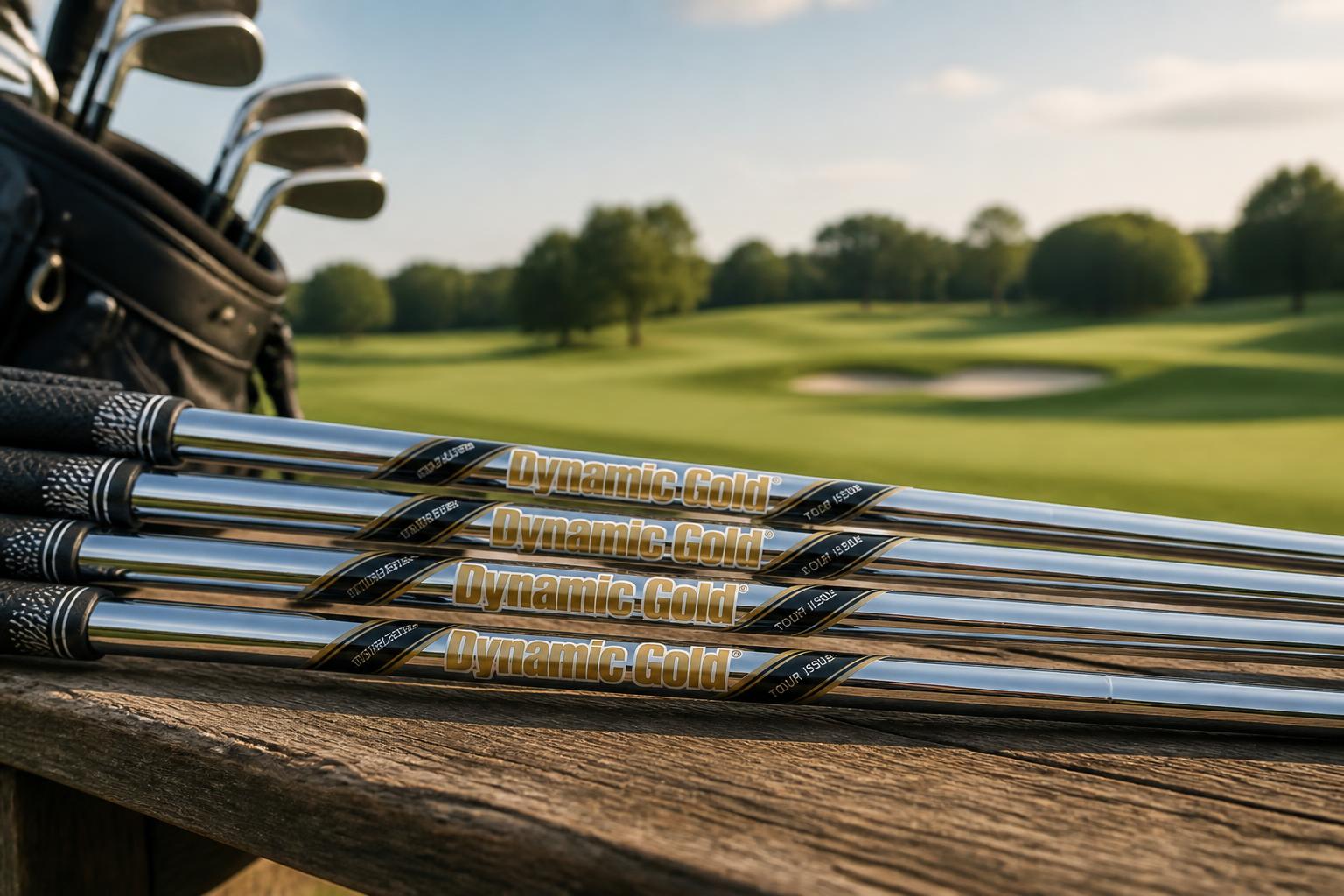
The standard Dynamic Gold family uses a descending weight system. That means your wedge shaft weighs more than your 3-iron shaft, which helps maintain consistent feel and swing weight through the set.
| Model | Weight Range (3-iron to wedge) | Launch | Spin | Tip Size |
|---|---|---|---|---|
| Dynamic Gold (Standard) | 94g to 132g | Low | Low | .355 taper or .370 parallel |
| Dynamic Gold 105 | 93g to 103g | Low/Mid | Low/Mid | .355 taper |
| Dynamic Gold 115 | 105g to 115g | Low | Low | .355 taper |
| Dynamic Gold 120 | 112g to 120g | Low/Mid | Low/Mid | .355 taper |
| Dynamic Gold Tour Issue | 94g to 132g | Low | Low | .355 taper only |
What this means for your set: If you currently play a lightweight graphite shaft around 85–95g, jumping straight to a standard Dynamic Gold S300 (110g in the 7-iron) will change your swing timing more than the flex will. The 105 or 120 versions are the bridge options—they keep the Dynamic Gold profile but don’t force you to adapt to a 20g weight increase overnight.
Flex Options and What They Mean
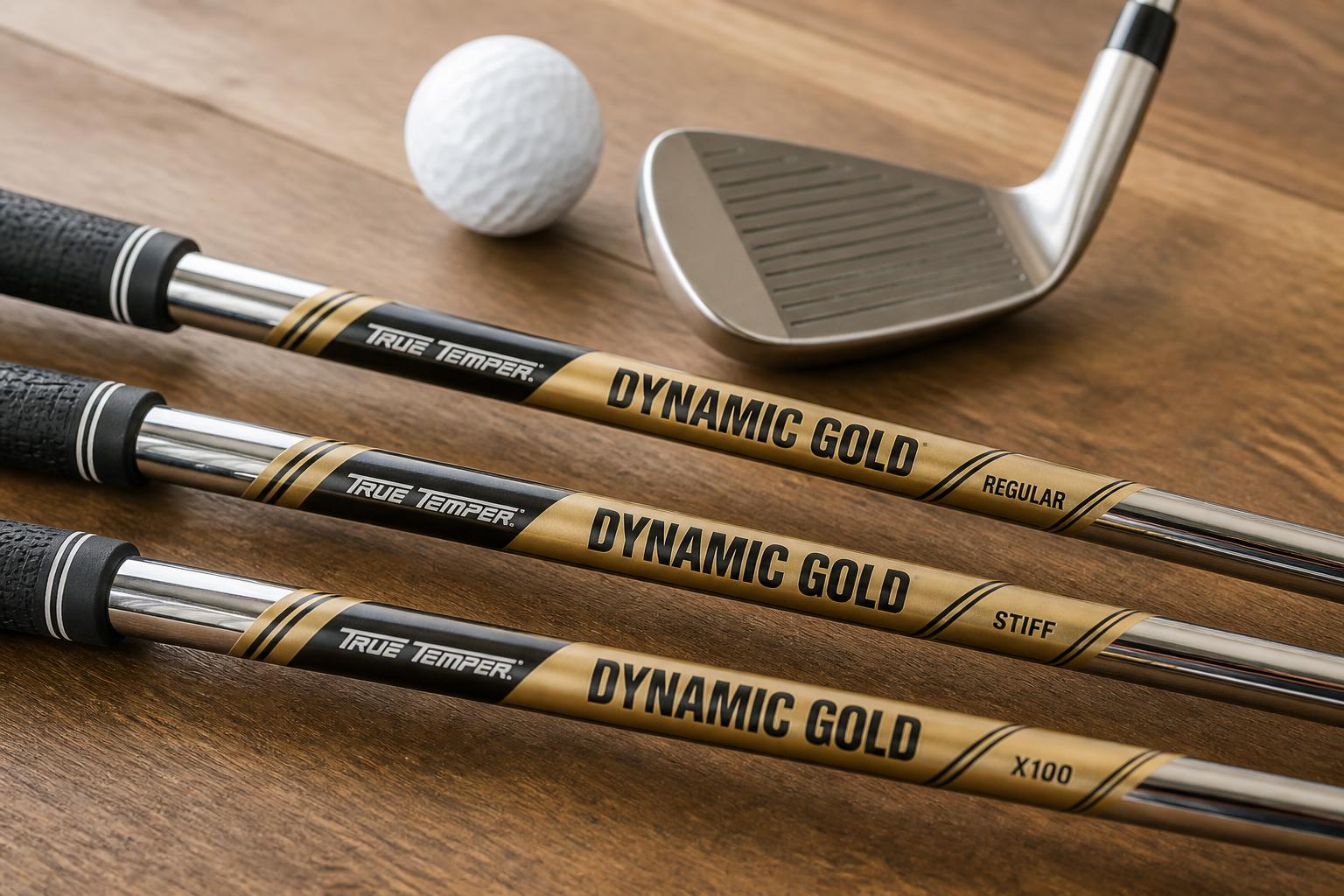
Dynamic Gold uses a letter-and-number flex system that tells you not only “stiff” or “regular.”
- R300 – Regular flex, 300 = 3.0 torque rating
- S300 – Stiff flex, the most common tour choice
- S400 – Stiff flex, slightly heavier (adds about 2g)
- X100 – Extra stiff, 100 = 100g+ weight class
- X300 – Extra stiff, heavier than X100
The number doesn’t indicate flex strength—it’s a weight sorting code. S300 and S400 have the same flex profile, but S400 shafts are sorted to be a few grams heavier. That’s why you’ll often see S400 in wedge shafts: the extra weight helps control tempo on partial shots.
The practical catch: Dynamic Gold plays stiffer than its label suggests. A golfer who fits into a regular flex in a 95g shaft often needs stiff in Dynamic Gold because the heavier weight loads differently. If you buy based on what you play in another brand, you may end up with a shaft that feels like a board.
Weight Progression by Club
The descending weight design means each shaft in your set is different. Here’s the typical progression for standard Dynamic Gold:
- 3-iron: 94g
- 5-iron: 101g
- 7-iron: 110g
- 9-iron: 121g
- PW: 127g
- LW: 132g
This isn’t a flaw—it’s intentional. The heavier short-iron shafts help you feel the clubhead more on finesse shots. If you prefer constant weight through the set, look at the Dynamic Gold 120, which holds a tighter weight range.
Where this causes problems: If you’re building a mixed set—say, a 5-iron from one manufacturer and a 9-iron from another—the weight progression can feel inconsistent if the heads have different weights. Always check the total club weight, not just the shaft weight, when mixing components.
Dynamic Gold 105: The Lighter Option
The TRUE TEMPER Dynamic Gold 105 S300 Stiff Flex Iron Shafts – .355 Taper Tip (Choose Length) (37.0″ Wedge) weighs in at 103 grams in stiff flex. That’s roughly 25 grams lighter than a standard S300.
Who it fits:
- Players with moderate swing speeds (85–95 mph with driver)
- Golfers transitioning from graphite who want steel feel without the heft
- Anyone struggling to get the ball in the air with standard Dynamic Gold
The 105 still launches low-mid with reduced spin compared to most lightweight shafts, so it’s not a high-launch rescue shaft. It just makes the Dynamic Gold profile more manageable for players who don’t generate a lot of clubhead speed.
The trade-off to know: Because the 105 is lighter, it can feel less stable on hard swings. If you have an aggressive transition and tend to overpower shafts, the 105 may twist or feel loose at impact. That’s a signal to move up to the 120 or standard DG rather than trying to adjust your swing.
Dynamic Gold 115: The Wedge Specialist
The True Temper Dynamic Gold 115 S300 Flex Wedge Shaft – .355 Taper Tip sits between the 105 and standard DG in weight at 115 grams. It’s marketed specifically for wedges, and that’s where it shines.
Why a dedicated wedge shaft matters:
- Wedge swings are shorter and more controlled than full iron swings
- The 115g weight provides stability without feeling boardy
- The low launch helps keep wedge shots from ballooning
If you’re building a wedge set and want something heavier than the 105 but lighter than a full-weight DG wedge shaft (which can hit 132g), the 115 is a practical middle ground.
The limitation: The 115 is not designed for full swings in long irons. If you’re thinking about putting it in a 4-iron to save weight, the launch will be too low and you’ll lose carry distance. Keep it in wedges and short irons where its profile actually helps.
Tour Issue vs. Standard: What’s Different?
The Tour Issue version of Dynamic Gold uses tighter weight-sorting tolerances. Standard shafts are sorted to within ±1.5g; Tour Issue shafts are sorted to within ±0.5g. The flex profile is identical.
For most golfers, this difference won’t show up on the scorecard. But if you’re a feel player who can detect a 1-gram difference between clubs, or if you’re building a set and want every shaft to match precisely, Tour Issue removes that variable.
The TRUE TEMPER New Tour Issue Dynamic Gold Onyx Wedge Shaft (Set of 3 Shafts) – Choose Flex (X-Stiff) adds a black finish on top of the tighter tolerances. The Onyx coating doesn’t change performance—it’s cosmetic. But if you’re gaming black irons or wedges, it keeps the visual flow consistent.
The honest take: Tour Issue costs more and delivers a measurable but small benefit. If you’re a 15-handicap player, standard DG will perform identically for you. If you’re a low single-digit player building a precision set, the tighter tolerances are worth the upcharge.
Tip Size: Taper vs. Parallel
Dynamic Gold shafts come in two tip configurations:
- .355 taper tip – Designed for forged irons and most wedge heads. The tip is pre-tapered, so you don’t need to trim it for length.
- .370 parallel tip – Designed for cast iron heads and some universal-fit hosels. You trim the tip to achieve your desired flex and length.
How to verify which you need: Check the hosel diameter of your iron heads. Most Titleist, Mizuno, and Callaway forged models take .355 taper. Many game-improvement irons from Ping, Cobra, and TaylorMade take .370 parallel. When in doubt, ask your clubfitter or check the manufacturer’s spec sheet.
The concrete verification step: Before ordering, measure the hosel opening with a caliper. A .355 taper shaft will rattle slightly in a .370 hosel, and a .370 parallel shaft won’t fit into a .355 hosel at all. If you’re buying heads separately, the listing should state the hosel size—if it doesn’t, contact the seller before purchasing.
Common Mistakes When Buying Dynamic Gold
1. Choosing flex based on driver swing speed alone. Dynamic Gold plays stiffer than many other steel shafts. A player who fits into a regular flex in a lighter shaft may need stiff in Dynamic Gold because the heavier weight changes how the shaft loads.
2. Ignoring weight class. Flex matters, but weight affects your tempo and timing just as much. If you’re coming from a 95g shaft, jumping to a 130g DG S300 will feel like swinging a sledgehammer for the first few rounds.
3. Mixing taper and parallel in the same set. You can’t swap a .355 taper shaft into a .370 hosel without an adapter. Verify your iron heads before ordering.
4. Assuming Tour Issue is “better.” It’s more consistent in weight sorting, but the bend profile is the same. If you’re not sensitive to small weight differences, standard DG performs identically.
5. Buying wedges and irons from different weight classes. If your irons are DG 120 and your wedges are standard DG S400, you’ll feel a noticeable jump in weight on partial shots. Keep the weight class consistent across your set, or deliberately choose a heavier wedge shaft if you want that feel.
How to Choose the Right Dynamic Gold
Use this decision flow:
1. What’s your driver swing speed? Under 85 mph: consider the 105. 85–95 mph: 105 or 120. 95+ mph: standard DG or 120.
2. What’s your ball flight? If you already hit it high, standard DG’s low launch will help. If you struggle to get it airborne, the 105 or 120 will be easier to elevate.
3. What’s your miss? Dynamic Gold’s low spin helps reduce hooks and ballooning. If you slice, the low spin might actually make the curve worse—consider a higher-spin option.
4. What’s your tempo? Smooth swingers often prefer the 120’s slightly softer feel. Aggressive transition players usually gravitate to standard DG.
The practical bottom line: If you’re replacing shafts in an existing set, match the weight class to what you currently play unless you have a specific reason to change. If you’re building a new set, start with the weight that matches your swing speed, then adjust flex based on how the shaft feels during a fitting session.
Final Thoughts
The Dynamic Gold lineup covers a wide range of swing profiles, but the differences between models are meaningful. The 105 is a genuine lightweight option, the 115 fills a wedge-specific niche, the 120 offers a middle path, and the standard DG remains the benchmark for low-launch, low-spin performance. Match the weight to your swing speed and the flex to your tempo, and you’ll land on the right version.
If you’re still unsure, get fitted with the actual shafts. The numbers on the label won’t tell you how a shaft feels in your hands—only a live fitting will do that.

Michael Reeves is a PGA Professional with over 20 years of experience in competitive golf and instruction. A former Division I collegiate player at the University of Texas, he competed on the mini-tours before transitioning to full-time coaching and golf journalism. He has been a certified PGA teaching professional since 2005 and has worked with players at every level, from absolute beginners to collegiate champions.
His writing has appeared in Golf Digest, Golf Magazine, and The Left Rough. At GolfHubz, Michael leads the editorial team, overseeing fact-checking and ensuring every answer meets the same standard he demands on the lesson tee: clear, evidence-based, and immediately useful.
When he’s not writing or teaching, Michael plays to a +1.4 handicap at his home club in Austin, Texas. He has attended over 40 major championships as a journalist and fan, and has played more than 200 courses across 15 countries.
You can reach Michael at [email protected] or follow his occasional swing analysis posts on the site.