Cleveland RTZ Wedge Bounce & Grind Chart
The Cleveland RTZ wedge line replaces the popular ZipCore series, and the most common question from golfers isn’t about loft — it’s about bounce and grind. Pick the wrong combination and you’ll either dig too deep on soft turf or skull it off tight fairway lies. This chart and guide breaks down each RTZ sole option so you can match the grind to your swing type and course conditions.
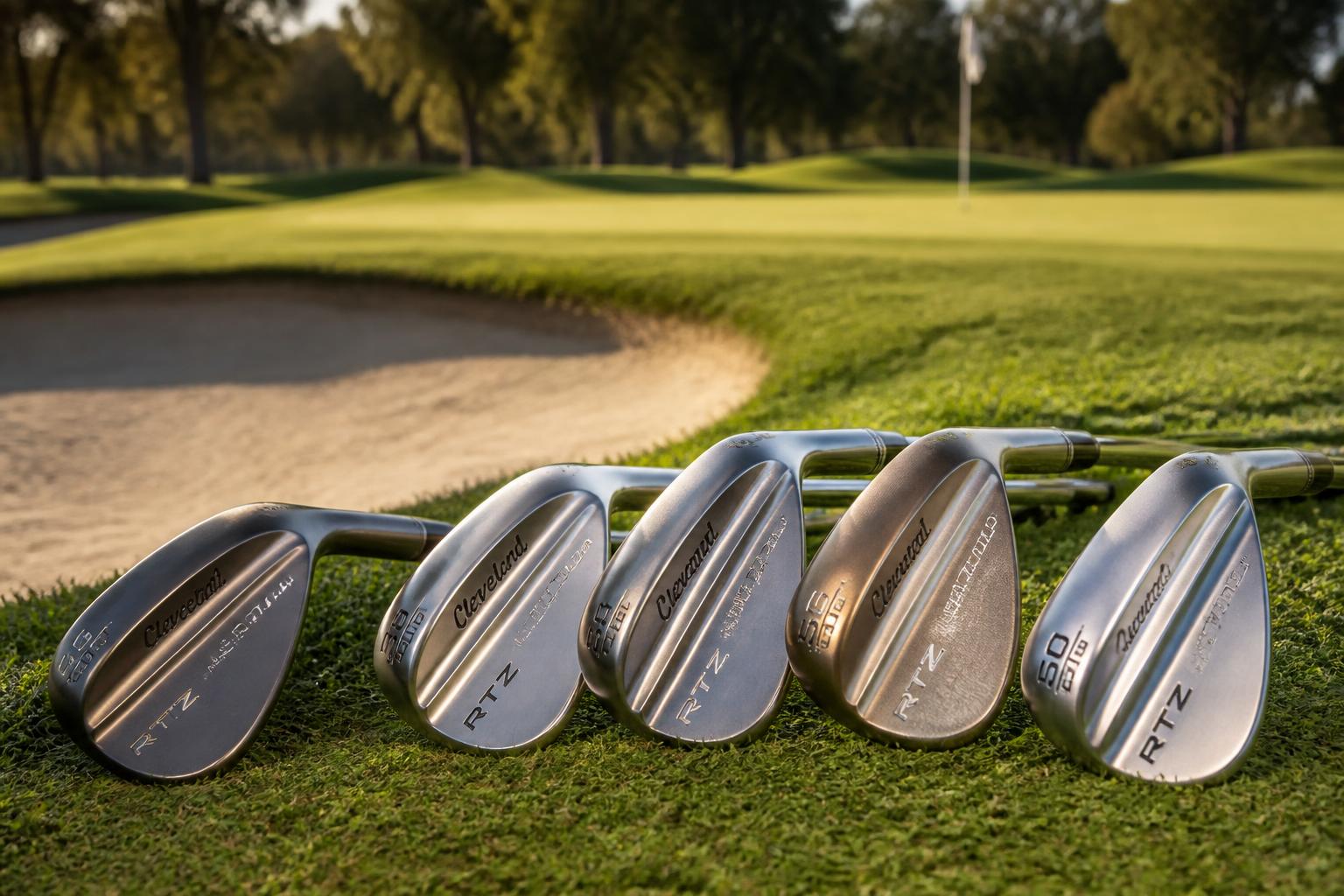
Why Bounce and Grind Matter More Than Loft
Bounce is the angle between the leading edge and the sole’s lowest point. Higher bounce (10°+) keeps the club from digging, while lower bounce (6°–8°) suits firmer turf and players with shallow swings. The grind is the shaping of the sole itself — removing material from specific areas changes how the club interacts with the turf through impact.
The RTZ line offers three primary grinds, each paired with specific bounce options. Getting this right matters more than choosing 56° vs. 60°, because the sole determines how forgiving the wedge is on less-than-perfect strikes.
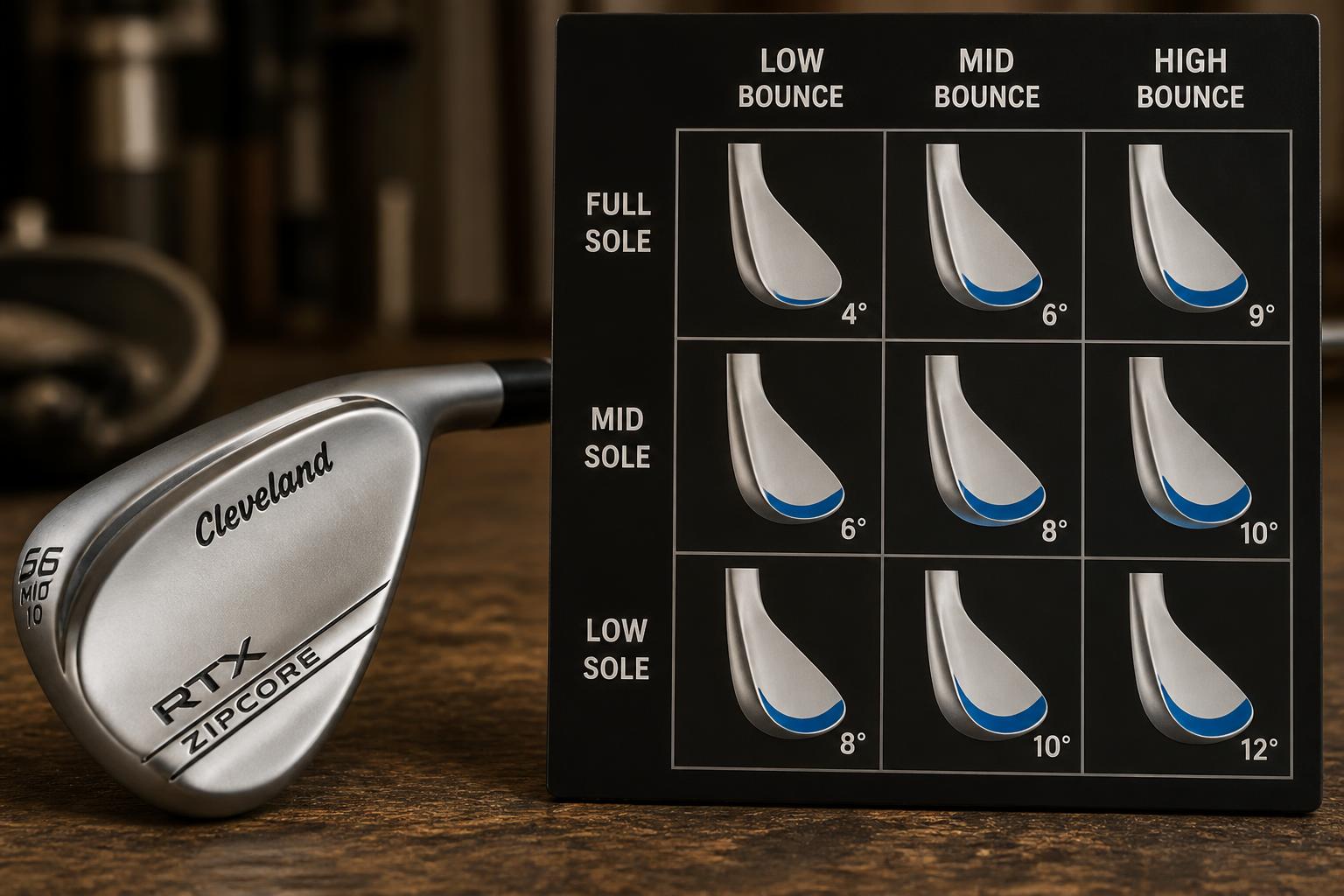
One important boundary: this chart applies to the standard RTZ retail lineup. Cleveland also releases Tour Rack versions with custom grinds and sole modifications that aren’t listed here. If you’re looking at a Tour Rack wedge or a used club with aftermarket grinding, the bounce numbers and sole shapes below won’t match exactly. Verify the specific grind stamp on the head before assuming the chart applies.
Cleveland RTZ Bounce and Grind Chart
| Grind | Available Lofts | Bounce Options | Best For | Swing Type |
|---|---|---|---|---|
| Low Grind | 46°–52° | 8° | Full shots, firm conditions | Steep, descending strikes |
| Mid Grind | 50°–60° | 10°–12° | Versatile play, most golfers | Neutral, moderate swing |
| Full Grind | 56°–60° | 10°–12° | Open-face shots, soft turf | Sweeping, shallow strikes |
Low Grind: For Steep Swingers and Firm Turf
The Low Grind features a narrower sole with less bounce (8°). This is the option for players who take a divot on nearly every wedge shot and play on firm, tight fairways. The reduced bounce lets the leading edge sit closer to the turf, which helps you make clean contact without the sole bouncing into the ball.
Who should choose it:
- Players with a steep, aggressive downswing
- Those who play on hard, dry courses
- Golfers who prefer to flight the ball low
Trade-off to know: On soft turf or fluffy rough, the Low Grind will dig. If your home course gets heavy rain or has lush fairways, this is the wrong pick. You’ll see fat shots that stop short and deep divots that feel like you’re hitting into wet soil. That’s the bounce working against you, not a swing flaw.
Mid Grind: The Versatile Default
The Mid Grind is the most popular option in the RTZ line, and for good reason. It offers 10°–12° of bounce with a sole that has material removed from the heel and toe. This allows you to open the face for flop shots while still having enough bounce to prevent digging on standard full swings.
Who should choose it:
- Most amateur golfers with a neutral swing path
- Players who want one wedge that works for full shots, pitches, and chips
- Those who play varied course conditions
Trade-off to know: The Mid Grind is a compromise. It won’t excel in any single scenario, but it won’t fail you either. If you’re unsure which grind to buy, this is the safe starting point. The practical implication: if you’re replacing an older wedge and only want one club to cover most situations, the Mid Grind in 56° is the option that gives you the most margin for error across different lies and course conditions.
Full Grind: For Open-Face Specialists
The Full Grind takes the most material off the sole, particularly from the heel and trailing edge. This allows the club to sit flatter when you open the face, making it ideal for flop shots, bunker play, and shots from soft rough. The bounce is still 10°–12°, but the grind shape lets the leading edge sit higher off the turf.
Who should choose it:
- Players who regularly open the face for creative shots
- Those who play on soft, lush courses
- Golfers with shallow, sweeping swings
Trade-off to know: On full shots from tight fairway lies, the Full Grind can feel less stable. The reduced surface area means less forgiveness on slightly fat strikes. If you mostly use your lob wedge for full swings from the fairway rather than creative short-game shots, the Full Grind’s design works against your primary use case. You’d be better served by the Mid Grind in the same loft.
Matching the Grind to Your Sand Game
Your bunker technique should influence your grind choice more than any other factor. If you use a steep, digging swing in bunkers, the Low Grind’s 8° bounce will help you get the leading edge under the ball. If you prefer to slide the club through the sand with a shallow swing, the Full Grind’s wider effective sole will prevent the club from digging too deep.
For most players, the Mid Grind in a 56° wedge is the most forgiving bunker option. It provides enough bounce to prevent digging while still allowing you to open the face when needed.
Here’s how to verify which grind fits your sand swing: next time you’re in a practice bunker, hit five shots with your current wedge and look at the divot pattern. A deep, short divot that starts after the ball means you’re steep — favor the Low Grind. A shallow, long divot that starts before the ball means you’re shallow — the Full or Mid Grind will work better. If you’re not taking a divot at all, you’re sweeping, and the Full Grind’s design matches that motion.
Cleveland RTZ Wedge Models and Z-Alloy Construction
The RTZ line uses Z-Alloy, a new steel from Cleveland Golf that’s softer and lighter than traditional wedge metals. This gives the wedges a softer feel at impact while maintaining durability. The Cleveland Golf RTZ BKS 56 Mid RH is a popular Mid Grind option in the 56° loft, and the Cleveland Golf RTZ BKS 60 Mid RH offers the same grind in a 60° for higher-lofted shots.
The RTZ wedges also feature HydraZip face technology, which uses a laser-etched pattern to improve spin in wet conditions. This is worth considering if you play early morning rounds with dew on the grass or in climates with frequent rain.
A realistic mismatch to watch for: the 56° and 60° RTZ wedges are available in both Mid and Full grinds, but the 46°–52° lofts only come in the Low Grind. If you’re planning a 50° wedge for full shots and want the versatility of a Mid Grind, that option doesn’t exist in the RTZ line. You’d need to either accept the Low Grind for that club or look at a different wedge model for the gap wedge slot. Check the loft and grind stamp on the hosel before purchasing — the grind is marked on the head, so you can confirm what you’re getting before you pay.
How to Test Before You Buy
You can’t fully understand a grind from a chart alone. Here’s a practical testing protocol:
1. Hit full shots from a tight fairway lie. Notice if the club digs or skips.
2. Open the face to 45° and hit a pitch shot. Does the leading edge sit too high or too low?
3. Hit from a bunker with a normal explosion shot. Pay attention to how the sole interacts with the sand.
4. Chip from the fringe with a putting-like stroke. The sole should glide without catching.
If you can only test one condition, make it the bunker. That’s where grind differences become most obvious.
One thing to watch during testing: a wedge that feels great on a mat at the store will behave differently on real grass. If you’re testing indoors, the turf interaction you’re evaluating won’t show up. At minimum, test the bunker shot on a real course or practice facility before committing to a grind.
Common Mistakes When Choosing a Grind
Mistake 1: Buying the same grind for all wedges. Your 50° wedge is primarily for full shots, so a Low Grind makes sense. Your 58° is for finesse shots, so a Full or Mid Grind is better. Mixing grinds across your set is normal and often ideal.
Mistake 2: Ignoring your course conditions. If you play on rock-hard municipal courses, the Full Grind’s soft-turf design will work against you. Be honest about where you actually play, not where you wish you played.
Mistake 3: Assuming more bounce is always better. High bounce prevents digging, but it also makes it harder to get the leading edge under the ball on tight lies. The 8° Low Grind exists for a reason.
Mistake 4: Choosing a grind based on a pro’s setup. Tour players have access to custom grinds and practice conditions most amateurs don’t. The wedge that works for a PGA Tour player on firm, fast tournament conditions likely won’t match your home course. Use your own divot pattern and course conditions as the reference, not what you see on TV.
Frequently Asked Questions
What is the difference between bounce and grind?
Bounce is the angle of the sole that prevents digging, while grind is the shaping of the sole that affects how the club sits when opened. A wedge can have high bounce with a grind that makes it play like less, or low bounce with a grind that adds versatility.
Should I get the same grind for my 56° and 60° wedges?
Not necessarily. Many players prefer a Mid Grind in the 56° for full shots and a Full Grind in the 60° for open-face shots around the green. Your swing and typical shots should dictate the combination.
Can I use a Low Grind wedge in soft conditions?
You can, but you’ll need to make swing adjustments. The Low Grind will dig more in soft turf, so you’ll need a more precise strike. If you play soft conditions regularly, a Mid or Full Grind is the better choice.
How do I know if I have a steep or shallow swing?
Look at your divots. A steep swing produces deep, short divots that start after the ball. A shallow swing produces thin, longer divots that start before the ball. If you rarely take a divot at all, you have a shallow swing and should favor higher bounce.
How can I confirm which grind is on a used RTZ wedge?
Check the hosel or the back of the head for the grind stamp. Cleveland marks the grind type directly on the wedge. If the stamp is worn or missing, measure the bounce with a bounce gauge at a local club fitter — that will tell you the actual sole angle regardless of what the previous owner claimed.
The right RTZ grind for you comes down to your swing type, course conditions, and the shots you need to hit most often. Start with the Mid Grind if you’re uncertain, then adjust based on how the wedge performs in your most common playing conditions.

Michael Reeves is a PGA Professional with over 20 years of experience in competitive golf and instruction. A former Division I collegiate player at the University of Texas, he competed on the mini-tours before transitioning to full-time coaching and golf journalism. He has been a certified PGA teaching professional since 2005 and has worked with players at every level, from absolute beginners to collegiate champions.
His writing has appeared in Golf Digest, Golf Magazine, and The Left Rough. At GolfHubz, Michael leads the editorial team, overseeing fact-checking and ensuring every answer meets the same standard he demands on the lesson tee: clear, evidence-based, and immediately useful.
When he’s not writing or teaching, Michael plays to a +1.4 handicap at his home club in Austin, Texas. He has attended over 40 major championships as a journalist and fan, and has played more than 200 courses across 15 countries.
You can reach Michael at [email protected] or follow his occasional swing analysis posts on the site.