How Fast Does a Golf Ball Travel?
← Golf Equipment | Golf Balls
BLOCKQUOTE_0
Quick Answer
- Ball speed is a combo of your swing, how well you hit it, and the ball’s compression.
- Pros crank it past 170 mph. Amateurs? Usually 100-150 mph.
- Dialing in your gear and swing is key to adding yards.
Who This is For
- Golfers who wanna know the science behind their slice (or their bombs).
- Anyone lookin’ to squeeze more distance out of their game.
What to Check First: Factors Affecting Golf Ball Speed
- Clubhead Speed: Grab a launch monitor. It’s the only way to get a real number on your swing. You gotta know what you’re working with.
- Ball Compression: This is huge. Check the ball’s specs. A ball that’s too hard or too soft for your swing kills speed. We’ll get into this more.
- Impact Location: Are you hitting it flush on the sweet spot? Or are you catching it off the toe or heel? That makes a massive difference. A clean strike is non-negotiable.
- Golf Ball Cover Material: The cover is what interacts with the clubface. Urethane covers give you spin and feel. Ionomer covers are tougher. Different materials work better with different swings.
- Launch Conditions: While not a pre-swing check, your angle of attack and spin rate are directly influenced by your swing and the ball. Too much spin or a bad launch angle bleeds off speed like a leaky tire.
Step-by-Step Plan: Maximizing Your Golf Ball Speed
1. Measure Your Clubhead Speed: Get on a launch monitor. Note the reading. Mistake: Swingin’ wild and inconsistent. This gives you garbage data. You need a baseline you can trust.
2. Test Different Golf Balls: Grab a few sleeves with varying compression ratings and cover materials. Observe changes in ball speed and distance. Mistake: Thinking all golf balls perform the same. They don’t, especially when it comes to compression and cover material. I usually grab a few different brands to see what feels best.
3. Analyze Your Impact Location: Use impact tape or chalk on your clubface. Look for consistent center-face contact. Mistake: Hitting off the toe or heel. This is a major speed killer, plain and simple. Aim for that sweet spot every time.
4. Evaluate Your Lie and Turf Interaction: How you approach the ball matters. A clean strike from a good lie is crucial for transferring maximum energy. Mistake: Digging too deep or hitting too thin. This messes with your impact and kills the energy transfer.
5. Consider Your Loft and Angle of Attack: The loft of your club and whether you hit up or down on the ball impacts launch conditions. Mistake: Having a dramatically steep or shallow angle of attack with the wrong ball. This can lead to ballooning shots or low, skidding drives.
6. Experiment with Launch Angle and Spin: After you’ve dialed in your swing and ball selection, pay attention to your launch monitor data. Mistake: Ignoring launch angle and spin rate. You might be leaving distance on the table with too much spin or a suboptimal launch.
7. Focus on Swing Tempo and Consistency: A smooth, repeatable swing is your best friend. Mistake: Rushing your swing or having a jerky tempo. This often leads to off-center hits and inconsistent ball speeds.
Understanding Golf Ball Speed and Performance
Golf ball speed is the ultimate metric for many golfers chasing more distance off the tee. It’s the speed at which the ball leaves the clubface after impact. But it’s not just about swinging harder. A whole host of factors come into play, and understanding them can help you add serious yards. The primary goal is to maximize the energy transfer from your club to the ball, and that’s where things like ball compression and cover material become critical.
Your clubhead speed is the engine, no doubt. But if your engine is connected to a weak transmission (the wrong golf ball), you’re not going to get all that power to the wheels. That’s why knowing your swing speed is the first step. Most amateurs swing their driver somewhere between 80 and 100 mph. Tour pros? They’re often pushing 115 mph or more. But even with a fast swing, if you’re not compressing the ball correctly, you’re leaving distance on the table.
This is where golf ball compression comes into play. Think of it like a spring. A higher compression ball is like a stiffer spring; it requires more force (higher swing speed) to compress it fully. When compressed properly, it springs back with more energy, leading to higher ball speeds. If your swing speed is too low for a high-compression ball, you won’t compress it enough, and it’ll feel hard and might even spin too much, killing distance. Conversely, a low-compression ball is like a softer spring. It compresses easily, even with a slower swing, but it doesn’t store and release as much energy, so you won’t get maximum speed from a fast swing.
The cover material is another piece of the puzzle, especially for how the ball interacts with the clubface and for spin characteristics. Urethane-covered balls are generally considered premium. They offer a softer feel and, crucially, more greenside spin. This means better control around the greens, but for some players with very high swing speeds, they might compress a urethane ball too much, leading to excessive spin and less distance off the tee. Ionomer-covered balls are typically more durable and firmer. They can sometimes provide a bit more distance for players who generate extreme clubhead speeds because they don’t compress as much. Finding the right balance between distance off the tee and spin around the greens is the golfer’s eternal quest.
Common Mistakes
- Mistake: Only caring about clubhead speed. — Why it matters: Ball speed is a symphony, not a solo. Your swing is just one instrument. You can swing as hard as you want, but if your impact is poor or your ball isn’t matched to your swing, you won’t see the results. — Fix: Look at the whole picture: impact quality, ball compression, launch conditions, and the golf ball’s cover material.
- Mistake: Using the wrong golf ball for your swing speed. — Why it matters: A ball that’s too hard or too soft won’t transfer energy effectively, robbing you of distance. It’s like trying to hammer a nail with a feather. — Fix: Match ball compression to your swing speed. Check the manufacturer’s recommendations or consult with a golf professional. I usually stick with mid-compression urethane balls, they’re pretty forgiving and give me good spin.
- Mistake: Inconsistent club-to-ball contact. — Why it matters: Off-center hits kill ball speed faster than a sudden downpour kills a picnic. Even a slight miss-hit can cost you 10-20 yards. — Fix: Practice drills focused on center-face strikes. Every shot should feel solid. Using impact tape on your clubface is a great way to visualize your contact.
- Mistake: Ignoring the golf ball’s cover material. — Why it matters: Urethane covers offer superior greenside spin and feel, but some players might get more distance with a firmer ionomer cover depending on their swing. It’s a trade-off between control and raw distance. — Fix: Experiment to see what cover material provides the best combination of spin and distance for your game. Don’t be afraid to try different models.
- Mistake: Assuming all “distance” balls are the same. — Why it matters: “Distance” can mean different things. Some are designed for low spin off the tee, while others focus on maximizing compression. They aren’t a one-size-fits-all solution. — Fix: Understand the specific design intentions of a distance ball. Some might be better for slower swingers, others for faster. Read reviews and test them yourself.
- Mistake: Not accounting for environmental factors. — Why it matters: Wind, temperature, and altitude can all affect ball flight and how far your ball travels. A ball that flies great on a calm, warm day might behave differently in other conditions. — Fix: Be aware of the conditions and adjust your expectations. Sometimes, a slightly higher spinning ball might be better in windy conditions.
FAQ
- What is the average golf ball speed for an amateur golfer?
Most amateur golfers see driver ball speeds between 100 and 150 mph. It really depends on their clubhead speed and how well they strike the ball. A consistent 130 mph ball speed is a solid benchmark for many recreational players.
- How does golf ball compression affect speed?
Compression is basically how much the ball deforms on impact. A ball with a higher compression rating needs a faster swing speed to compress properly and maximize speed. Too low a compression for your swing means you won’t get the most out of it and it might feel mushy. Too high and it can feel like hitting a rock, with less efficient energy transfer.
- Can changing my golf ball significantly increase my ball speed?
Yes, it absolutely can. If you’re using a ball with the wrong compression for your swing speed, or a cover material that doesn’t suit your game, switching to one that’s a better match can add noticeable ball speed and, therefore, distance. It’s often one of the easiest ways to gain yards.
- What’s the deal with urethane vs. ionomer covers?
Urethane covers are generally softer, offering more greenside spin and a better feel, which is great for approach shots and chipping. Ionomer covers are typically harder and more durable, and can sometimes offer a bit more distance for players with very high swing speeds who might compress a urethane ball too much. It’s a trade-off between short-game control and tee-shot distance for some.
- Does swing tempo matter for ball speed?
Tempo is part of your overall swing, and a smooth, consistent tempo generally leads to better impact and more consistent ball speed. A jerky tempo can throw off your impact point, leading to off-center hits and reduced ball speed. Think of it as the rhythm section of your swing.
- How much faster can a golf ball go with the right equipment?
For an amateur golfer, switching to a ball with the correct compression for their swing speed could realistically add 2-5 mph of ball speed. Combined with optimizing your impact and launch conditions, this can translate to 5-10 yards or more off the tee. It’s not magic, but it’s significant.
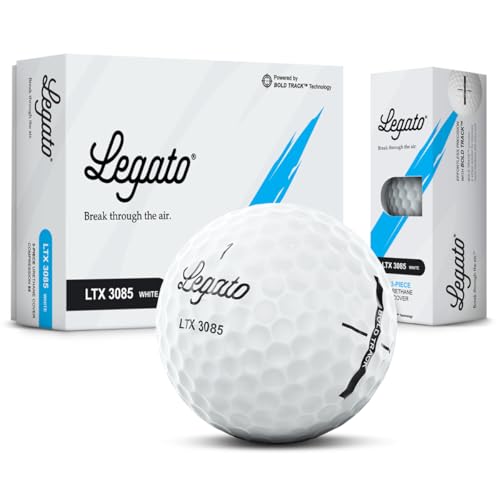 Legato Golf Balls LTX3085, 3 Piece, Urethane Cover, White, 1 Dozen | Maximized Spin Control & Soft Feel, 85 Compression for Maximized Distance, USGA ConformingCheck price on AmazonWe may earn a commission
- Is there a maximum speed a golf ball can travel?
Theoretically, there’s a limit based on the physics of impact and the ball’s construction. However, for practical purposes, the speeds we see from professional golfers (around 170-180 mph for drivers) are pushing the upper limits of what’s achievable with current club and ball technology.

Michael Reeves is a PGA Professional with over 20 years of experience in competitive golf and instruction. A former Division I collegiate player at the University of Texas, he competed on the mini-tours before transitioning to full-time coaching and golf journalism. He has been a certified PGA teaching professional since 2005 and has worked with players at every level, from absolute beginners to collegiate champions.
His writing has appeared in Golf Digest, Golf Magazine, and The Left Rough. At GolfHubz, Michael leads the editorial team, overseeing fact-checking and ensuring every answer meets the same standard he demands on the lesson tee: clear, evidence-based, and immediately useful.
When he’s not writing or teaching, Michael plays to a +1.4 handicap at his home club in Austin, Texas. He has attended over 40 major championships as a journalist and fan, and has played more than 200 courses across 15 countries.
You can reach Michael at [email protected] or follow his occasional swing analysis posts on the site.