Golf Ball Speed Explained
← Golf Equipment | Golf Balls
BLOCKQUOTE_0
Quick Answer
- Golf ball speed is a direct result of clubhead speed, how solid your impact is, and the golf ball’s design—think compression and cover material.
- Pros can launch drivers north of 170 mph. Most weekend warriors are in the 100-150 mph ballpark.
- It’s a dance between your swing and the gear you’re using.
Who This Golf Ball Speed Guide Is For
- Amateur golfers who want to understand why their drives aren’t reaching their full potential.
- Players looking to fine-tune their setup and swing for more yards off the tee and better control.
What to Check First
- Driver Specs: Your driver’s loft and shaft flex are huge. Are they a good match for your swing?
- Ball Construction: Are you playing a premium urethane ball or a more basic ionomer cover? This affects spin and feel.
- Compression Rating: What’s the compression number on your current gamer golf balls? Too high or too low can bleed off speed. I always keep a few different types in my bag to test.
- Launch Monitor Data: If you have access to one, check your clubhead speed versus your ball speed. A big discrepancy? Something’s probably off.
Understanding How Fast Golf Balls Go
Step-by-Step Plan to Maximize Golf Ball Speed
1. Measure Your Clubhead Speed: Grab a launch monitor or a radar device. What to look for: Your peak swing speed reading. Mistake to avoid: Relying on how fast you think you’re swinging; the numbers don’t lie.
2. Determine Your Ball Speed: A launch monitor is your best friend here. What to look for: The actual speed the ball is traveling right off the clubface. Mistake to avoid: Assuming ball speed will be close to clubhead speed; it’s always lower.
3. Assess Impact Location: Slap some impact tape or spray onto your driver’s face. What to look for: Consistent contact right in the sweet spot. Mistake to avoid: Hitting the ball consistently off the toe or heel; that’s a massive energy killer.
4. Test Different Golf Balls: Experiment with balls featuring varying compression ratings and cover types. For instance, try a urethane-covered ball for better greenside spin and feel. What to look for: Which ball feels the best and consistently delivers the highest ball speed for your swing. Mistake to avoid: Sticking with the same brand and model forever without seeing if something else works better.
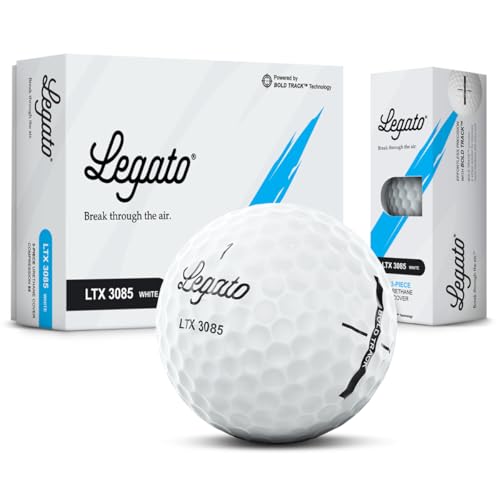 Legato Golf Balls LTX3085, 3 Piece, Urethane Cover, White, 1 Dozen | Maximized Spin Control & Soft Feel, 85 Compression for Maximized Distance, USGA ConformingCheck price on AmazonWe may earn a commission
5. Evaluate Driver Loft and Shaft: If you’re not sure, get fitted. What to look for: Specs that align with your swing speed and tempo. Mistake to avoid: Gaming a driver with a shaft that’s way too stiff or too flexible for you.
6. Refine Your Swing Mechanics: Focus on a smooth, repeatable tempo and achieving solid impact. What to look for: Consistent, centered contact with the clubface. Mistake to avoid: Trying to muscle the ball; smooth, controlled swings often generate more speed.
7. Check Your Grip Pressure: Sometimes, gripping too tightly can restrict your wrists and slow down your swing. What to look for: A relaxed grip that allows for natural wrist hinge and release. Mistake to avoid: Squeezing the club like you’re trying to crush a can; ease up.
8. Consider Ball Compression Fit: A ball that’s too firm for your swing speed will just bounce off the face, losing energy. Conversely, a ball that’s too soft will feel mushy and might not provide optimal spin. What to look for: A ball that feels responsive and gives you good feedback on impact. Mistake to avoid: Using a high-compression ball with a slower swing, or a low-compression ball with a fast swing.
Factors Affecting How Fast Golf Balls Go
Common Mistakes in Understanding Golf Ball Speed
- Mistake: Focusing solely on clubhead speed.
- Why it matters: This overlooks critical elements like the golf ball’s construction (compression, cover material) and the quality of your impact. You can swing hard, but if the ball isn’t optimized for you, you’re leaving distance on the table.
- Fix: Understand that speed is a product of your swing, your impact, and the ball itself. Consider all three for maximum results.
- Mistake: Using the wrong golf ball compression rating.
- Why it matters: A ball that’s too firm for your swing speed will feel like hitting a rock and won’t compress properly, leading to energy loss and reduced ball speed. A ball that’s too soft can feel dead and might not spin enough for control.
- Fix: Test a variety of compression ratings. Many golfers find a ball that matches their swing speed leads to a noticeable jump in both distance and feel. I learned this the hard way; I thought I just needed to swing harder, but a softer ball was the ticket.
- Mistake: Inconsistent impact location on the clubface.
- Why it matters: Hitting the ball off-center, whether on the toe or heel, dramatically reduces the energy transfer from the club to the ball. This means less ball speed, less distance, and often less accuracy.
- Fix: Dedicate practice time to hitting the ball squarely on the clubface. Drills focusing on alignment and a consistent swing path can help immensely.
- Mistake: Overlooking the golf ball cover material.
- Why it matters: While primarily affecting greenside spin and feel, the cover material can indirectly influence your confidence and control. Urethane covers, common on premium balls, offer superior spin for stopping power and a softer feel, which many golfers prefer. Ionomer covers are typically more durable and less expensive but offer less spin.
- Fix: Understand that the cover type impacts how the ball interacts with the clubface and the turf. Choose a cover that suits your game, especially if you prioritize spin around the greens.
- Mistake: Believing that more spin equals more distance off the tee.
- Why it matters: For drivers, you actually want less spin for maximum distance. Too much spin causes the ball to balloon and lose forward momentum. Greenside, however, high spin is your friend for control.
- Fix: Use a lower-spin driver ball if maximum distance off the tee is your goal. If you’re looking for wedges that bite, then a higher-spinning ball with a urethane cover is what you want.
- Mistake: Not considering the dimple pattern.
- Why it matters: Dimples are designed to reduce drag and increase lift, helping the ball fly farther and straighter. Different dimple patterns can affect aerodynamics in subtle ways.
- Fix: While you can’t change the dimples on your ball, be aware that manufacturers spend a lot of time engineering these patterns to optimize performance for different types of shots and swing speeds.
FAQ
- What is the average golf ball speed for an amateur golfer?
Most amateur golfers typically see ball speeds ranging from 100 mph to 150 mph with their driver, depending heavily on their clubhead speed and how well they strike the ball.
- How much does clubhead speed affect golf ball speed?
Clubhead speed is arguably the biggest factor. As a general rule, for every 1 mph increase in clubhead speed, you can expect a corresponding increase in ball speed, though the exact relationship varies based on the club and the ball’s characteristics.
- Does the type of golf ball cover (e.g., urethane) influence how fast it goes?
The cover type primarily impacts spin and feel. Urethane covers generally promote higher spin rates, which are great for control around the greens but might not always translate to the absolute highest ball speed off the tee compared to some ionomer covers designed for lower spin. It’s a trade-off.
- What is golf ball compression?
Golf ball compression measures how much a ball deforms under impact. Lower compression balls are softer and designed for golfers with slower swing speeds, while higher compression balls are firmer and best suited for faster swing speeds to maximize energy transfer.
- Can I increase my golf ball speed without swinging harder?
Absolutely. Optimizing your driver’s loft and shaft, choosing a golf ball with the right compression and cover for your swing, and improving your contact consistency on the clubface can all lead to increased ball speed without needing to swing out of your shoes.
- What’s the difference between a urethane and an ionomer golf ball cover?
Urethane covers are typically softer, offer more spin, and provide a premium feel, especially around the greens. They are found on higher-end balls. Ionomer covers are more durable, less expensive, and generally produce less spin, making them a good choice for distance-focused balls or for golfers who tend to hit their balls on harder surfaces.
- How does ball speed translate to distance?
Ball speed is a critical component of distance. Combined with launch angle and spin rate, ball speed determines how far the ball will travel. Higher ball speed, within an optimal launch and spin window, generally leads to greater distance.

Michael Reeves is a PGA Professional with over 20 years of experience in competitive golf and instruction. A former Division I collegiate player at the University of Texas, he competed on the mini-tours before transitioning to full-time coaching and golf journalism. He has been a certified PGA teaching professional since 2005 and has worked with players at every level, from absolute beginners to collegiate champions.
His writing has appeared in Golf Digest, Golf Magazine, and The Left Rough. At GolfHubz, Michael leads the editorial team, overseeing fact-checking and ensuring every answer meets the same standard he demands on the lesson tee: clear, evidence-based, and immediately useful.
When he’s not writing or teaching, Michael plays to a +1.4 handicap at his home club in Austin, Texas. He has attended over 40 major championships as a journalist and fan, and has played more than 200 courses across 15 countries.
You can reach Michael at [email protected] or follow his occasional swing analysis posts on the site.