Choosing the Right Golf Wedges
← Golf Equipment | Golf Clubs
BLOCKQUOTE_0
Quick Answer
- Dial in your wedge selection based on your swing, typical course conditions, and the shots you want to hit.
- Loft, bounce, and grind are the core specs you need to understand for effective wedge play.
- Always test wedges on the course or simulator to feel how they perform for your game.
Who This Is For
- Golfers serious about improving their short game and scrambling for pars.
- Anyone who wants to get past the “just hit it” mentality and understand their equipment.
What to Check First: Wedge Selection
- Your Current Wedge Lofts: Grab a tape measure or check your manual. What numbers are on your existing wedges? Are the gaps between them consistent?
- Your Swing Attack Angle: Are you a steep swinger who digs into the turf, or do you have a shallower, sweeping motion? This is huge for bounce.
- Your Typical Turf Conditions: Do you play on firm, tight fairways or softer, forgiving lies? Do you face a lot of fluffy sand or firm greenside bunkers?
- Your Preferred Shot Trajectories: Do you hit high, soft spinners, or lower, running chips? Loft is your friend here.
- Your Existing Iron Set: Make sure your new wedges complement the lofts and distances of your irons for seamless gapping.
Step-by-Step Plan: How to Choose Wedges
1. Assess Your Current Wedge Performance: Spend some time on the range or practice green with your current wedges. Hit chips, pitches, and even some half-swings. What to look for: How consistently do you make solid contact? How far do the balls fly? How does the club sole interact with the turf – does it dig or glide? Mistake to avoid: Just hitting balls without really analyzing what’s happening. You need real data, not just vibes.
2. Determine Your Ideal Wedge Gapping: This is crucial for predictable distances. Aim for consistent loft increments, typically 3-5 degrees between each wedge. What to look for: Yardage gaps that make sense for your game. If you hit your pitching wedge 130 yards, your next wedge should ideally go around 125-127 yards, and the one after that another 3-5 yards shorter. Mistake to avoid: Having wedges that are too close in loft, leading to overlapping distances and awkward yardages where you’re unsure what club to hit. This is a foundational element of how to choose wedges [1].
3. Understand Loft Options: Loft dictates trajectory and spin. Higher lofts (60+ degrees) are for high, soft-landing shots over hazards or out of bunkers. Mid-lofted wedges (54-58 degrees) are your workhorses for greenside shots and bunker play. Lower-lofted wedges (50-54 degrees) are often used for fuller swings and longer approach shots, essentially filling the gap between your pitching wedge and sand wedge. What to look for: Lofts that fill the specific distance gaps in your bag and allow you to hit the trajectory you desire for different shots. Mistake to avoid: Picking a loft based solely on a number you saw a pro use or because it sounds “cool.” Your game needs come first.
4. Evaluate Bounce Angle: Bounce is the angle created by the leading edge and the lowest point of the sole. It helps prevent the club from digging into the turf. Lower bounce (4-8 degrees) is best for firm turf, tight lies, and shallow swingers. Higher bounce (10-14 degrees) is ideal for softer conditions, fluffy sand, and steeper swingers who tend to dig. What to look for: A bounce angle that complements your swing’s attack angle and the typical conditions you play. If you frequently chunk shots, you might need more bounce. Mistake to avoid: Using a low-bounce wedge on a wet, soft fairway or a high-bounce wedge on a hard, baked-out lie, which can lead to skulling the ball.
5. Consider the Grind: The grind refers to the shape and contouring of the wedge’s sole. It affects how the club interacts with the turf and sand. Different grinds are designed for specific conditions and shot types. For instance, a full sole offers forgiveness, a C-grind allows for more versatility in opening the face, and a V-grind can help reduce digging. What to look for: A grind that suits the common lies you encounter. If you play a lot of fluffy sand, a wider sole with some relief might be good. If you play tight lies, a grind that allows the leading edge to sit closer to the ground is beneficial. Mistake to avoid: Choosing a grind without understanding its specific function. A grind that works perfectly for one player or course might be a disaster for another.
6. Test Them Out: This is non-negotiable. Head to a reputable golf shop with a simulator, or get to the driving range. Hit a variety of shots – chips, pitches, sand shots, and even some controlled full swings. What to look for: How the club feels in your hands. Does it feel balanced? How does it sound on impact? Most importantly, how does it perform on the shots you need it for? Does it glide through the turf or dig? Does it spin the ball effectively? Mistake to avoid: Buying a wedge based solely on brand name, color, or what your buddies are using. What works for them might not work for you.
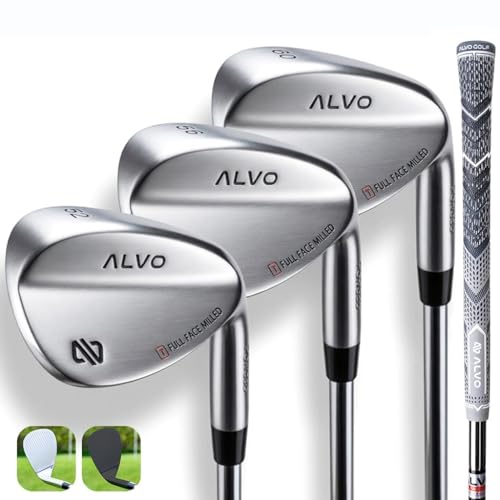 ALVO GOLF Premium Golf Wedges 52/56/60 Sets or Individual Wedges - 52 degree Gap Wedge, 56 degree Sand Wedge, 60 degree lob Wedge Golf Club - Pitching Wedge for Men Right Hand - Wedges Golf - Max spinCheck price on AmazonWe may earn a commission
How to Choose Wedges: Key Considerations
When you’re looking at new wedges, it’s easy to get lost in the numbers. But really, it boils down to a few key areas that dictate performance. Understanding these will help you nail down how to choose wedges that actually improve your game.
First, let’s talk about Loft. This is probably the most straightforward spec. It’s the angle of the clubface relative to the shaft. Higher lofts (like 60 degrees and up) send the ball higher and make it stop quicker. Lower lofts (around 50 degrees) are for longer, more controlled shots that fly lower. You need to figure out what loft fills the gap between your longest iron (usually your pitching wedge) and your shortest fairway wood or hybrid. For example, if your pitching wedge is 45 degrees and you want a 50-yard difference, you’ll need something around 50 degrees. If you want a 130-yard club, you’ll likely be looking at a 50-54 degree wedge. Don’t just pick a number; pick a number that gives you a distinct yardage difference from your other clubs.
Next up is Bounce. This is the angle between the leading edge of the club and the lowest point of the sole. It’s designed to prevent the club from digging too deep into the turf. If you have a steep swing, you tend to hit down hard, and more bounce will help the club skip through the turf instead of burying itself. This is crucial for avoiding those chunky shots. If you have a shallow swing, you don’t dig as much, so less bounce is usually better, allowing the clubface to sit closer to the ground for cleaner contact. For most golfers playing a variety of conditions, a medium bounce (around 8-10 degrees) is a good all-around choice.
Finally, we have the Grind. This is the shape of the sole. It’s where wedge manufacturers get creative and offer a lot of options. Think of it as the sole’s personality. A full sole is wide and forgiving, great for beginners or those who play softer conditions. A C-grind has material removed from the heel and toe, allowing for more shot-making versatility and better performance from tight lies or when you want to open the clubface. A V-grind often has a sharper leading edge and some sole relief, which can help with digging. The grind is really about how the club interacts with the ground through the swing, and it’s often tailored to specific turf conditions and player styles. Picking the right grind can be the difference between a perfect chip and a chunked miss.
Common Mistakes
- Buying Wedges Solely on Aesthetics — Why it matters: A shiny, cool-looking wedge won’t help your score if it doesn’t perform for your swing and the conditions you play. Looks are nice, but function is king on the course. — Fix: Always prioritize how the wedge performs and feels over its appearance. Take it for a spin before you buy.
- Ignoring Bounce Angle — Why it matters: Using the wrong bounce angle is a fast track to chunking (digging too deep) or thinning (skimming off the top) shots. It completely messes with your contact and distance control. — Fix: Match the bounce angle to your swing’s attack angle and the typical turf conditions where you play. Steep swingers need more bounce; shallow swingers need less.
- Not Checking Wedge Gapping — Why it matters: If your wedges are too close in loft, you’ll end up with overlapping distances. This leads to awkward yardages, indecision, and missed greens. You might be forced to “throttle down” on a swing, which is never ideal. — Fix: Ensure there’s a logical, 3-5 degree loft increment between your wedges. This provides distinct, playable yardage differences.
- Overlooking the Grind — Why it matters: The grind affects how the sole interacts with the turf and sand. A grind that works in soft conditions can dig badly in firm ones, and vice versa. It’s a critical factor for consistent contact from various lies. — Fix: Understand what different grinds are designed for and choose one that suits your typical course conditions and playing style.
- Sticking with Old Technology — Why it matters: Wedge design has evolved significantly. Modern wedges often offer better forgiveness, spin characteristics, and turf interaction than older models. Your game might have changed, or technology might have advanced beyond what you’re currently using. — Fix: Periodically reassess your wedge setup. Consider trying newer models that might offer improved performance or better suit your evolving game.
- Buying Only One New Wedge — Why it matters: If you buy one new wedge without considering your existing set, you might create a massive distance gap or have a wedge that doesn’t blend well with your other clubs. — Fix: Always consider how a new wedge fits into your overall bag composition, paying close attention to loft gapping and distance relationships.
FAQ
- What is the difference between a gap wedge, sand wedge, and lob wedge?
A gap wedge (GW) typically has 50-54 degrees of loft and is used for longer approach shots, filling the gap between your pitching wedge and sand wedge. A sand wedge (SW) is usually 54-58 degrees with more bounce, designed specifically for bunker shots but also versatile from the fairway and rough. A lob wedge (LW) has the highest loft (58-64+ degrees) and is used for high, soft-landing shots, often needed to carry hazards or stop the ball quickly on the green.
- How do I determine the correct bounce angle for my wedges?
Your swing attack angle is the biggest factor. If you’re a steep swinger who digs into the ground, you generally need more bounce (10-14 degrees) to prevent digging. If you have a shallow, sweeping swing, less bounce (4-8 degrees) is usually better, allowing the club to glide through the turf more easily. For average swings and varied conditions, a medium bounce (8-10 degrees) is a good starting point.
- What is a wedge grind and why does it matter?
The grind refers to the shape and contouring of the wedge’s sole. It dictates how the club interacts with the turf and sand during the swing. Different grinds are designed to perform better in specific conditions and allow for different shot-making capabilities. For example, a grind that’s good for soft sand might dig too much on firm fairways. It’s a crucial part of how to choose wedges for your specific game [2].
- How many wedges should I carry in my golf bag?
Most golfers benefit from carrying two or three wedges beyond their pitching wedge. A common setup includes a gap wedge (around 50-52 degrees), a sand wedge (around 54-56 degrees), and a lob wedge (around 58-60 degrees). The exact number and lofts depend on your existing iron lofts and your desired distance gaps between clubs.
- Can I use the same wedge for sand shots and chips around the green?
Yes, absolutely. Many golfers successfully use their sand wedge for both bunker play and chipping around the green. The key is understanding how its bounce and loft will interact with the specific lie you’re facing. While a sand wedge is designed for bunkers, its versatility makes it a popular choice for various short-game shots.
- How do I know if I need a specific type of wedge grind?
Consider the typical conditions you play in. If you play on firm, tight courses, a grind with less sole width and some heel/toe relief might be beneficial to prevent digging. If you play on softer courses with lush turf, a wider sole or a full sole grind can provide more forgiveness. If you like to open the clubface to hit specialty shots, look for grinds that offer more heel and toe relief.
Sources
[1] keyword | How to Choose the Right Golf Wedges | https://golfhubz.com/how-to-choose-the-right-golf-wedges
[2] keyword | How to Choose the Right Golf Wedge | https://golfhubz.com/how-to-choose-the-right-golf-wedge

Michael Reeves is a PGA Professional with over 20 years of experience in competitive golf and instruction. A former Division I collegiate player at the University of Texas, he competed on the mini-tours before transitioning to full-time coaching and golf journalism. He has been a certified PGA teaching professional since 2005 and has worked with players at every level, from absolute beginners to collegiate champions.
His writing has appeared in Golf Digest, Golf Magazine, and The Left Rough. At GolfHubz, Michael leads the editorial team, overseeing fact-checking and ensuring every answer meets the same standard he demands on the lesson tee: clear, evidence-based, and immediately useful.
When he’s not writing or teaching, Michael plays to a +1.4 handicap at his home club in Austin, Texas. He has attended over 40 major championships as a journalist and fan, and has played more than 200 courses across 15 countries.
You can reach Michael at [email protected] or follow his occasional swing analysis posts on the site.