How to Choose the Right Golf Wedges
← Golf Equipment | Golf Clubs
BLOCKQUOTE_0
Quick Answer
- Focus on loft, bounce, and grind to match your typical course conditions and swing type.
- Ensure your wedges create consistent yardage gaps with your irons for better distance control.
- Consider your typical course conditions – firm, soft, or sandy – when selecting bounce and grind.
Who This Is For
- Golfers looking to improve their short game and scoring around the green by optimizing their wedge setup.
- Players who want to understand the specific functions of different wedge types (gap, sand, lob) and how they can benefit their game.
- Anyone seeking to fine-tune their club selection for various lies and shot-making scenarios, ultimately leading to more confidence and lower scores.
What to Check First When Choosing Wedges
- Current Loft Gaps: Take stock of the loft angles on your current pitching wedge, gap wedge, sand wedge, and lob wedge. You need to know if there’s a consistent 3-5 degree difference between each club to avoid awkward yardage gaps [1]. It’s no fun hitting one wedge and then the next one goes way too far.
- Bounce Angle Performance: Think about how your current wedges perform on the turf. Do they dig too much in firm conditions? Do they skip off the grass in softer conditions? The bounce angle is key here, and it needs to match your usual playing environment.
- Grind Versatility: Examine the sole grind of your existing wedges. Does it allow you to open the clubface for different shots? Or does it feel like it’s always digging or getting stuck? A versatile grind is crucial for a good short game.
- Swing Type Assessment: Are you a steep swinger who attacks the ball from the top, or do you have a more sweeping motion? This is a big one for bounce. Steep swingers often need more bounce to prevent the club from digging, while sweepers might do better with less.
- Typical Course Conditions: Where do you play most often? Are the fairways usually firm and dry, or are they soft and lush? Is there a lot of sand in the bunkers? This will heavily influence the bounce and grind you should be looking for.
How to Pick Wedges: A Step-by-Step Plan
1. Analyze Your Current Short Game: Get real about your strengths and weaknesses around the green. Do you struggle with bunker shots? Do you consistently leave chips short? Are your approach shots from 70-100 yards leaving you too close or too far?
- What to look for: Specific recurring problems or areas where you feel least confident. This is your starting point.
- Mistake to avoid: Making assumptions about what you need without actually observing your own play. Get out on the course or practice green and pay attention.
2. Establish Proper Loft Gaps: This is critical for consistent distance control. Your wedges should offer distinct yardage increments. A common and effective setup involves a 3-5 degree loft difference between clubs [2]. For instance, if your pitching wedge is 46 degrees, a gap wedge might be 50-52 degrees, a sand wedge 54-56 degrees, and a lob wedge 58-60 degrees.
- What to look for: A clear, predictable yardage difference between each wedge. This allows you to confidently select the right club for the shot.
- Mistake to avoid: Having overlapping yardages or gaps that are too large. This forces awkward half-swings and reduces precision.
3. Understand and Select Bounce Angle: Bounce is the angle created by the leading edge of the club and the lowest point of the sole.
- Low Bounce (4-8 degrees): Ideal for firm conditions, tight lies, and players with a shallower swing. It allows the leading edge to sit closer to the ground, preventing digging.
- Mid Bounce (8-12 degrees): A versatile option that works well for a variety of conditions and swing types. It offers a good balance between preventing digging and allowing for playability.
- High Bounce (12+ degrees): Best for soft turf, wet conditions, sand, and players with a steeper swing. The higher bounce helps the club glide through the turf or sand without getting stuck.
- What to look for: A bounce angle that matches your typical course conditions and swing arc. If you play firm courses, lean low. If you play soft courses or hit down hard, lean high.
- Mistake to avoid: Using high bounce on firm fairways (it can skip off the ball) or low bounce in soft sand or wet rough (it will dig).
4. Evaluate the Grind Characteristics: The grind refers to how the sole of the wedge is shaped, including heel, toe, and trailing edge relief. Different grinds offer varying degrees of versatility and performance in different situations.
- Full Sole: Offers maximum stability and is forgiving, often found on sand wedges designed for bunker play.
- C-Grind/K-Grind: Feature significant heel and toe relief, allowing the clubface to be opened easily for creative shots like flop shots.
- V-Sole/U-Grind: Offer a combination of bounce and sole width, providing good turf interaction and versatility.
- What to look for: A grind that allows you to manipulate the clubface (open or close it) and adapt to different lies without the sole getting in the way.
- Mistake to avoid: Choosing a grind that’s too restrictive for your preferred shot-making style. If you like hitting high flop shots, you need a grind that facilitates opening the face.
5. Consider Your Swing Path and Angle of Attack: This is where bounce and grind really come into play.
- Steep Swingers: Tend to hit down sharply on the ball. They need more bounce to prevent the club from digging into the turf, which can lead to chunked shots.
- Sweepers: Tend to swing more level or even slightly upward through impact. They might prefer less bounce to avoid the club bouncing off the turf before striking the ball, which can lead to thinned shots.
- What to look for: A combination of bounce and grind that complements your natural swing. If you’re unsure, a mid-bounce with a versatile grind is often a safe bet.
- Mistake to avoid: Ignoring your swing type and picking wedges that fight against your natural motion. This is a recipe for inconsistent contact.
6. Match Your Set for Consistency: While wedges are specialized, their overall look, feel, and performance should ideally integrate with your iron set. Many golfers prefer wedges from the same manufacturer or even the same model line as their irons to maintain a consistent feel and visual alignment.
- What to look for: A visual and tactile match. When you set up to the ball, the wedge should feel like a natural extension of your irons, not something foreign.
- Mistake to avoid: Picking wedges that look or feel drastically different from your irons. This can negatively impact your confidence and consistency on approach shots.
7. Test Drive Your Options: If at all possible, try out different wedges before you buy. Visit a golf shop with a simulator or a practice area. Hit a few chips, pitches, and bunker shots with the clubs you’re considering.
- What to look for: How the club interacts with the turf, the feel of the impact, and how easy it is to execute the shots you want to hit.
- Mistake to avoid: Buying wedges based solely on brand name, price, or online reviews without ever hitting them. Specs are important, but feel is king.
Common Mistakes When Choosing Wedges
- Ignoring Loft Gaps — Why it matters: This is a big one. If your wedges have similar lofts, you’ll have awkward yardage gaps, making it tough to judge distances accurately. You might find yourself between clubs on crucial approach shots. — Fix: Aim for a consistent 3-5 degree loft difference between each wedge and your pitching wedge.
- Incorrect Bounce Selection — Why it matters: The wrong bounce angle is a common culprit for poor wedge play. Too much bounce can cause the club to bounce off firm turf before impact (thin shots), while too little bounce can lead to the leading edge digging deeply into soft turf or sand (chunked shots). — Fix: Match the bounce angle to your typical course conditions and swing type. Low bounce for firm courses/sweepers, high bounce for soft courses/steep swingers.
- Wrong Grind for Your Swing — Why it matters: A grind that doesn’t suit your swing or the shots you like to hit can lead to inconsistent contact. A grind that’s too wide might dig in soft sand, while one with insufficient heel relief might prevent you from opening the clubface for a flop shot. — Fix: Choose a grind that allows for the versatility you need to execute various shots from different lies, and that complements your swing path.
- Over-reliance on the Lob Wedge — Why it matters: Many golfers focus too much on the highest-lofted wedge (lob wedge), thinking it’s the only solution for getting up and down. They neglect the importance of the gap wedge and sand wedge for crucial mid-range approach shots and fairway lies where control is key. — Fix: Ensure all your wedges are properly fitted and create a cohesive set that covers your full range of approach shots and short game needs.
- Not Considering Turf Conditions — Why it matters: What works perfectly on a links course with firm, tight fairways is often a disaster on a lush, soft parkland course. The bounce and grind need to be appropriate for the typical conditions you face. — Fix: Prioritize bounce and grind based on the predominant turf conditions where you play most of your golf.
- Buying Based on Looks Alone — Why it matters: A wedge might look sleek and modern, but if its specifications (loft, bounce, grind) don’t match your game, it won’t help your score. Performance and fit trump aesthetics every time. — Fix: Prioritize how the club performs for your game. Test it out, understand the specs, and only then consider if you like the look.
- Ignoring Your Existing Iron Set — Why it matters: While wedges are specialized, they should still feel like part of your overall set. If your wedges have a vastly different feel or offset compared to your irons, it can disrupt your confidence and consistency on approach shots. — Fix: Try to match the general look, feel, and offset of your wedges to your irons. Many manufacturers offer wedge lines that complement their iron sets.
FAQ
- What is the difference between a gap wedge, sand wedge, and lob wedge?
A gap wedge (GW) typically has 50-54 degrees of loft and is designed to fill the yardage gap between your pitching wedge and sand wedge, offering a more controllable distance. A sand wedge (SW) usually has 54-58 degrees of loft and is characterized by more bounce and a wider sole, specifically engineered to help golfers escape sand bunkers with ease. A lob wedge (LW) boasts the highest loft, ranging from 58 to 64 degrees, and is used for high-trajectory shots that land softly with minimal roll, perfect for short-game finesse around the green.
- How does bounce angle affect my wedge play?
Bounce angle is crucial because it dictates how the sole of the club interacts with the ground. A higher bounce angle helps prevent the leading edge from digging into soft turf or sand, allowing the club to glide through more smoothly. Conversely, a lower bounce angle is better suited for firm conditions and tight lies, as it allows the leading edge to sit closer to the ground, reducing the chance of the club bouncing off the turf prematurely.
- What is a golf club grind, and why does it matter?
The grind refers to the shaping and contouring of the sole of a wedge, including the heel, toe, and trailing edge relief. It significantly impacts how the club sits at address, how it performs from various lies (fairway, rough, sand), and how easily you can manipulate the clubface for different shots. A versatile grind allows for a wide range of shot-making, while a specialized grind might be optimized for very specific conditions or swing types.
- How do I know what loft to choose for my wedges?
The key is to create consistent yardage gaps between your clubs. Generally, you’ll want a 3-5 degree difference in loft between each wedge and your pitching wedge. For example, if your pitching wedge is 46 degrees, your gap wedge might be 50-52 degrees, your sand wedge 54-56 degrees, and your lob wedge 58-60 degrees. This ensures each club has a distinct yardage value.
- Should I have wedges with different bounce angles?
Yes, this is a very common and effective strategy for many golfers. Carrying two wedges with different bounce angles allows you to adapt to various course conditions. For instance, you might have a lower-bounce wedge for firm, dry courses and a higher-bounce wedge for softer conditions, wet turf, or bunker play.
- Can I use the same wedge for sand and chips?
Absolutely. Many golfers find their sand wedge to be a versatile tool for both bunker shots and chipping around the green. However, it’s important that the bounce and grind of your sand wedge are suitable for the turf conditions you typically encounter on your greens. If your greens are very firm, a sand wedge with excessive bounce might be tricky for delicate chips.
- What is the best loft for a lob wedge?
Lob wedges typically range from 58 to 64 degrees of loft. The “best” loft for you depends on your swing speed, the specific yardage you need to cover, and the trajectory you prefer. A higher loft (e.g., 62-64 degrees) will produce a higher, softer shot with less forward roll, ideal for getting over obstacles. A slightly lower loft (e.g., 58-60 degrees) might offer a bit more versatility for shots requiring some rollout or when you need to keep the ball lower.
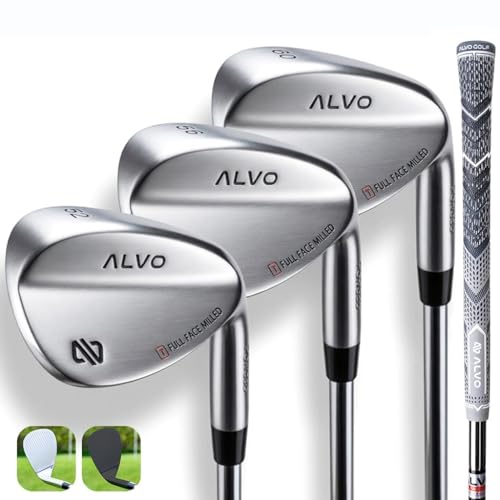 ALVO GOLF Premium Golf Wedges 52/56/60 Sets or Individual Wedges - 52 degree Gap Wedge, 56 degree Sand Wedge, 60 degree lob Wedge Golf Club - Pitching Wedge for Men Right Hand - Wedges Golf - Max spinCheck price on AmazonWe may earn a commission
Sources:

Michael Reeves is a PGA Professional with over 20 years of experience in competitive golf and instruction. A former Division I collegiate player at the University of Texas, he competed on the mini-tours before transitioning to full-time coaching and golf journalism. He has been a certified PGA teaching professional since 2005 and has worked with players at every level, from absolute beginners to collegiate champions.
His writing has appeared in Golf Digest, Golf Magazine, and The Left Rough. At GolfHubz, Michael leads the editorial team, overseeing fact-checking and ensuring every answer meets the same standard he demands on the lesson tee: clear, evidence-based, and immediately useful.
When he’s not writing or teaching, Michael plays to a +1.4 handicap at his home club in Austin, Texas. He has attended over 40 major championships as a journalist and fan, and has played more than 200 courses across 15 countries.
You can reach Michael at [email protected] or follow his occasional swing analysis posts on the site.