Golf Grip Size Guide: Wraps for Midsize Grips
← Golf Equipment | Golf Clubs
BLOCKQUOTE_0
Quick Answer
- Midsize golf grips usually need 2-3 wraps of standard grip tape to achieve the desired diameter.
- Your individual hand size and personal preference for grip feel are the most important factors.
- Adjusting the number of wraps directly impacts grip diameter, which can significantly affect your swing tempo and control.
Who This Is For
- Golfers who feel like their current grips are too small, leading to a weak hold, loss of control, or excessive hand fatigue during the round.
- Players looking to fine-tune their club feel for improved swing consistency and tempo, whether for competitive play or just weekend enjoyment.
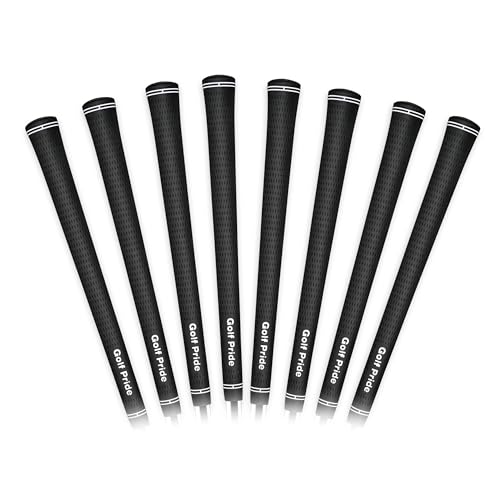 Golf Pride Tour Velvet Golf Grip, Midsize, 8 Pack | The Standard for Feel and Performance, Moderate Feedback, Plus Sign Texture for Slip-Resistant Surface & TractionCheck price on AmazonWe may earn a commission
What to Check First for Your Golf Grip Size
- Inspect Your Current Grips: Look for any size markings on your existing grips. More importantly, pay attention to how they feel during your swing. Do they feel too thin, forcing you to squeeze harder? Or do they feel just right?
- Measure Your Hands: If you have a tape measure handy, measure the length from the tip of your longest finger to the heel of your palm. Also, measure the circumference of your palm just below your fingers. This gives you a baseline for comparison.
- Identify Your Grip Tape: Note the type of grip tape currently on your clubs. Is it standard width (about 2 inches) or something thinner? This will influence how many layers you need.
- Assess Your Swing Feel: During practice swings, consciously focus on your grip. Are your hands feeling comfortable and secure, or are they straining? This subjective feel is a crucial indicator of whether you need a larger grip.
Step-by-Step Plan: How Many Wraps is a Midsize Grip
- Gather Your Supplies. Before you start, make sure you have everything. You’ll need your new grips, grip tape, a solvent (like mineral spirits or grip solvent), a vise with a rubber clamp, a sharp utility knife, end caps, and a ruler or tape measure to count your wraps. Mistake: Forgetting a crucial tool, like the rubber clamp for your vise, can make the whole process way more difficult and potentially damage your clubs. I once tried to do this without one and nearly ended up with a mangled shaft.
- Strip the Old Grip. Carefully insert the tip of your utility knife under the edge of the old grip, near the butt end. Slowly and steadily slice down the length of the grip to peel it off the shaft. Mistake: Cutting too deep can easily scratch or gouge your club shaft, which is a permanent blemish. Always use a sharp blade and let it do the work, rather than forcing it.
- Clean the Shaft Thoroughly. Once the old grip is off, use your solvent and a clean rag to remove all traces of old tape and adhesive residue. The shaft needs to be perfectly smooth and clean for the new grip to adhere properly. Mistake: Leaving any sticky residue behind is a common pitfall. It can cause the new grip to feel uneven or even slip over time. Get it squeaky clean.
- Apply New Grip Tape. Starting at the butt end of the shaft, begin wrapping the grip tape around. Overlap each turn by at least half the width of the tape to ensure complete coverage and a smooth surface. Work your way down the shaft, leaving a small portion of the tip exposed if your grip has an end cap. Mistake: Inconsistent tape overlap is a surefire way to create lumps and bumps under your new grip. This leads to an uneven feel and can negatively impact your swing. Aim for smooth, uniform coverage.
- Build Your Midsize Grip Thickness. For most golfers, a midsize grip requires adding 2 to 3 layers of standard grip tape. This is your starting point. You can always add or remove a layer later if the feel isn’t quite right. Mistake: Overbuilding the grip with too many wraps initially. While you want a thicker grip, going too far can make it feel cumbersome and difficult to control. Start conservatively.
- Install the New Grip. Peel the backing off the grip tape. Carefully slide the new grip onto the shaft, starting from the butt end. If it’s a bit sticky, a small amount of solvent can help it slide on smoothly. Ensure the grip is aligned straight down the shaft. Mistake: Trapping air bubbles inside the grip. As you slide it on, try to work out any trapped air by pressing firmly along the sides.
- Secure the End Cap. Firmly push the end cap into the open end of the grip. Make sure it’s seated snugly and doesn’t feel loose. Mistake: A loose end cap is an invitation for dirt and moisture to get into your club. It also just feels unprofessional and can detract from the overall feel of the club. Give it a good, solid push.
- Test and Adjust for Optimal Feel. Once the solvent has fully evaporated (check the manufacturer’s instructions, usually a few hours), pick up the club. Take some practice swings. How does the grip feel in your hands? Is it comfortable? Does it feel too thick or too thin? If it’s not quite right, you can carefully remove the grip (it’s easier the second time) and add or remove a layer of tape. Mistake: Settling for a grip that feels “okay.” This is your chance to dial it in perfectly for your hands and swing. Don’t be afraid to make minor adjustments to get it just right.
How Many Wraps is a Midsize Grip: Fine-Tuning Your Club
Achieving the perfect grip size is a game-changer for your golf game. It’s not just about comfort; it’s about control and consistency. When we talk about how many wraps is a midsize grip, we’re essentially talking about building up the diameter of the club’s butt end. Standard grips are built to a specific diameter, but hands vary widely. Adding layers of grip tape is the most common and effective way to increase that diameter to a midsize feel.
The goal of a midsize grip is to reduce the tendency for golfers to over-grip. When a grip is too thin, players often feel the need to squeeze harder to maintain control. This excessive tension can lead to a host of swing faults, including a stiff wrist, a restricted backswing, and an inconsistent downswing tempo. By increasing the grip’s diameter, the club feels more substantial in your hands, encouraging a lighter, more relaxed grip pressure. This allows your wrists to hinge more freely and promotes a smoother, more fluid swing.
When you’re deciding on how many wraps is a midsize grip for you, remember that it’s a personal calibration. Some golfers might find that 2 wraps of standard tape are perfect, while others with larger hands might need 3, 4, or even 5 wraps to achieve that midsize feel. The key is to experiment. Start with the general guideline of 2-3 wraps, and then use your practice swings as a feedback loop. If the grip feels too thin, add another layer. If it feels too thick and unwieldy, remove a layer. It’s a process of iteration until you find that sweet spot where the club feels like an extension of your hands, not a burden. Don’t be afraid to experiment; that’s how you truly optimize your equipment.
Common Mistakes with Golf Grip Size Wraps
- Mistake: Using too much or too little grip tape.
- Why it matters: This is the most direct way you alter the grip’s diameter. Too much tape can make the grip feel overly bulky, making it hard to fully close your hands around the club, which can lead to a loss of feel and control. Conversely, too little tape means you might as well have stuck with a standard grip, negating the benefit of building it up.
- Fix: Start with the common recommendation of 2-3 wraps of standard grip tape for a midsize feel. Then, take practice swings and assess the feel. If it feels too thin, add another layer. If it feels too thick and your fingers are getting cramped, remove a layer. Adjust incrementally until it feels just right for your hands.
- Mistake: Inconsistent tape overlap.
- Why it matters: If your grip tape overlaps unevenly, you’ll end up with ridges and bumps along the shaft. This creates an inconsistent surface under the grip, which can lead to hot spots on your hands or simply an uncomfortable, uneven feel throughout your swing.
- Fix: Ensure each wrap of grip tape overlaps the previous one by at least half the width of the tape. Maintain consistent tension as you wrap to create a smooth, uniform surface. A good overlap is crucial for a seamless grip feel.
- Mistake: Not cleaning shaft residue thoroughly.
- Why it matters: Old grip tape adhesive can be incredibly stubborn. If you don’t remove it completely, it can prevent the new grip from adhering properly to the shaft. This can lead to slippage during your swing, an uneven grip feel, or even make it difficult to slide the new grip on in the first place.
- Fix: Use a quality solvent (like mineral spirits or a dedicated grip solvent) and a clean, lint-free cloth. Work the solvent into the residue and scrub until the shaft feels completely smooth and clean. It’s worth the extra effort.
- Mistake: Using the wrong type of grip tape.
- Why it matters: Grip tape comes in different thicknesses. Standard tape is about 2 inches wide and has a certain thickness. If you opt for extra-thin tape, you’ll need significantly more layers to achieve the same build-up as standard tape. This can be confusing and lead to an incorrect grip size if not accounted for.
- Fix: Unless you have a specific reason or preference, stick with standard-width grip tape for building up your grips. It’s the most common and predictable option. If you do use thinner tape, check the manufacturer’s recommendations for how many layers are equivalent to standard tape.
- Mistake: Rushing the grip installation.
- Why it matters: Trying to jam the grip on too quickly can result in trapped air bubbles, misalignment, or damage to the grip itself. It also makes it harder to ensure the grip is perfectly straight down the shaft.
- Fix: Take your time. Use enough solvent to allow the grip to slide smoothly. Work the grip on from the butt end, gently pushing and wiggling it into place. Ensure it’s aligned correctly before the solvent fully evaporates.
FAQ
- How do I measure my hand for golf grip size?
To get a rough idea, measure from the crease at the base of your longest finger to the heel of your palm. Then, measure the circumference of your palm just below your fingers. Generally, standard grips fit hands measuring 8.5 to 8.75 inches from the wrist to the fingertip. Midsize grips are for hands larger than that, or for those who prefer a thicker feel.
- What is the difference between standard and midsize grips?
The primary difference is diameter. A midsize grip is typically about 1/16th of an inch thicker than a standard grip. This added thickness is achieved through manufacturing or by adding layers of grip tape. Midsize grips are designed for golfers with larger hands or those who tend to grip the club too tightly with standard grips.
- Can I use more than 3 wraps for a midsize grip?
Absolutely. While 2-3 wraps of standard grip tape is a common starting point for a midsize feel, it’s not a hard and fast rule. If you have significantly larger hands or prefer a very substantial grip, you might need 4, 5, or even more wraps. The key is to achieve a comfortable and secure feel for your individual hands.
- How do I know if I need a midsize grip?
Pay attention to your hands during and after your round. If you find yourself consistently squeezing the club too hard, experiencing hand fatigue or soreness, or if your wrists feel locked up during the swing, you might benefit from a thicker grip. A midsize grip can help promote lighter grip pressure and a more relaxed swing.
- Does grip tape thickness affect the build-up?
Yes, it does. Standard grip tape is typically around 2 inches wide. If you’re using thinner grip tape, you will need to use more layers to achieve the same diameter build-up as you would with standard tape. It’s best to stick with standard tape for consistency unless you have a specific reason to use a thinner product.
- How long does it take for the grip to fully set?
Once you’ve installed the grip and the solvent has evaporated from under it, the grip is generally playable. However, for the adhesive to fully cure and the grip to reach its final firmness, it’s best to let it sit for at least 12-24 hours. This ensures a secure bond and optimal feel.

Michael Reeves is a PGA Professional with over 20 years of experience in competitive golf and instruction. A former Division I collegiate player at the University of Texas, he competed on the mini-tours before transitioning to full-time coaching and golf journalism. He has been a certified PGA teaching professional since 2005 and has worked with players at every level, from absolute beginners to collegiate champions.
His writing has appeared in Golf Digest, Golf Magazine, and The Left Rough. At GolfHubz, Michael leads the editorial team, overseeing fact-checking and ensuring every answer meets the same standard he demands on the lesson tee: clear, evidence-based, and immediately useful.
When he’s not writing or teaching, Michael plays to a +1.4 handicap at his home club in Austin, Texas. He has attended over 40 major championships as a journalist and fan, and has played more than 200 courses across 15 countries.
You can reach Michael at [email protected] or follow his occasional swing analysis posts on the site.