Cost of Golf Grips
← Golf Equipment | Golf Clubs
BLOCKQUOTE_0
Quick Answer
- Expect to pay between $3 and $15 for standard golf grips.
- Premium or specialized grips can cost $15 to $30 or more each.
- The final price tag hinges on the brand, material, and whether you’re installing them yourself or paying a pro.
Who This Is For
- Golfers trying to get a handle on the budget for re-gripping their entire club set.
- Players who are on the fence about tackling a DIY re-grip job versus handing it over to the pros.
- Anyone curious about why some golf grips cost way more than others.
What to Check First
- Count your clubs: Seriously, how many clubs are in your bag that actually need new grips? Don’t just guess. Get an exact number.
- Material preference: Are you feeling a classic rubber vibe, something with a bit of cord for extra grab, or a slick synthetic? This choice really moves the needle on price.
- Brand price points: Do a quick scan of the usual suspects like Golf Pride, Lamkin, and Winn. What’s their average price range for the types you like?
- Installation plan: This is huge. Are you going to be a weekend warrior with a DIY kit, or will you be dropping your clubs off at the shop? That decision alone impacts the total cost.
Estimating Your Golf Grip Costs
Re-gripping your clubs is one of those essential maintenance tasks that can make a surprising difference in your game. Let’s break down how to figure out what it’s going to cost you. It’s not rocket science, but a little planning goes a long way.
Step-by-Step Plan for Estimating Golf Grip Costs
1. Inventory your clubs.
- Action: Grab your club bag and do a walk-through. Count every single club that’s showing its age and needs a fresh grip.
- What to look for: Make sure you’re not leaving any stragglers behind – that favorite wedge, the trusty putter, or that old hybrid you rarely use but still keep around.
- Mistake to avoid: Underestimating the number of clubs. Trust me, you don’t want to be halfway through the job and realize you only bought 12 grips for your 14 clubs. It’s a real buzzkill.
2. Select your preferred grip type and material.
- Action: Think about how you like your clubs to feel in your hands. Do you want the classic, reliable feel of standard rubber? Maybe you need the extra traction of a corded grip for those damp days? Or perhaps a softer, more modern synthetic?
- What to look for: Once you’ve narrowed down the material, check the price per grip for that specific type. Standard rubber is usually the most budget-friendly.
- Mistake to avoid: Getting fixated on a super-premium, high-tech grip without first checking if it fits your budget. You might fall in love with a $25 grip when you only budgeted $5 per club.
3. Research specific grip models from reputable brands.
- Action: Now that you know your material, start browsing specific models from the big names – Golf Pride, Lamkin, Winn, etc. Look at their offerings within your chosen material category.
- What to look for: Find the average cost per grip for the models that catch your eye. Websites of major golf retailers and the manufacturers themselves are great resources.
- Mistake to avoid: Blindly picking the first brand or model you stumble upon. Prices can vary significantly even within the same material type. A little comparison shopping can save you a decent chunk of change.
4. Factor in installation.
- Action: This is where your plan solidifies. Are you a hands-on type ready to tackle the DIY route, or will you be heading to your local golf shop or club fitter?
- What to look for: If you’re going DIY, price out the necessary supplies: grip tape, solvent (or mineral spirits), a vise or clamp, and a utility knife. If you’re using a pro, ask for their labor cost per club or for a full set.
- Mistake to avoid: Forgetting about the cost of installation supplies if you’re doing it yourself. Those seemingly small items add up. Conversely, if you’re paying someone, don’t assume the grip price includes installation – always clarify the labor fees upfront.
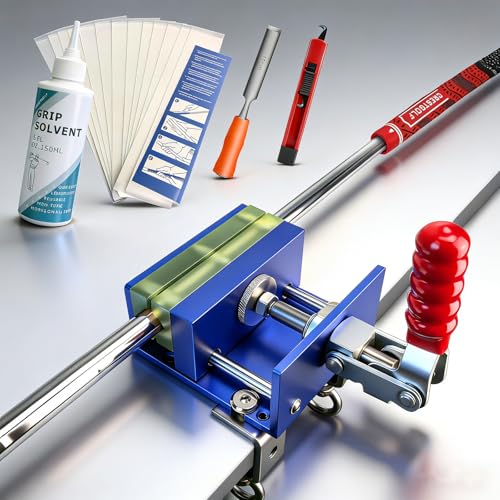 Crestgolf Golf Repair Kit Drill-Free & Drill Installation for Regripping Golf Clubs, Inlcudes 13PCS Grip Tapes, Hook Knife, Solvent, Grip Tape Remover and Aluminum Vise Clamp for Home or WorkshopCheck price on AmazonWe may earn a commission
How Much Are Golf Grips? A Detailed Breakdown
Alright, let’s get down to brass tacks. The cost of golf grips isn’t a single, fixed number. It’s a spectrum, and understanding where your desired grips fall on that spectrum is key to budgeting.
Standard Rubber Grips
These are your everyday, reliable grips. They’re the workhorses of the golf world and generally the most affordable option. You’ll find a wide variety of textures and firmness levels within this category.
- Price Range: Typically $3 to $8 per grip.
- Why they cost this much: They are mass-produced using proven, durable rubber compounds. While they might not have all the bells and whistles of high-end options, they offer solid performance and longevity for the average golfer.
- What to look for: Brands like Golf Pride’s Victory Cord or some of Lamkin’s classic rubber models fall into this range.
Cord Grips
These grips have fabric (often cotton or synthetic cord) embedded into the rubber. This adds texture and significantly enhances grip, especially in wet or humid conditions. They offer a more aggressive feel and feedback.
- Price Range: Usually $5 to $12 per grip.
- Why they cost this much: The added process of embedding the cord material increases manufacturing complexity and cost. They are favored by players who need maximum tackiness and control, often in challenging weather.
- What to look for: Golf Pride’s New Decade MultiCompound (which blends cord with rubber) or some of Winn’s Dri-Tac with Cord models are good examples.
Synthetic and Performance Grips
This is where things can get a bit more high-tech and, consequently, more expensive. Synthetic grips use various polymer blends and advanced materials to offer specific benefits like enhanced shock absorption, unique textures for superior feel, or exceptional durability.
- Price Range: Can start around $8 and climb to $15, $20, or even $30+ for premium, tour-proven models.
- Why they cost this much: The development of specialized materials, advanced molding techniques, and often the inclusion of proprietary technologies (like vibration dampening systems or unique surface patterns) drive up the price. These are for golfers who are very particular about feel and performance.
- What to look for: Look at brands like SuperStroke (known for their larger putter grips with counter-balancing), Winn’s Excel series, or premium lines from Golf Pride and Lamkin that use advanced polymer compounds.
Installation Costs: DIY vs. Professional
This is a major factor that many people overlook when calculating the total cost of re-gripping.
- DIY Installation:
- Cost: If you’re doing it yourself, the primary cost is for the grips themselves, plus the supplies. A basic DIY kit (tape, solvent, vise clamp) might run you $20-$40 initially if you don’t have any tools. After that, it’s just the cost of the grips.
- Pros: Saves money on labor, you can do it on your own schedule.
- Cons: Requires some effort, patience, and the right tools. Mistakes can happen if you’re not careful.
- Professional Installation:
- Cost: Most golf shops or club fitters will charge a labor fee per club, typically ranging from $3 to $5 per club. This is in addition to the cost of the grips themselves.
- Pros: Quick, convenient, and done by experienced professionals. Ensures the grips are installed correctly.
- Cons: Adds to the overall expense. You’re dependent on their availability.
- Total Cost Example: For a full set of 14 clubs, if you choose $8 grips and pay $4 per club for installation, your total cost would be (14 grips $8/grip) + (14 clubs $4/club labor) = $112 + $56 = $168.
Common Mistakes in Estimating Golf Grip Costs
Let’s be honest, nobody wants to get halfway through a project and realize they’ve miscalculated. Here are some common pitfalls to avoid when figuring out how much those new grips will set you back.
- Mistake: Not counting all the clubs that need grips.
- Why it matters: This is the most basic, but most common, error. You think you need 10 grips, but you actually have 14 clubs that need attention. This leads to an incomplete re-grip job and the need for an unplanned trip back to the store or an extra online order.
- Fix: Do a thorough inventory of your club bag. Every single club, from your driver down to your sand wedge, needs to be checked. Don’t forget your putter – it gets a lot of action and its grip wears out too!
- Mistake: Overlooking the cost of installation supplies for DIY.
- Why it matters: You see a grip for $5 and think, “Great, that’s cheap!” But if you’re doing it yourself and don’t have any supplies, you’ll need grip tape, solvent (or mineral spirits), and possibly a vise or clamp. These items can add $20-$40 to your initial outlay, making the DIY option seem less economical than it initially appeared.
- Fix: If you’re planning a DIY re-grip, make a separate list of all the installation materials you’ll need and price them out before you buy the grips. This gives you a true picture of the DIY cost.
- Mistake: Forgetting about professional installation labor fees.
- Why it matters: This is a big one for those opting for shop installation. The price you see on the grip is just for the grip. The labor to actually install it can significantly increase the total cost. If you’re quoted $10 per grip and $4 per club for labor, that $10 grip just became a $14 grip.
- Fix: Always ask for a clear quote that includes both the cost of the grips and the labor charges per club or for the entire set. Don’t assume labor is included.
- Mistake: Assuming all grips are priced the same.
- Why it matters: You might budget for basic $5 grips, only to fall in love with a high-performance model that costs $15 or more. This can lead to sticker shock when you’re ready to make your purchase.
- Fix: Get a general understanding of the price range for different types of grips (rubber, cord, synthetic) and different brands before you start shopping. This helps you set a realistic budget from the outset.
- Mistake: Not considering the putter grip cost separately.
- Why it matters: Putter grips are often larger and can be significantly more expensive than standard iron or wood grips. If you budget based on iron grip prices and then realize your putter grip is double that, your budget will be off.
- Fix: When counting your clubs, make a note of your putter and research putter grip prices specifically. They often fall into the $10-$30+ range.
- Mistake: Buying grips in bulk without checking the manufacturer’s recommendations for your clubs.
- Why it matters: While buying in bulk can sometimes offer savings, it’s crucial to ensure the grips are suitable for your specific clubs and playing style. A grip that works great for a driver might not be ideal for a wedge, or vice versa.
- Fix: Consult manufacturer websites or experienced club fitters to ensure the grips you’re buying in bulk are appropriate for the different types of clubs in your bag.
FAQ
- How much does it typically cost to re-grip a full set of golf clubs?
For a standard set of 14 clubs, you’re generally looking at a range of $100 to $250 or more. This depends heavily on the specific grips you choose (standard vs. premium) and whether you’re paying for professional installation or doing it yourself. DIY will always be on the lower end of that spectrum.
- Are expensive golf grips worth the extra cost?
This is subjective and depends on your priorities and budget. Premium grips often offer enhanced feel, superior durability, better traction in various conditions, or advanced vibration dampening. If you notice a tangible improvement in your comfort, control, and overall performance, and the cost fits your budget, then yes, they can absolutely be worth it. For many, the feel of fresh, high-quality grips is a game-changer.
- What is the difference in price between rubber and cord grips?
Standard rubber grips are typically the most budget-friendly, often costing between $3 and $8 per grip. Cord grips, which incorporate fabric for enhanced traction, usually cost a bit more, generally falling in the $5 to $12 range per grip. This price difference reflects the added material and manufacturing complexity.
- How often should I replace my golf grips?
As a general rule of thumb, most golfers should consider replacing their grips every 1 to 2 years, or after approximately 40 rounds of play. However, this can vary based on how often you play, your grip pressure, and the conditions you play in. If your grips feel slick, hard, cracked, or worn, it’s definitely time for a change, regardless of the timeline.
- Can I re-grip my own clubs?
Absolutely! Re-gripping your own clubs is a very common and achievable DIY project. With a little patience, some basic tools like grip tape, solvent, and a vise, you can successfully replace your grips and save a good amount of money compared to professional installation. There are tons of great video tutorials online to guide you through the process.
- What’s the most expensive type of golf grip?
The most expensive golf grips are typically those made with advanced, proprietary materials, those designed for specific performance benefits (like extreme vibration dampening or unique textures), or larger, counter-balanced putter grips. These can easily range from $15 to $30 or even upwards of $35 per grip.
- Does the brand of golf grip matter for price?
Yes, brand does matter. Established brands like Golf Pride, Lamkin, and Winn often have a reputation for quality and performance, which can influence their pricing. Higher-end models within these brands will naturally command higher prices than their entry-level offerings. However, you can often find excellent value from lesser-known brands or by looking for sales on popular models.

Michael Reeves is a PGA Professional with over 20 years of experience in competitive golf and instruction. A former Division I collegiate player at the University of Texas, he competed on the mini-tours before transitioning to full-time coaching and golf journalism. He has been a certified PGA teaching professional since 2005 and has worked with players at every level, from absolute beginners to collegiate champions.
His writing has appeared in Golf Digest, Golf Magazine, and The Left Rough. At GolfHubz, Michael leads the editorial team, overseeing fact-checking and ensuring every answer meets the same standard he demands on the lesson tee: clear, evidence-based, and immediately useful.
When he’s not writing or teaching, Michael plays to a +1.4 handicap at his home club in Austin, Texas. He has attended over 40 major championships as a journalist and fan, and has played more than 200 courses across 15 countries.
You can reach Michael at [email protected] or follow his occasional swing analysis posts on the site.