Choosing the Right Golf Grip Size
← Golf Equipment | Golf Clubs
BLOCKQUOTE_0
Quick Answer
- Measure your hand from the base of your palm to the tip of your middle finger for the most accurate sizing.
- Cross-reference your hand measurement with grip manufacturer charts, as sizing can vary between brands.
- Don’t forget to factor in your personal comfort and swing style – it’s not just about the numbers.
Who This is For
- Any golfer who’s noticed inconsistency in their shots, feels like they’re “choking” the club, or experiences hand fatigue or pain during their round.
- Players who are serious about optimizing their equipment and want to ensure their grips aren’t holding back their swing potential.
What to Check First
- Hand Measurement is King: Grab a flexible tape measure. You need to accurately measure the length of your dominant hand from the crease at the base of your palm all the way to the tip of your middle finger. This is the single most important piece of data you’ll collect. Don’t eyeball it; get a solid number in inches.
- Your Current Glove Size: Dig out your golf glove. What size does it say? While not a perfect science, your glove size is a decent secondary indicator. If you’re a Large glove, you’re likely not going to be fitting into the smallest grip size.
- The State of Your Current Grips: Take a good look at the grips currently on your clubs. Are they shiny and slick? Do they feel hard as rocks? Are there any visible cracks or worn-down spots? These are all signs that your grips are past their prime, and their size might be contributing to issues even if they were once correct.
- How Your Hands Feel: This might sound simple, but pay attention. During your swing, do your hands feel cramped? Are you squeezing the life out of the club? Or does it feel like your hands are sliding around? Any discomfort or lack of control is a red flag that your grip size might be off.
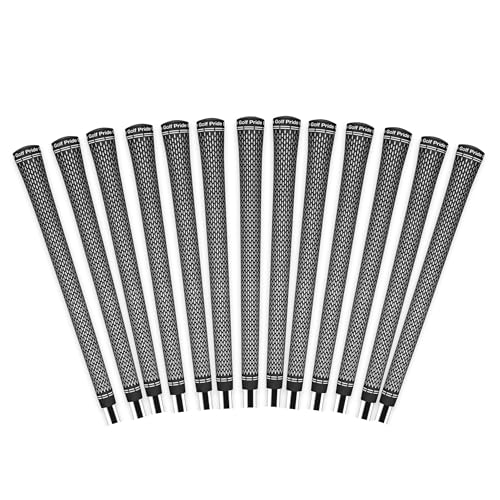 Golf Pride Tour Velvet 360 Golf Grip - Durable, Comfortable Grip Set for Clubs - Features Non-Slip Technology & a Softer Feel - Standard - White - 13 PackCheck price on AmazonWe may earn a commission
Step-by-Step Plan: How to Select Golf Grip Size
1. Measure Your Hand Length Accurately.
- Action: Place your dominant hand flat on a table, palm facing up. Take your flexible tape measure and start at the very bottom crease of your palm where it meets your wrist. Extend the tape straight up to the very tip of your middle finger.
- What to Look For: A precise measurement in inches. For example, you might get 7.5 inches, or 8.25 inches. Write this number down.
- Mistake to Avoid: Don’t just guess or estimate. An inaccurate measurement is the fastest way to pick the wrong size. Also, make sure you’re measuring to the tip of your middle finger, not the knuckle. I learned that the hard way.
2. Determine Your Glove Size as a Reference.
- Action: Find the golf glove you wear for your dominant hand. Look for the size label inside. Common sizes are Small, Medium, Large, Extra-Large, and sometimes Cadet versions for shorter fingers.
- What to Look For: Your standard glove size. This will give you a general ballpark figure. For instance, a men’s Large glove often corresponds to a standard grip size, but this isn’t a hard rule.
- Mistake to Avoid: Never rely solely on your glove size. It’s a helpful clue, but hand length is far more definitive. Your glove might fit okay, but your hand length could push you towards a different grip size.
3. Consult Grip Manufacturer Sizing Charts.
- Action: Navigate to the official websites of major golf grip manufacturers like Golf Pride, Lamkin, Winn, or SuperStroke. Look for their “Grip Selector,” “Sizing Guide,” or “Technical Specs” section.
- What to Look For: These charts will typically correlate hand measurements (inches) and sometimes glove sizes to their specific grip sizes, which are usually categorized as Undersize, Standard, Midsize, and Jumbo (or Oversize). You’ll see ranges like “7.5 – 7.75 inches = Standard.”
- Mistake to Avoid: Assuming all brands use the exact same sizing standards. A “Standard” grip from one company might feel slightly different from another. Always check the specific brand’s chart you’re interested in.
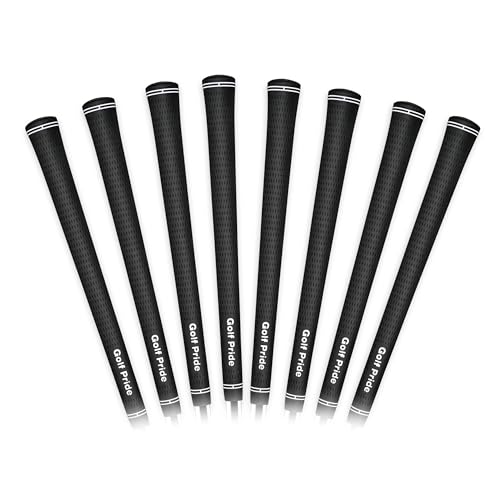 Golf Pride Tour Velvet Golf Grip, Midsize, 8 Pack | The Standard for Feel and Performance, Moderate Feedback, Plus Sign Texture for Slip-Resistant Surface & TractionCheck price on AmazonWe may earn a commission
4. Consider Your Swing Tempo and Feel.
- Action: Think critically about your golf swing. Are you a quick, aggressive swinger who generates a lot of clubhead speed? Or do you have a smoother, more controlled tempo? How does the club feel in your hands during your swing?
- What to Look For: Golfers with faster, more powerful swings often benefit from slightly larger grips (Midsize or even Jumbo) as they can help reduce the tendency to over-grip and maintain control. Conversely, those with slower tempos might find Standard or even Undersize grips feel more natural and allow for better wrist action. The key is what feels right to you.
- Mistake to Avoid: Picking a size based purely on the numbers from the chart without considering your personal swing characteristics and how the club feels. A grip that’s too small can lead to excessive hand tension, while one that’s too large can restrict your hands and impede proper release.
5. Factor in Hand Comfort and Grip Pressure.
- Action: Reflect on how much pressure you typically apply to the club. Do you tend to squeeze the club too tightly, leading to fatigue or tension in your forearms and wrists? Or do you feel like you can’t get a secure enough hold?
- What to Look For: A grip that feels comfortable and allows you to maintain a relaxed, yet secure, hold on the club. If a grip feels like it’s digging into your palm or forcing your fingers into an uncomfortable position, it’s likely the wrong size. The goal is to find a size that encourages a lighter, more consistent grip pressure.
- Mistake to Avoid: Choosing a grip size that causes any discomfort, numbness, or pain. This will absolutely sabotage your game and your enjoyment. Your hands are your connection to the club; they need to feel good.
6. Experiment and Test if Possible.
- Action: If you have the opportunity, visit a reputable golf shop or driving range that has demo clubs or allows you to try different grip sizes. Even holding a club with a different grip size can give you a feel for it.
- What to Look For: What feels most natural and comfortable in your hands. Does a Midsize grip fill your palm better? Does a Standard grip allow for more flexibility? Trust your tactile feedback.
- Mistake to Avoid: Buying an entire set of new grips without ever having physically felt a different size on a club. It’s worth the effort to try and get a hands-on feel if you can.
How to Select Golf Grip Size: Common Mistakes
- Mistake: Relying solely on your golf glove size.
- Why it matters: Glove sizing is standardized for fit and comfort, but it doesn’t account for the nuances of hand width or the length of your fingers relative to your palm. A glove might fit your hand snugly, but the actual dimensions of your hand could dictate a different grip size for optimal club control.
- Fix: Always measure your hand length directly from the base of your palm to the tip of your middle finger. Use your glove size as a secondary reference, not the primary one.
- Mistake: Not considering your swing tempo and power.
- Why it matters: A grip that’s too small for a powerful, fast swinger can lead to over-gripping, causing tension in the wrists and forearms, and potentially a loss of control through impact. Conversely, a grip that’s too large for a slower swinger might restrict their hands and prevent a proper release of the club.
- Fix: Honestly assess your swing speed and power. If you’re a big hitter, lean towards Midsize or Jumbo. If you have a smoother tempo, Standard or even Undersize might be more appropriate.
- Mistake: Ignoring hand comfort and potential for blisters.
- Why it matters: Pain, numbness, or the development of blisters will significantly detract from your golf experience and negatively impact your swing mechanics. If your grips are uncomfortable, you’ll subconsciously adjust your grip pressure, often leading to tension and inconsistency.
- Fix: Prioritize a grip size that feels immediately comfortable and allows your hands to remain relaxed throughout your swing. If a grip size feels like it’s digging into your palm or forcing your fingers into an awkward position, it’s not the right one for you.
- Mistake: Assuming the “standard” grip size is suitable for everyone.
- Why it matters: The “standard” grip size is designed for the average golfer, but very few golfers are truly average. Many golfers have hands that are larger or smaller than the typical profile that standard grips are built for, and using a non-optimal size can lead to issues.
- Fix: Be open to exploring Midsize and Jumbo grips if your hand measurements indicate they might be a better fit. Don’t be afraid to step outside the “standard” box if it means a more comfortable and controlled feel.
- Mistake: Failing to check the condition of your current grips.
- Why it matters: Even if you have the correct grip size, worn-out grips lose their tackiness and texture. This can cause your hands to slip, forcing you to grip tighter and leading to tension and loss of control, regardless of the grip’s diameter.
- Fix: Regularly inspect your grips for signs of wear, such as becoming shiny, hard, or slick. Replace them when they start to feel less grippy, typically every 40-50 rounds or annually, depending on how much you play and the conditions.
- Mistake: Not accounting for grip build-up or tape layers.
- Why it matters: Golfers often add layers of grip tape underneath their grips to slightly increase the diameter. If you plan on doing this, you need to factor it into your initial size selection. A standard grip with two layers of tape will feel larger than a standard grip with no tape.
- Fix: If you know you’ll be adding tape, consult manufacturer charts for the “built-up” size or consider ordering grips that are one size smaller than your measurement indicates if you plan on adding multiple layers of tape.
FAQ
- How do I measure my hand for golf grip size?
Measure from the crease at the base of your palm, where your hand meets your wrist, straight up to the tip of your middle finger. Use a flexible tape measure for the most accurate result in inches.
- What is the standard golf grip size?
The standard grip size for men is typically around 0.600 inches in diameter. For women, it’s usually around 0.580 inches. However, this can vary slightly between manufacturers, and “standard” is just a starting point.
- Can glove size determine my golf grip size?
Glove size is a helpful starting point and a good secondary reference, but it is not definitive. Hand length measurement is a more accurate method for determining the correct grip size.
- What if my hand measurement falls between two grip sizes?
When your measurement falls between two sizes, it’s generally recommended to go with the larger size. A slightly larger grip often allows for a more relaxed grip pressure, whereas a grip that’s too small can lead to over-gripping and tension. Consulting a golf professional can also provide valuable guidance.
- How often should I replace my golf grips?
It’s recommended to replace your golf grips every 40-50 rounds of golf or approximately once every 1-2 years, whichever comes first. Factors like frequency of play, climate, and storage conditions can affect their lifespan. If they start to feel slick or hard, it’s time for a change.
- Are Midsize grips just for larger hands?
Not necessarily. While Midsize grips are larger than standard, they are often beneficial for golfers who tend to grip the club too tightly, regardless of their hand size. A Midsize grip can help promote a lighter, more consistent grip pressure, leading to better control and less fatigue.
- Does grip size affect swing speed?
While grip size doesn’t directly increase or decrease your potential swing speed, it can significantly impact your ability to access your maximum swing speed and maintain control through the swing. A grip that’s too large or too small can hinder your natural release and wrist action, indirectly affecting how efficiently you transfer energy to the clubhead.

Michael Reeves is a PGA Professional with over 20 years of experience in competitive golf and instruction. A former Division I collegiate player at the University of Texas, he competed on the mini-tours before transitioning to full-time coaching and golf journalism. He has been a certified PGA teaching professional since 2005 and has worked with players at every level, from absolute beginners to collegiate champions.
His writing has appeared in Golf Digest, Golf Magazine, and The Left Rough. At GolfHubz, Michael leads the editorial team, overseeing fact-checking and ensuring every answer meets the same standard he demands on the lesson tee: clear, evidence-based, and immediately useful.
When he’s not writing or teaching, Michael plays to a +1.4 handicap at his home club in Austin, Texas. He has attended over 40 major championships as a journalist and fan, and has played more than 200 courses across 15 countries.
You can reach Michael at [email protected] or follow his occasional swing analysis posts on the site.