When to Regrip Golf Clubs
← Golf Equipment | Golf Clubs
BLOCKQUOTE_0
Quick Answer
- Regrip your golf clubs every 40-50 rounds or once a year, whichever comes first.
- Look for slickness, cracking, or separation on your grips – these are clear signs they need replacing.
- Fresh grips mean better control and more consistent shots. Simple as that.
Who This Is For
- Golfers who’ve noticed their shots going a bit wild lately. Lost control? It’s often the grips.
- Anyone who can’t remember the last time they swapped out their grips. If it’s been over a year, you’re probably due.
What to Check First for Golf Club Grips
- Check the manual or manufacturer’s website for specific grip recommendations. Sometimes they have their own ideas.
- Give your current grips a feel. Are they slick? Lost that tacky feel? That’s a red flag.
- Look for visible damage. Cracks, tears, or that worn-smooth look all mean it’s time for a change.
- Consider your playing frequency. If you play a lot, you’ll need to regrip more often than someone who hits the links a few times a year.
Step-by-Step Plan: Regripping Golf Clubs
1. Gather your gear. You’ll need new grips, grip solvent, grip tape, a utility knife, a vise with a grip clamp, a rubber mallet, and a towel. Make sure you have enough for all your clubs.
- What to look for: All the necessary supplies ready to go.
- Mistake to avoid: Running out of tape halfway through. That’s a real buzzkill.
2. Remove the old grip. Carefully slice along the back of the grip with your utility knife. Go slow and steady.
- What to look for: The old grip peeling away cleanly.
- Mistake to avoid: Cutting into the club shaft. That’s a rookie move you don’t want to make.
3. Scrape off the old tape. Use solvent and a scraper or your knife to get rid of all the old tape and adhesive.
- What to look for: A completely clean, smooth shaft surface. No sticky bits left behind.
- Mistake to avoid: Leaving any residual tape. This will create lumps and affect how the new grip sits.
4. Apply new grip tape. Wrap the double-sided grip tape around the shaft, leaving about a quarter-inch exposed at the butt end.
- What to look for: Smooth, even tape application with no wrinkles or gaps.
- Mistake to avoid: Overlapping the tape too much or not enough. This can lead to an uneven grip feel.
5. Apply solvent. Pour a good amount of solvent into the new grip. You want enough to coat the inside.
- What to look for: Solvent running freely inside the grip.
- Mistake to avoid: Using too little solvent. It makes sliding the grip on a real struggle.
6. Install the new grip. Quickly slide the grip onto the taped shaft, making sure to push it all the way down to the butt end. Use the solvent to help it slide.
- What to look for: The grip sliding on smoothly and seating correctly.
- Mistake to avoid: Getting air bubbles trapped. If it sticks, add more solvent.
7. Position and let it dry. Align the grip properly and let it dry completely. This usually takes a few hours, but check the grip manufacturer’s instructions.
- What to look for: Grips that are firmly attached and not slipping.
- Mistake to avoid: Trying to play too soon. You don’t want your new grips coming off mid-swing. For more on this, check out When to Play After Regripping Golf Clubs.
Common Mistakes When Regripping Golf Clubs
- Not removing all old tape — Why it matters: Causes uneven grip thickness and poor adhesion. — Fix: Scrape thoroughly until the shaft is smooth.
- Using too much or too little solvent — Why it matters: Too much makes a mess, too little makes installation difficult. — Fix: Use generously; it evaporates quickly and helps the grip slide on easily.
- Incorrect tape application (e.g., wrinkles, gaps) — Why it matters: Leads to lumps or an uneven feel in the grip. — Fix: Apply tape smoothly and overlap edges slightly for a consistent surface.
- Not checking grip alignment — Why it matters: A crooked grip can affect your swing and shot accuracy. — Fix: Take a moment to ensure the grip’s logo or pattern is straight before the solvent dries.
- Forgetting about grip size — Why it matters: The wrong size can negatively impact your swing and comfort. — Fix: Choose grips that match your hand size and playing style.
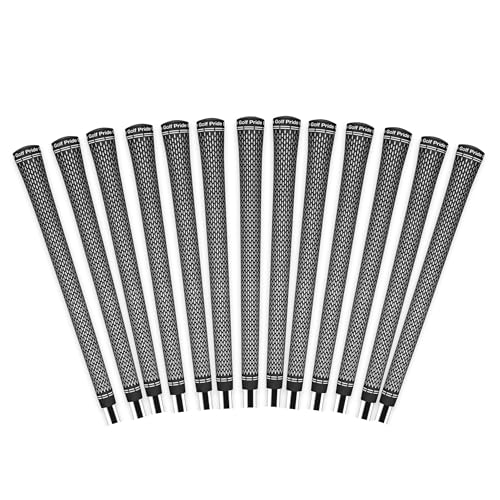 Golf Pride Tour Velvet 360 Golf Grip - Durable, Comfortable Grip Set for Clubs - Features Non-Slip Technology & a Softer Feel - Standard - White - 13 PackCheck price on AmazonWe may earn a commission
FAQ
- How often should I regrip my golf clubs?
You should regrip your clubs every 40-50 rounds or at least once a year, whichever comes first. Think of it like changing your tires – essential for performance.
- What are the signs that my golf grips need replacing?
Look for a loss of tackiness, slickness, cracking, tearing, or smoothing of the surface. If they feel hard or uncomfortable, it’s time.
- Can I regrip my own golf clubs?
Absolutely. It’s a straightforward DIY project that can save you money and is quite satisfying. Just follow the steps carefully.
- How long does it take for golf grips to dry after regripping?
Most grips need a few hours to dry completely. Always check the specific instructions for your new grips, but generally, 4-6 hours is a good ballpark. You don’t want to rush this. For more details, check out When Can You Play Golf After Regripping Clubs?.
- Will regripping my golf clubs improve my game?
Yes, significantly. Fresh grips provide better traction and feel, leading to more consistent swings and improved shot control. It’s one of the easiest ways to boost your game. Learn more about When to Regrip Your Golf Clubs.
Sources:
- When to Play After Regripping Golf Clubs
- When to Regrip Your Golf Clubs
- When Can You Play Golf After Regripping Clubs?
- Waiting Time After Regripping Golf Clubs

Michael Reeves is a PGA Professional with over 20 years of experience in competitive golf and instruction. A former Division I collegiate player at the University of Texas, he competed on the mini-tours before transitioning to full-time coaching and golf journalism. He has been a certified PGA teaching professional since 2005 and has worked with players at every level, from absolute beginners to collegiate champions.
His writing has appeared in Golf Digest, Golf Magazine, and The Left Rough. At GolfHubz, Michael leads the editorial team, overseeing fact-checking and ensuring every answer meets the same standard he demands on the lesson tee: clear, evidence-based, and immediately useful.
When he’s not writing or teaching, Michael plays to a +1.4 handicap at his home club in Austin, Texas. He has attended over 40 major championships as a journalist and fan, and has played more than 200 courses across 15 countries.
You can reach Michael at [email protected] or follow his occasional swing analysis posts on the site.