Understanding Uniflex Golf Club Shafts and Their Performance
← Golf Equipment | Golf Clubs
BLOCKQUOTE_0
Quick Answer
- Uniflex golf shafts are designed to be a versatile flex, aiming to suit a broad range of swing speeds.
- They offer a blend of flexibility and stability, making them a solid choice for many golfers.
- These shafts are a good pick if you’re not sure of your exact swing tempo or have a moderate swing speed.
Uniflex golf shafts are a great option for golfers seeking versatility. If you’re unsure about your exact swing tempo or have a moderate swing speed, these shafts offer a good balance of flexibility and stability.
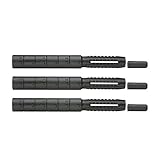
- 3 Pack of Shaft Extensions
- The Universal Shaft extensions will work with any steel shaft
- The Universal Shaft extensions will work with almost any graphite shaft
- After applying a little epoxy, insert the extension into a shaft, force the provided tapered plug into the extension until the extension expands to fit the ID of the golf shaft
- Will compress to fit a .540" inside diameter (ID) and expand to fit up to a .590" inside diameter (ID)
Who This Is For
- New golfers trying to figure out shaft flex.
- Players with moderate swing speeds who don’t fit neatly into stiff or regular categories.
- Golfers looking for a cost-effective shaft that performs well across different conditions.
What to Check First: Understanding Uniflex Shafts
- Swing Speed: Get your swing speed measured. A launch monitor or a club fitter is your best bet. You’re looking for mph here.
- Ball Flight: Pay attention to your usual ball flight. Is it too high, too low, or does it hook or slice a lot?
- Swing Tempo: How does your clubhead speed connect with your swing tempo? This is key.
- Your Game Goals: What are you trying to achieve with your game? Better distance, more accuracy, or just a more consistent feel?
Exploring Uniflex Golf Shafts and Their Characteristics
Step-by-Step Plan: Evaluating Uniflex Shafts
1. Action: Measure your driver swing speed.
What to look for: A swing speed typically between 80-100 mph is often cited for uniflex suitability. I usually find my driver speed hovers around 95 mph, so uniflex often feels pretty good for me.
Mistake to avoid: Guessing your swing speed. It’s way more accurate to get it measured. Relying on guesswork is like packing for a camping trip without checking the weather forecast – you’re asking for trouble.
2. Action: Observe your typical ball flight.
What to look for: Consistent ball flight without excessive ballooning or dropping too quickly. A nice, penetrating trajectory is the goal.
Mistake to avoid: Blaming the shaft for every shot. Your swing mechanics play a huge role. Sometimes, it’s just a bad swing, not faulty gear.
3. Action: Consider your swing tempo.
What to look for: A smooth transition from backswing to downswing, not a jerky, rushed motion. A fluid tempo allows the shaft to do its job properly.
Mistake to avoid: Focusing only on raw speed. Tempo greatly affects how a shaft feels and performs, even at the same swing speed. A fast, jerky tempo will make a shaft feel stiffer than it is.
4. Action: Research specific uniflex shaft models.
What to look for: Manufacturer specs on weight, torque, and kick point. These details matter for fine-tuning performance. A lower torque generally means less twisting on off-center hits.
Mistake to avoid: Assuming all uniflex shafts are created equal. They aren’t. Just like different brands of tents have different features, so do golf shafts.
5. Action: Demo clubs with uniflex shafts if possible.
What to look for: How the club feels during your swing and the results on the course or range. Does it feel like an extension of your arms, or is it fighting you?
Mistake to avoid: Buying without trying. Feel is subjective, and what works for one person might not work for you. Trying before buying is a golden rule, whether it’s gear or a campsite.
6. Action: Analyze your typical miss.
What to look for: Are you consistently hitting shots too high, too low, left, or right? This can sometimes point to a shaft that’s too stiff or too flexible for your swing.
Mistake to avoid: Ignoring your misses. They’re often the best indicators of equipment issues. Don’t just shrug them off; use them as data.
7. Action: Consult a club fitting professional.
What to look for: An expert’s opinion based on your actual swing data. They can recommend the best flex and shaft profile for your game.
Mistake to avoid: Self-diagnosing without expert input. While you can gather a lot of info yourself, a professional fitting can save you time and money in the long run.
Understanding Uniflex Golf Shafts: Key Considerations
Common Mistakes
- Mistake: Assuming uniflex is a “one-size-fits-all” solution.
Why it matters: It can lead to inconsistent performance if your swing speed is outside the intended range. If your swing is too fast, it might feel like a wet noodle. Too slow, and it might feel like a broomstick.
Fix: Verify your swing speed and consult manufacturer specs for the specific uniflex shaft. Look at the recommended swing speed range for that particular model.
- Mistake: Ignoring swing tempo in favor of swing speed.
Why it matters: Tempo significantly impacts how a shaft feels and performs, even at the same swing speed. A smooth, rhythmic swing will load a shaft differently than a quick, jerky one.
Fix: Consider your transition from backswing to downswing when evaluating flex. Focus on a smooth, controlled tempo.
- Mistake: Not testing uniflex shafts before buying.
Why it matters: Shaft feel and performance are subjective and vary by model. What feels great to one golfer might feel terrible to another, even with similar swing characteristics.
Fix: Demo uniflex shafts from different brands or get fitted. This is crucial for finding a shaft that matches your personal feel preferences.
- Mistake: Relying on old club fitting advice.
Why it matters: Technology and shaft designs evolve. What was true years ago might not be now. Shafts have become more sophisticated, with different materials and construction methods.
Fix: Get a current fitting or research the latest shaft offerings. Keep up with the times, just like you’d upgrade your camping gear.
- Mistake: Overlooking weight and balance.
Why it matters: A shaft’s weight and how it’s balanced can affect your swing feel and control, even if the flex is right. A club that’s too heavy can lead to fatigue and loss of speed.
Fix: Check the total weight and swingweight of the club. Pay attention to how the club feels in your hands during the swing.
- Mistake: Misinterpreting “uniflex” as “ultra-flexible.”
Why it matters: Uniflex is designed for a wide range of moderate speeds, not necessarily for the slowest swings. It aims for versatility, not extreme softness.
Fix: Understand that uniflex is about adaptability within a specific, broader range, not simply being the softest option available.
- Mistake: Assuming uniflex shafts are only for beginners.
Why it matters: Many experienced golfers with moderate swing speeds can benefit from the forgiveness and consistency uniflex shafts offer. It’s not just a starter shaft.
Fix: Consider uniflex based on your swing metrics, not just your experience level. It can be a smart choice for seasoned players too.
FAQ
- What is the typical swing speed range for uniflex shafts?
Generally, uniflex shafts are designed for golfers with driver swing speeds between 80 and 100 mph. However, this can vary slightly by manufacturer and the specific model of the shaft. Some might lean a bit lower or higher within that general bracket.
- How do uniflex shafts compare to regular flex shafts?
Uniflex shafts aim to be more forgiving and adaptable than regular flex, covering a wider spectrum of swing speeds. Regular flex is typically more suited to a narrower range, usually around 90-100 mph, and might feel too stiff for someone at the lower end of that spectrum. Uniflex tries to bridge that gap.
- Can a beginner golfer benefit from uniflex shafts?
Absolutely. Beginners often have developing swing speeds and tempos, making it hard to pinpoint a precise flex. Uniflex can provide a good starting point without the confusion of choosing between stiff, regular, or senior flex. It offers a forgiving feel as they learn and improve.
- Are uniflex shafts good for distance?
They can be. When matched appropriately to your swing speed and tempo, a uniflex shaft can help you achieve optimal launch conditions for good distance. If the shaft is too flexible or too stiff for your specific swing, it will hinder your distance and accuracy. It’s all about the right fit.
- Should I replace my current shafts with uniflex?
It depends on your current situation. If you’re struggling with consistency, experiencing inconsistent ball flight, or are simply unsure about your current shaft’s performance, exploring uniflex options might be a worthwhile endeavor. A professional fitting is the best way to know for sure if a change is needed and if uniflex is the right direction.
- What does “flex” mean in a golf shaft?
Flex refers to how much a shaft bends during the golf swing. It’s a measure of the shaft’s stiffness. Too little flex (a shaft that’s too stiff) can lead to a low, weak shot because the clubface won’t square up properly. Too much flex (a shaft that’s too soft) can cause a high, uncontrolled shot with potential hooks or slices as the shaft bends excessively and releases inconsistently. Uniflex tries to find a versatile middle ground that works for a broader audience.
- Are uniflex shafts heavier or lighter than other flexes?
Shaft weight is a separate specification from flex, though they are related. Uniflex shafts can come in various weights, just like regular or stiff shafts. You’ll find lightweight uniflex shafts designed for easier acceleration and heavier ones for more control and stability. Always check the specific weight of any shaft you’re considering.
Sources:
- Understanding Uniflex Golf Club Shafts
- Exploring Uniflex Golf Shafts and Their Characteristics
- Understanding Uniflex Golf Shafts

Michael Reeves is a PGA Professional with over 20 years of experience in competitive golf and instruction. A former Division I collegiate player at the University of Texas, he competed on the mini-tours before transitioning to full-time coaching and golf journalism. He has been a certified PGA teaching professional since 2005 and has worked with players at every level, from absolute beginners to collegiate champions.
His writing has appeared in Golf Digest, Golf Magazine, and The Left Rough. At GolfHubz, Michael leads the editorial team, overseeing fact-checking and ensuring every answer meets the same standard he demands on the lesson tee: clear, evidence-based, and immediately useful.
When he’s not writing or teaching, Michael plays to a +1.4 handicap at his home club in Austin, Texas. He has attended over 40 major championships as a journalist and fan, and has played more than 200 courses across 15 countries.
You can reach Michael at [email protected] or follow his occasional swing analysis posts on the site.