J.J. Spaun’s Golf Club Selection
← Golf Equipment | Golf Clubs
BLOCKQUOTE_0
Quick Answer
- J.J. Spaun’s golf bag is a testament to precision and performance, featuring a strong leaning towards Titleist and Vokey equipment.
- He opts for a Titleist TSR3 driver and a Titleist TSi2 fairway wood, showcasing a preference for high-performance, player-focused designs.
- His iron set of choice is the Titleist T100, known for its blend of feel, control, and workability.
His iron set of choice is the Titleist T100, known for its blend of feel, control, and workability. If you’re looking for a premium iron that offers exceptional performance, these are a top contender.
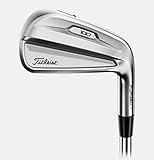
- The 100% forged design produces a consistent, solid control iron that delivers the performance the best players demand.
- High density and quality tungsten at heel and tip on medium to long irons to control the center of gravity and achieve perfect progression throughout the set.
- The new face of the T100 features a continuous construction that creates a seamless impact surface and a more even edge. The faces of the irons were redesigned to impart a little more effect, to improve the shape of the blow and the braking power.
- The aesthetics of the T100 have been refined to produce a cleaner and safer appearance. They have a thinner top line, and a compact blade length, finished in a matte brushed chrome plating to reduce glare.
Who This Is For
- Amateur golfers who want to understand how professional equipment choices might inform their own game.
- Golf enthusiasts and gearheads who enjoy dissecting the specific club selections of PGA Tour players like J.J. Spaun.
- Anyone looking to emulate the bag setup of a tour professional, seeking inspiration for their own club fitting and selection process.
What Clubs Does J.J. Spaun Play First?
- Driver: Confirm the exact model is the Titleist TSR3. Pay attention to the loft setting – this is crucial for dialing in launch conditions. Check the manual or manufacturer’s site if unsure about loft adjustments.
- Fairway Wood: Verify the model is the Titleist TSi2. Like the driver, the loft is a key spec. Ensure you’re looking at the correct TSi series fairway wood, as Titleist has several.
- Irons: Pinpoint the specific iron model, which is the Titleist T100. Note that T100 irons are designed for a specific player profile, so understanding their characteristics is important.
- Wedges: Identify the Vokey SM9 models. Vokey wedges are highly customizable, so it’s important to note the specific lofts and grinds he uses, as these are critical for different shot types and course conditions.
- Putter: While specific putter models can change, it’s worth noting if there’s a consistent brand or style he favors. Tour pros often have unique putter preferences.
J.J. Spaun’s Golf Club Selection: A Closer Look
Step-by-Step Plan for Understanding J.J. Spaun’s Bag
1. Action: Identify the driver model. What to look for: The Titleist TSR3. This driver is engineered for speed and forgiveness, with adjustability to fine-tune performance. Mistake: Assuming any Titleist driver is the same. The TSR series represents a significant advancement in Titleist’s driver technology, and each model within the series has distinct characteristics.
2. Action: Determine the fairway wood model. What to look for: The Titleist TSi2. This fairway wood is designed for a blend of speed and high launch, offering versatility from the tee and turf. Mistake: Confusing it with other Titleist fairway wood lines like the TS or TSi3. Each line has a different design philosophy.
3. Action: Confirm the iron set. What to look for: Titleist T100 irons. These are player’s cavity-back irons, offering a classic look with modern performance for skilled golfers. Mistake: Not specifying the exact model within the T-series. The T100 is distinct from the T150 or T200, each catering to different player needs.
4. Action: Note the wedge models and configurations. What to look for: Vokey Design SM9 wedges. Pay close attention to the specific lofts (e.g., 50°, 54°, 60°) and grinds (e.g., F, S, M, D) he uses. Mistake: Assuming any Vokey wedge will suffice. The grind and loft are critical for how the club interacts with the turf and the variety of shots you can play.
5. Action: Verify the shaft specifications for each club. What to look for: The specific shaft model and flex (e.g., Fujikura Ventus Blue 6X for the driver, True Temper Dynamic Gold Tour Issue X100 for irons). Mistake: Overlooking shafts. The shaft is arguably the most critical component influencing club performance, feel, and trajectory. Without the right shaft, even the best clubhead won’t perform optimally.
6. Action: Investigate his hybrid and utility iron choices, if any. What to look for: Whether he carries a hybrid or a utility iron, and the specific model and loft. These clubs fill gaps between fairway woods and irons. Mistake: Assuming he only carries a standard set of irons and woods. Many pros use hybrids or utility irons for specific course conditions or shot requirements.
7. Action: Research his putter. What to look for: The brand, model, and any specific customizations. Putter selection is highly personal. Mistake: Assuming a putter brand is standard. Tour pros often have unique putter preferences that are key to their success on the greens.
8. Action: Check for any specialty clubs or unique additions. What to look for: Any non-standard clubs, like a driving iron or a specific long-iron replacement. Mistake: Not looking beyond the typical driver-fairway-iron-wedge setup. Pros sometimes carry clubs for specific strategic advantages.
Common Mistakes in J.J. Spaun’s Club Selection Analysis
- Mistake: Assuming all players use the same club models. — Why it matters: Golf equipment is incredibly personalized. What works for one player, even a pro, might not suit another’s swing, feel, or preferences. It’s like picking hiking boots; you need what fits your feet. — Fix: Always verify the exact models, lofts, lies, and shaft specifications for each club.
- Mistake: Not confirming shaft details. — Why it matters: The shaft is the engine of the club. It dictates flex, weight, torque, and kickpoint, all of which dramatically affect swing tempo, ball speed, launch angle, and spin. A mismatch can kill performance. — Fix: Research the specific shaft models and flexes used in his clubs. This detail is often more important than the clubhead itself.
- Mistake: Ignoring wedge grinds and lofts. — Why it matters: Wedges are scoring clubs. The grind determines how the club interacts with the turf (bounce and sole width), affecting shot versatility from various lies. Loft dictates trajectory and spin. These are critical for short game mastery. — Fix: Pay close attention to the specific grind and loft numbers on his wedges, as these are tailored for his specific short-game needs.
- Mistake: Relying on outdated information. — Why it matters: Tour player bags are not static. Equipment manufacturers constantly release new models, and players frequently test and swap clubs throughout the season based on performance, course conditions, or personal preference. What he played last year might not be what he’s playing today. — Fix: Look for recent tour reports, equipment updates from reputable golf media, or official manufacturer specs released for the current season.
- Mistake: Overlooking adjustability. — Why it matters: Many modern drivers and fairway woods have adjustable hosels and weights. These allow for fine-tuning loft, face angle, and center of gravity. A pro’s setup might reflect specific adjustments made during fitting. — Fix: Be aware that factory settings might not be what the pro is using. Check for any mention of custom weighting or hosel adjustments.
- Mistake: Generalizing iron sets. — Why it matters: While J.J. Spaun plays Titleist T100 irons, the term “T100” can sometimes be a starting point. Pros might have different shaft options, lie angles, or even a blend of iron models within a set (e.g., a T100 in the long irons and T200 in the short irons, though this is less common with the T100). — Fix: Seek out detailed reports that specify the shaft and any custom work done on the irons.
What Clubs Does J.J. Spaun Play? FAQ
- What driver does J.J. Spaun use?
J.J. Spaun currently plays a Titleist TSR3 driver. This model is known for its speed, adjustability, and refined acoustics, catering to players who want to dial in their launch conditions.
- What irons does J.J. Spaun play?
He uses the Titleist T100 irons. These irons are designed for skilled players seeking a blend of traditional feel, clean aesthetics, and modern performance, offering exceptional control and workability.
- What fairway wood is in J.J. Spaun’s bag?
He typically carries a Titleist TSi2 fairway wood. This club is designed for players who want a balance of speed and a higher launch angle, providing versatility from the tee and the fairway.
- What wedges does J.J. Spaun have in his bag?
J.J. Spaun relies on Vokey Design SM9 wedges. The specific lofts and grinds within this series are critical for his short game, allowing for precise control on approach shots and around the greens.
- Does J.J. Spaun use a putter from a specific brand?
Information on J.J. Spaun’s exact putter model can vary, as tour players often experiment with putters to find what works best for them on different courses or at different times. It’s best to check recent tour reports for the most up-to-date information on his putting setup.
- Are J.J. Spaun’s club specifications readily available?
While the general club models are often reported, precise specifications like exact loft, lie angle, shaft tipping, and swing weighting are usually kept private or are subject to change based on fitting sessions. For exact details, you would typically need to consult the club manufacturer or specific tour equipment reports, which may not always be publicly disclosed.
- How often do PGA Tour players like J.J. Spaun change their clubs?
PGA Tour players often change their clubs more frequently than amateurs. They are constantly testing new equipment from manufacturers, tweaking their setups based on course conditions, personal performance, and feedback. A club that’s in the bag one week might be swapped out the next if a better option or a more suitable alternative is found.

Michael Reeves is a PGA Professional with over 20 years of experience in competitive golf and instruction. A former Division I collegiate player at the University of Texas, he competed on the mini-tours before transitioning to full-time coaching and golf journalism. He has been a certified PGA teaching professional since 2005 and has worked with players at every level, from absolute beginners to collegiate champions.
His writing has appeared in Golf Digest, Golf Magazine, and The Left Rough. At GolfHubz, Michael leads the editorial team, overseeing fact-checking and ensuring every answer meets the same standard he demands on the lesson tee: clear, evidence-based, and immediately useful.
When he’s not writing or teaching, Michael plays to a +1.4 handicap at his home club in Austin, Texas. He has attended over 40 major championships as a journalist and fan, and has played more than 200 courses across 15 countries.
You can reach Michael at [email protected] or follow his occasional swing analysis posts on the site.