Golf Ball Pricing: Factors and Average Costs
← Golf Equipment | Golf Clubs
BLOCKQUOTE_0
Quick answer
- Most golf balls will run you between $10 and $60 per dozen.
- You’ll pay more for premium urethane balls than the ionomer kind.
- Price jumps depend on the brand, how many layers the ball has (2-piece, 3-piece, etc.), and the tech packed inside.
Who this is for
- Anyone trying to get a handle on how much different golf balls should cost.
- New golfers figuring out what kind of budget they need for balls.
- Seasoned players looking to dial in their equipment choices without overspending.
What to check first
- Count the count: Make sure you know if you’re looking at a dozen (12 balls) or some other quantity. That’s key for a fair comparison.
- Cover material: Urethane covers feel better and spin more, but they cost more than ionomer covers. This is a big one for feel and control around the greens.
- Construction: Is it a simple 2-piece ball or a more complex 3-piece or multi-piece design? More layers usually mean a higher price tag, but also potentially more performance.
- Brand name: Big names often charge a premium for their reputation and R&D. Sometimes you’re paying for the logo, other times for proven tech.
- Intended use: Is it a distance ball, a soft feel ball, a ball for high swing speeds, or one for beginners? The design purpose impacts the price.
Understanding Golf Ball Pricing
Figuring out how much do golf balls cost isn’t just about grabbing the cheapest dozen. It’s about matching your game to the right ball without breaking the bank. Let’s break it down. I’ve spent more than my fair share of time looking at golf balls, trying to find that sweet spot between performance and price.
- Action: Figure out your typical swing speed.
- What to look for: Slower swing speeds often work well with lower compression balls, which are typically cheaper. These balls are designed to compress more easily, giving you a bit of a boost. Higher swing speeds need balls that can handle more force without losing energy.
- Mistake: Thinking every ball is designed for every swing speed. If you have a faster swing and use a ball designed for slower speeds, you might get less distance and a mushy feel. Conversely, a slow swinger with a high-compression ball might not get it to compress enough for optimal performance.
- Action: Pinpoint what you need most from a ball.
- What to look for: Are you chasing more distance off the tee, better spin around the greens for stopping power, or just a softer feel for more control on short shots? Different balls are engineered for different priorities. Distance balls often have firmer cores and firmer covers, while spin balls usually feature softer urethane covers.
- Mistake: Grabbing a ball just because it’s cheap, without thinking about how it’ll actually play for you. A ball that’s cheap but doesn’t help your game is no bargain. I learned that the hard way early on.
- Action: Scout out different golf ball brands and their offerings.
- What to look for: Established brands usually have a good range of prices and technologies to choose from. They often have entry-level options, mid-tier performers, and premium tour balls. Don’t be afraid to look at their entire lineup.
- Mistake: Ignoring lesser-known brands that might surprise you with great value. Sometimes smaller companies can offer excellent technology at a lower price point because they don’t have the same marketing overhead. I’ve found some solid deals from smaller companies over the years that perform just as well as the big names.
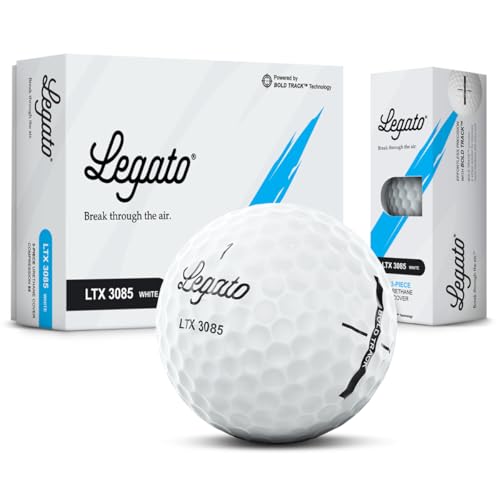 Legato Golf Balls LTX3085 | Maximized Distance with Soft Feel | 3 Piece | Urethane Cover | 85 Compression | White | 1 Dozen (12 Balls)Check price on AmazonWe may earn a commission
- Action: Check out reviews and comparisons for specific models.
- What to look for: See how balls perform for golfers with similar skill levels and needs to yours. Look for independent reviews that test distance, spin, feel, and durability. Websites and YouTube channels dedicated to golf equipment can be goldmines.
- Mistake: Relying only on marketing hype without real-world feedback. Every company says their ball is the longest and straightest. You need objective data and opinions from actual golfers.
- Action: Consider buying in bulk or looking for deals.
- What to look for: Sometimes buying multiple dozens or during sales can save you a decent chunk of change. Many retailers offer discounts when you buy 3 or 4 dozen at once. Keep an eye out for holiday sales or end-of-season clearances.
- Mistake: Not taking advantage of potential savings when stocking up. If you know you’ll go through a dozen or two a season, buying during a sale is a no-brainer.
- Action: Understand the construction types.
- What to look for:
- 2-Piece balls: These are generally the most affordable and durable. They typically feature a solid core and a Surlyn (ionomer) cover. They’re great for beginners and casual golfers looking for maximum distance and value.
- 3-Piece balls: These add a mantle layer between the core and the cover. This extra layer allows for more advanced design, often leading to better spin control around the greens and a softer feel, while still offering good distance. They are usually made with ionomer covers but can sometimes feature urethane.
- Multi-Piece (4-piece and 5-piece) balls: These are the most technologically advanced and expensive. They have multiple mantle layers and often a urethane cover. They are designed for golfers seeking the ultimate in spin, control, feel, and customized ball flight.
- Mistake: Buying a multi-piece ball when a 2-piece would serve you just as well, or vice-versa. A beginner might not benefit from the spin of a 5-piece ball and could be better off with a more forgiving, less expensive option.
Common Mistakes in Golf Ball Cost Analysis
- Mistake: Grabbing the absolute cheapest golf balls on the shelf.
- Why it matters: These balls might not fly as far, won’t last as long, and won’t feel great. They can feel like hitting rocks and may have inconsistent performance, which can actually make your game worse and less fun. You might end up losing more balls because they don’t perform predictably.
- Fix: Find a balance. Match the price to your game needs and skill level. Don’t just go for the bottom dollar. Look for balls in the $20-$30 per dozen range for a good blend of performance and value for most amateur golfers.
- Mistake: Dropping serious cash on premium balls when you’re just playing casually or are a beginner.
- Why it matters: All that fancy tech in high-end balls might go to waste if you’re not a scratch golfer or hitting every shot perfectly. The advanced spin control and feel are designed for players who can consistently take advantage of them. For many, the extra cost doesn’t translate into a noticeable improvement in their score.
- Fix: For practice or casual rounds, consider mid-range balls or even good quality used ones. Save the premium stuff for when you’re really dialed in and can feel the difference. A dozen of last year’s premium model on sale can also be a great compromise.
- Mistake: Not knowing the difference between urethane and ionomer covers.
- Why it matters: Urethane covers give you way more spin and control around the greens – crucial for your short game, like chipping and pitching. They have a softer feel. But they cost more. Ionomer covers are generally more durable and cheaper, offering more resistance to cuts and scuffs, and are often found on distance-oriented balls.
- Fix: Learn what each material does. It’s a big factor in how a ball performs and how much it costs. If your short game is weak, a urethane ball might help more than a distance ball, even if it’s a bit pricier.
- Mistake: Assuming all “distance” balls are the same.
- Why it matters: Some distance balls are built for slower swings, while others are for faster ones. You might buy one that doesn’t give you the boost you’re looking for if it’s not matched to your swing speed. A ball designed for a 120 mph swing speed might feel like a brick to someone swinging at 80 mph.
- Fix: Check the compression rating and intended swing speed for distance balls. Many manufacturers will specify if a ball is designed for high or low swing speeds. Look for balls with lower compression if you have a slower swing.
- Mistake: Forgetting about used or refinished golf balls.
- Why it matters: These can offer incredible value, often playing nearly as well as new balls for a fraction of the price. Refinished balls are cleaned and re-marked, and while some purists avoid them, many offer a fantastic way to play premium balls at a budget price.
- Fix: Buy from reputable sellers. Look for sellers who grade their used balls clearly (e.g., AAAA, AAA). You can get premium balls at a steep discount, making them a great option for practice or even casual rounds.
- Mistake: Not considering the impact of ball construction on feel.
- Why it matters: The number of pieces in a ball directly affects its feel. 2-piece balls tend to feel firmer, while 3-piece and multi-piece balls generally offer a softer, more responsive feel due to their more complex construction and often softer covers. If you prefer a softer sensation, a firmer 2-piece ball might be a turn-off.
- Fix: Pay attention to descriptions that mention “soft feel” or “firm feel.” If possible, try out different types of balls to see what you prefer. A ball that feels good to you will likely lead to more confident swings.
- Mistake: Overlooking the importance of golf ball dimple patterns.
- Why it matters: While not always directly advertised on the price tag, the specific dimple pattern on a golf ball is engineered to optimize aerodynamics, influencing lift and drag. This directly impacts the ball’s trajectory and how it flies through the air, affecting both distance and accuracy. Different patterns are designed for different flight characteristics.
- Fix: While it’s hard for the average golfer to discern the nuances of dimple patterns, reputable brands often explain the aerodynamic benefits of their designs. Look for balls that mention improved lift or reduced drag, especially if you struggle with getting the ball to carry well.
FAQ
- What is the average price range for a dozen new golf balls?
You’re generally looking at anywhere from $10 for budget options to $60 or more for premium, tour-level balls per dozen. Most golfers find a good balance in the $25-$40 per dozen range.
- How do urethane golf balls compare in price to ionomer golf balls?
Urethane-covered balls are typically more expensive, often costing $10-$20 more per dozen than similar ionomer-covered balls because of the superior feel, spin, and control they offer, which is prized by better players.
- Are premium golf balls worth the higher cost for an average golfer?
For the average golfer, the difference in performance might be subtle. If you’re not consistently hitting high-quality shots where spin and feel are critical, mid-range balls might offer a better bang for your buck. However, if you enjoy the game and want to maximize your potential, experimenting with premium balls could be worthwhile.
- Does the number of pieces in a golf ball affect its cost?
Yes, generally. 2-piece balls are usually the most affordable and durable, designed for maximum distance. 3-piece and multi-piece balls incorporate more layers for enhanced feel, spin, and control around the greens, which drives up the price due to more complex manufacturing processes.
- Can I find good golf balls for under $20 a dozen?
Absolutely. You can find decent 2-piece or budget-friendly 3-piece balls from various brands in that price range, especially if you look for sales or consider less premium models. These are excellent for beginners or for practice sessions.
- How important is brand name when considering golf ball price?
Brand name plays a significant role. Established brands with strong reputations for R&D and marketing often command higher prices for comparable technology. However, don’t discount smaller brands that might offer similar performance at a lower price point.
- What’s the best way to save money on golf balls?
Look for sales, buy in bulk (often 3 or 4 dozen at a time), consider mid-range options that balance performance and cost, and explore high-quality used or refinished golf balls from reputable sellers. Buying last year’s models on clearance is also a smart move.
Sources:

Michael Reeves is a PGA Professional with over 20 years of experience in competitive golf and instruction. A former Division I collegiate player at the University of Texas, he competed on the mini-tours before transitioning to full-time coaching and golf journalism. He has been a certified PGA teaching professional since 2005 and has worked with players at every level, from absolute beginners to collegiate champions.
His writing has appeared in Golf Digest, Golf Magazine, and The Left Rough. At GolfHubz, Michael leads the editorial team, overseeing fact-checking and ensuring every answer meets the same standard he demands on the lesson tee: clear, evidence-based, and immediately useful.
When he’s not writing or teaching, Michael plays to a +1.4 handicap at his home club in Austin, Texas. He has attended over 40 major championships as a journalist and fan, and has played more than 200 courses across 15 countries.
You can reach Michael at [email protected] or follow his occasional swing analysis posts on the site.