Cost to Regrip a Putter
← Golf Costs & Economics | Golf Equipment Costs
BLOCKQUOTE_0
Quick Answer: How Much Does it Cost to Regrip a Putter?
- Expect to pay between $5 and $25 per grip for the grip itself, plus potential labor costs if you go to a pro shop.
- Doing it yourself can save you a good chunk of change, mostly just covering the cost of the grips and a few basic tools.
- Professional services offer convenience and expertise, but the final price tag will depend on your grip choice and the shop’s rates.
Who This Putter Regripping Guide Is For
- Golfers who want to bring back that fresh feel and improve their putting performance without buying a new club.
- Anyone curious about the actual costs involved in keeping their putter in top shape.
- DIYers who like getting their hands dirty and want to learn a useful golf club maintenance skill.
What to Check First Before Putter Regripping
- Current Grip Condition: Give your current grip a good once-over. Is it worn out, cracked, or just plain slippery? A beat-up grip messes with your feel.
- Putter Head Weight: Believe it or not, a new grip can slightly change your putter’s swing weight. Lighter grips can make the head feel heavier. Keep this in mind, especially if you’re sensitive to feel.
- Grip Size and Type: Putter grips come in all sorts of shapes and sizes – standard, midsize, jumbo, even pistol grips. Think about what feels best in your hands. This is key to a solid stroke.
- Shaft Type: Most putters have steel shafts, but some might have graphite. Make sure your tools and methods are compatible.
Step-by-Step Putter Regripping Plan
1. Purchase New Putter Grips: Choose grips that match your preference and budget.
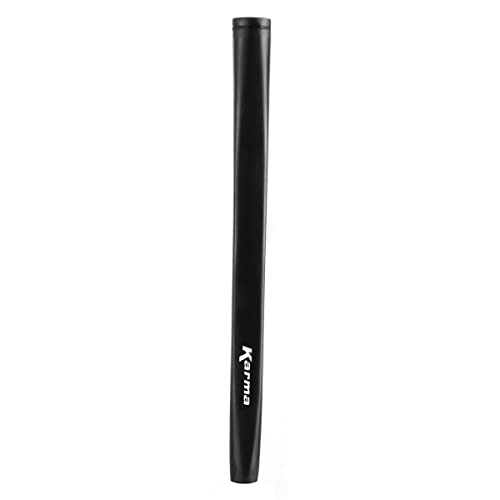 Karma Smooth Black Paddle Putter Grip | Standard Size, Soft Comfortable RubberCheck price on AmazonWe may earn a commission
- What to look for: Comfortable feel, appropriate size (standard, midsize, jumbo), and tackiness.
- Mistake to avoid: Buying grips that are incompatible with your shaft diameter or have a weird texture you won’t like.
2. Gather Necessary Tools: You’ll need regripping tape, solvent (or mineral spirits), a vise with a shaft clamp, a utility knife, and a rubber mallet.
- What to look for: All your supplies ready to go before you start.
- Mistake to avoid: Forgetting a critical tool like the vise or not having enough solvent. Trust me, you don’t want to run out mid-job.
3. Secure the Putter in a Vise: Clamp the putter shaft firmly, using a shaft protector or rubber insert to avoid damaging the shaft.
- What to look for: The putter is held securely but not so tight that it risks cracking.
- Mistake to avoid: Overtightening the vise and cracking the shaft. That’s a quick way to turn a $10 fix into a much bigger problem.
4. Remove the Old Grip: Use your utility knife to carefully cut off the old grip. Start from the top and work your way down.
- What to look for: The old grip coming off cleanly without damaging the shaft.
- Mistake to avoid: Cutting too deep and nicking the shaft itself. That’s a no-go.
5. Clean the Shaft: Scrape off any old grip tape residue. A clean surface is crucial for the new tape to stick.
- What to look for: A smooth, clean shaft surface free of any gunk.
- Mistake to avoid: Leaving old tape behind, which can cause bumps under the new grip.
6. Apply New Grip Tape: Wrap the double-sided grip tape around the shaft where the grip will go. Overlap it slightly.
- What to look for: Even coverage with no wrinkles or loose ends.
- Mistake to avoid: Not covering the full length where the grip will sit, leading to a loose grip.
7. Apply Solvent and Mount the Grip: Douse the inside of the new grip with solvent. Then, slide the grip onto the taped shaft, making sure it’s straight.
- What to look for: The grip sliding on smoothly, allowing you to adjust its position.
- Mistake to avoid: Not using enough solvent. It makes installation a bear and can damage the grip. Also, make sure the grip is oriented correctly before it’s fully on.
8. Let it Dry: Allow the solvent to evaporate and the grip to set. This usually takes a few hours.
- What to look for: The grip feeling secure and dry to the touch.
- Mistake to avoid: Trying to use the putter before the grip is fully set. It’ll just spin.
Common Mistakes When Regripping Putters
- Incorrect Grip Size — Leads to improper hand placement and stroke, affecting your consistency. — Choose grips that match your hand size and playing style. Standard, midsize, and jumbo are the main options.
- Not Using Enough Solvent — Makes installation difficult and can cause the grip to tear or get stuck halfway. — Use the amount recommended by the grip manufacturer, usually a good splash inside.
- Overtightening the Vise — Can crack or damage the putter shaft, which is a costly repair. — Use a shaft clamp or rubber vise insert to protect the shaft.
- Skipping the Grip Tape — The grip won’t adhere properly and could spin during your stroke. — Always use double-sided grip tape designed for golf clubs.
- Rushing the Job — Leads to crooked grips, air bubbles, or damage to the club. — Take your time, especially on your first few. It’s better to do it right.
- Using the Wrong Solvent — Some solvents can damage certain grip materials or the shaft. — Stick to grip solvent or mineral spirits. Check the grip manufacturer’s recommendations.
FAQ
- How often should I regrip my putter?
You should regrip your putter when the current grip shows signs of wear, like cracking, becoming slick, or losing its tackiness. For most golfers, this is every 1-3 years, depending on how much you play and practice.
- Can I regrip my putter myself?
Absolutely! Regripping a putter is one of the easier club maintenance tasks. With a few basic tools and a little patience, most golfers can do it successfully.
- What is the average cost of a new putter grip?
New putter grips typically range from $5 to $25 each, depending on the brand, material, and size. Some premium or oversized grips can cost a bit more.
- How much does it cost to have a pro shop regrip my putter?
If you go to a golf shop, expect to pay around $10 to $30 per putter, which includes both the grip cost and the labor. This can vary based on the shop and the grip you choose.
- Will a new putter grip change the weight of my putter?
Yes, a new grip can slightly alter the putter’s overall weight and swing weight. Lighter grips can make the putter head feel heavier, and vice-versa. Consider the weight of the new grip if you’re sensitive to feel.
- Can I use rubbing alcohol instead of grip solvent?
Rubbing alcohol (isopropyl alcohol) can sometimes work as a substitute for grip solvent, but it might not be as effective or evaporate as cleanly. Grip solvent or mineral spirits are generally recommended for best results.

Michael Reeves is a PGA Professional with over 20 years of experience in competitive golf and instruction. A former Division I collegiate player at the University of Texas, he competed on the mini-tours before transitioning to full-time coaching and golf journalism. He has been a certified PGA teaching professional since 2005 and has worked with players at every level, from absolute beginners to collegiate champions.
His writing has appeared in Golf Digest, Golf Magazine, and The Left Rough. At GolfHubz, Michael leads the editorial team, overseeing fact-checking and ensuring every answer meets the same standard he demands on the lesson tee: clear, evidence-based, and immediately useful.
When he’s not writing or teaching, Michael plays to a +1.4 handicap at his home club in Austin, Texas. He has attended over 40 major championships as a journalist and fan, and has played more than 200 courses across 15 countries.
You can reach Michael at [email protected] or follow his occasional swing analysis posts on the site.