Cost of a Golf Ball
← Golf Equipment | Golf Balls
BLOCKQUOTE_0
Quick answer
- A single golf ball typically costs between $1 and $5, with premium models reaching higher.
- The price hinges on construction, cover material (urethane vs. ionomer), and performance features.
- Budget-friendly options are usually 2-piece, lower-compression balls, great for beginners.
Who this is for
- Beginner golfers just starting out and looking for affordable practice balls.
- Mid-handicap players wanting to understand the value proposition of different golf ball types.
- Experienced golfers evaluating how ball cost impacts their performance and budget.
What to check first for Golf Ball Cost
- Construction Layers: Check if it’s a 2-piece, 3-piece, or even 4-piece ball. More layers usually mean more advanced performance and a higher price tag.
- Cover Material: Is it urethane or ionomer? Urethane covers offer superior spin and feel but come at a premium. Ionomer is more durable and cheaper.
- Intended Player: Is the ball marketed for beginners, game improvement, or advanced players? This dictates its design and cost.
- Brand Reputation & Model: Established brands often command higher prices, but don’t discount lesser-known brands that might offer better value for specific needs.
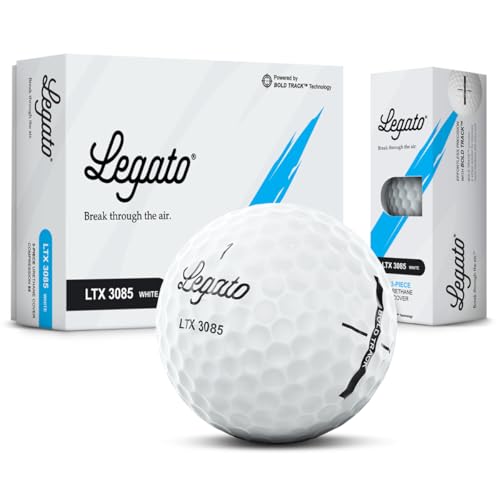 Legato Golf Balls LTX3085 | Maximized Distance with Soft Feel | 3 Piece | Urethane Cover | 85 Compression | White | 1 Dozen (12 Balls)Check price on AmazonWe may earn a commission
Understanding Golf Ball Cost and Performance
Let’s get into the nitty-gritty of why some golf balls cost more than others. It ain’t just about the dimples, folks.
Step-by-step plan to understand Golf Ball Cost
1. Assess your skill level honestly.
- Action: Take stock of your current game. Are you hitting fairways consistently? How often do you find yourself in the rough or the woods? What’s your typical handicap?
- What to look for: A clear picture of your strengths and weaknesses. Are you a slicer, a hooker, or do you have a reliable draw? Do you struggle with distance or accuracy?
- Mistake: Overestimating your abilities and buying a premium, high-spin ball when you need something more forgiving and durable. I learned this lesson early on, costing me a fortune in lost balls.
2. Learn the basic golf ball constructions.
- Action: Educate yourself on the differences between 2-piece, 3-piece, and multi-piece golf balls. Understand what a core, mantle, and cover do.
- What to look for: How construction impacts feel, spin, and compression. 2-piece balls are generally firmer, longer off the tee, and less spinny. 3-piece balls offer more spin control and a softer feel.
- Mistake: Not knowing the fundamental differences means you can’t make an informed choice. Buying a spin-heavy ball when you need maximum distance off the tee is a classic blunder.
3. Determine your swing speed.
- Action: Try to get a rough estimate of your driver swing speed. Many driving ranges have launch monitors, or a local pro shop can help.
- What to look for: A general category: under 90 mph (slower swingers), 90-105 mph (average to fast swingers), or over 105 mph (very fast swingers).
- Mistake: Ignoring swing speed is a big one. A ball that’s too hard for your swing won’t compress properly, killing distance. A ball that’s too soft for a fast swing can feel mushy and lack control.
4. Identify your primary performance needs.
- Action: Decide what aspect of your game you want the golf ball to help the most. Is it maximizing distance off the tee? Generating more spin for approach shots? Achieving a softer feel? Or just finding a ball that lasts?
- What to look for: Ball descriptions that highlight specific benefits. Look for keywords like “distance,” “spin,” “feel,” “soft,” “firm,” and “durability.”
- Mistake: Chasing a ball that promises everything for everyone. Most balls are designed with specific player types and needs in mind. Trying to be a jack-of-all-trades often means being master of none.
5. Consider the cover material.
- Action: Pay attention to whether the ball has a urethane or ionomer cover. This is a major factor in price and performance.
- What to look for: Urethane covers are generally softer, provide more greenside spin, and offer a better feel. Ionomer covers are harder, more durable, and usually less expensive, often found on distance-focused balls.
- Mistake: Not understanding the trade-offs. You might pay more for a urethane ball expecting it to be incredibly durable, when in reality, it might show scuffs more readily than a harder ionomer cover.
How Much is One Golf Ball? Factors Affecting Price
The cost of a golf ball isn’t arbitrary. It’s a reflection of the materials, the manufacturing process, and the intended performance benefits.
Common mistakes in Golf Ball Cost
- Assuming all golf balls perform the same.
- Why it matters: This is a rookie mistake. The difference in feel, spin, and distance between a $1 ball and a $5 ball can be night and day. You might be leaving strokes on the table or wasting money on features you can’t utilize.
- Fix: Research specific models and their intended benefits. Read reviews from golfers with similar skill levels to yours.
- Buying the most expensive ball you can find.
- Why it matters: The highest-priced balls are usually engineered for tour professionals or very skilled amateurs. Their advanced technology, like high spin rates around the green, might be wasted on a player who struggles with consistency or swing speed. You’re essentially paying for performance you can’t access.
- Fix: Match the ball’s features to your game. A mid-priced ball that complements your swing speed and playing style will likely yield better results than an overpriced ball that’s too demanding.
- Ignoring the number of layers.
- Why it matters: Each layer in a golf ball serves a purpose. More layers generally allow for finer tuning of compression, spin, and feel. A 2-piece ball is simpler and cheaper, while a 3-piece or 4-piece ball offers more nuanced performance, hence a higher cost.
- Fix: Understand that more layers typically mean more advanced performance characteristics, especially for spin and feel. Decide if that added complexity is worth the extra bucks for your game.
- Focusing solely on brand names.
- Why it matters: While Titleist, Callaway, and Bridgestone make fantastic golf balls, they aren’t the only players in the game. Smaller companies or brands might offer exceptional value or specialized performance that perfectly suits your needs at a lower price point.
- Fix: Be open to trying different brands and models. Base your decision on the ball’s specifications and how they align with your game, not just the logo on the side.
- Not considering buying in bulk or looking for deals.
- Why it matters: Golf balls are often cheaper when bought by the dozen or in larger quantities. Retailers also run sales, especially around holidays or at the end of the season. You can save a significant amount by being strategic.
- Fix: Keep an eye out for sales and promotions. Buying a few extra sleeves or a full dozen when they’re on discount can significantly lower your per-ball cost.
- Forgetting about used or refinished golf balls.
- Why it matters: For practice sessions, casual rounds, or if you’re someone who tends to lose a lot of balls, used or refinished balls can be a game-changer for your wallet. They’re often available at a fraction of the cost of new balls.
- Fix: Purchase from reputable online retailers or local golf shops that specialize in used balls. Inspect them carefully for significant scuffs or damage, but for general play, they’re often a fantastic bargain.
FAQ
- What is the average price of a golf ball?
The average price for a new golf ball typically falls between $2.00 and $4.00 per ball. However, this range is quite broad. You can find basic models for under $1.50 each, while premium, tour-level balls can easily cost $5.00 or more.
- Are more expensive golf balls always better for my game?
Not necessarily. The “better” golf ball is the one that complements your swing speed, desired spin rate, and overall playing style. A $5 premium ball might perform worse for a beginner than a $2 ball designed for distance and forgiveness, simply because the beginner can’t take full advantage of the advanced technology.
- How does golf ball construction affect its price?
The number of layers and the materials used are primary cost drivers. Multi-piece construction (3-piece, 4-piece) with advanced core and mantle designs, combined with a soft urethane cover, requires more complex manufacturing processes and higher-quality materials, thus increasing the price. Simpler 2-piece designs with ionomer covers are less expensive to produce.
- Should beginners use cheaper golf balls?
Yes, it’s generally recommended for beginners to start with more affordable golf balls. These are often 2-piece, lower-compression balls that are more forgiving on off-center hits, offer more distance for slower swing speeds, and are less punishing financially when inevitably lost.
- Can I use any golf ball I find?
Technically, yes, as long as it conforms to the Rules of Golf (governed by the USGA and R&A). However, performance will vary dramatically. Using a ball not suited to your game can negatively impact your scores, even if it’s technically legal. It’s best to choose balls that align with your skill level and goals.
- What’s the difference between a urethane and an ionomer cover?
Urethane covers are generally softer, offering superior greenside spin for players who want to control their approach shots and short game. They also provide a more premium feel. Ionomer covers are harder and more durable, typically found on distance-focused balls. They are less expensive to produce and resist cuts and abrasions better, but offer less spin.
- Where can I find good deals on golf balls?
Look for sales at major sporting goods retailers, golf specialty shops, and online stores. Buying in bulk (dozens rather than sleeves) often provides a discount. Also, consider reputable sellers of used or refinished golf balls for significant savings, especially for practice or casual play.

Michael Reeves is a PGA Professional with over 20 years of experience in competitive golf and instruction. A former Division I collegiate player at the University of Texas, he competed on the mini-tours before transitioning to full-time coaching and golf journalism. He has been a certified PGA teaching professional since 2005 and has worked with players at every level, from absolute beginners to collegiate champions.
His writing has appeared in Golf Digest, Golf Magazine, and The Left Rough. At GolfHubz, Michael leads the editorial team, overseeing fact-checking and ensuring every answer meets the same standard he demands on the lesson tee: clear, evidence-based, and immediately useful.
When he’s not writing or teaching, Michael plays to a +1.4 handicap at his home club in Austin, Texas. He has attended over 40 major championships as a journalist and fan, and has played more than 200 courses across 15 countries.
You can reach Michael at [email protected] or follow his occasional swing analysis posts on the site.