Choosing the Right Golf Putter
← Golf Equipment | Golf Clubs
BLOCKQUOTE_0
Quick Answer
- Match your putting stroke type (straight or arc) to the putter’s toe hang.
- Choose between a blade or mallet head based on your preference and stroke.
- Ensure the putter’s length and lie angle are properly fitted for your stance.
Who This is For
- Golfers ready to dial in their short game and sink more putts.
- Anyone looking to upgrade from a beginner putter or fine-tune their current setup.
What to Check First for Your Golf Putter
- Your Putting Stroke: Is it mostly straight back and straight through, or does it have a noticeable arc? This is key. Knowing this will drastically narrow down your options.
- Putter Balance (Toe Hang): Feel the weight and balance of different putter heads. Some are face-balanced, others have toe hang. This is directly related to your stroke type.
- Grip Feel: Does the grip feel comfortable in your hands? Too thick, too thin, or the wrong material can throw you off. It’s your only connection to the club.
- Head Style: Blade putters generally suit an arcing stroke, while mallets are often better for a straighter one. This is a good starting point for matching.
- Length and Lie Angle: These two factors are crucial for proper setup and consistent contact. An ill-fitting putter is a score killer.
How to Choose a Golf Putter: Step-by-Step
1. Assess Your Putting Stroke.
- Action: Observe your natural motion in front of a mirror or use a practice putting mat. Focus on the path of the putter head.
- What to look for: Is it a straight back and straight through motion, or does it have a distinct arc from backswing to follow-through? This is the most critical piece of information.
- Mistake to avoid: Guessing your stroke type. If you’re unsure, have a buddy film you or use a putting analysis app. Being honest here saves a lot of heartache later.
2. Identify Your Preferred Putter Head Style.
- Action: Look at the different head shapes available – blades and mallets.
- What to look for: Blade putters are typically smaller, more traditional shapes, often with more toe hang (meaning the toe points down when balanced on your finger). Mallet putters are larger, more forgiving, and often face-balanced (meaning the face stays square to your hand when balanced). Blades tend to suit an arcing stroke, while mallets are often better for a straighter one.
- Mistake to avoid: Choosing based on looks alone. A flashy putter won’t save strokes if it doesn’t fit your swing. Functionality trumps aesthetics every time on the course.
3. Determine the Correct Putter Length.
- Action: Stand naturally with a club (any club will do for a rough measurement) in your hands as if you’re addressing the ball. Have someone measure from the ground up to the crease in your lead wrist.
- What to look for: This measurement gives you a starting point for putter length. Generally, taller golfers need longer putters, and shorter golfers need shorter ones. You should be able to stand up relatively straight, not hunched over.
- Mistake to avoid: Using an incorrect length that forces bad posture. If the putter is too long, you’ll have to bend too much, leading to inconsistency. If it’s too short, you’ll be too upright.
4. Check the Putter’s Balance (Toe Hang).
- Action: Balance the putter on your index finger, roughly halfway down the shaft.
- What to look for: If the toe hangs down significantly, it has high toe hang. If the face points straight up or is mostly level, it’s face-balanced. If you have an arcing stroke, look for a putter with toe hang. If your stroke is straight back and straight through, a face-balanced putter is usually the best bet.
- Mistake to avoid: Ignoring toe hang and its relation to your stroke. This is a major factor in how the putter feels through impact and helps it naturally return to square.
5. Test Different Grip Types and Sizes.
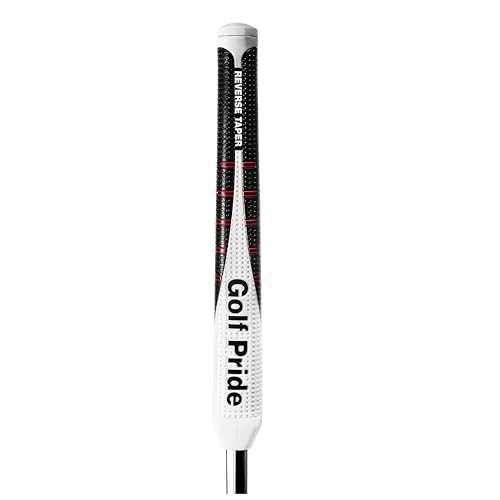 Golf Pride Reverse Taper Golf Putter Grip - Unique Shape to Optimize Both Hands - Tacky Dimpled Surface Texture - Large - FlatCheck price on AmazonWe may earn a commission
- Action: Hold the putter and feel how the grip fits your hands. Try different thicknesses and textures.
- What to look for: A grip that feels comfortable and allows you to maintain a relaxed grip pressure is ideal. Some golfers prefer a fatter grip to reduce wrist action, while others like a standard size.
- Mistake to avoid: Sticking with a standard grip if it doesn’t feel good. The grip is your only connection to the club, and an uncomfortable one can lead to tension and loss of feel.
6. Consider the Shaft Offset.
- Action: Look at where the shaft connects to the putter head.
- What to look for: Most putters have some offset, meaning the shaft is bent forward or set back from the leading edge of the clubface. Full shaft offset (where the shaft is in front of the leading edge) can help promote a slightly more open clubface on the backswing and a closed face through impact, which can be beneficial for arcing strokes. A shorter or no offset is often preferred for straighter strokes.
- Mistake to avoid: Not paying attention to shaft offset. It can subtly influence your setup, eye position over the ball, and the natural path of your stroke.
7. Test Different Loft Angles.
- Action: While most putters come with a standard loft (typically 3-4 degrees), subtle variations exist, and some custom options are available.
- What to look for: Standard loft is designed to get the ball rolling quickly without bouncing too much. If you have a very steep or very shallow putting stroke, you might benefit from a slightly different loft, but this is usually a more advanced consideration.
- Mistake to avoid: Overthinking loft as a beginner. Unless you have a very unusual stroke, the standard loft will likely work fine. Focus on stroke type, length, and balance first.
8. Take It to the Practice Green.
- Action: The best way to know if a putter is right is to roll some putts with it.
- What to look for: Pay attention to the feel and sound off the face. Does it feel solid? Does the ball roll off the face the way you expect? Does it feel balanced throughout your stroke?
- Mistake to avoid: Buying a putter without testing it on actual greens. Online reviews are helpful, but real-world feel on real grass is everything. You need to feel confident with it.
Common Mistakes in Choosing a Golf Putter
- Choosing based on aesthetics — Why it matters: A putter that looks cool won’t help your score if it doesn’t suit your stroke and feel. A flashy design is useless if it leads to more three-putts. — Fix: Prioritize performance, feel, and proper fit over looks.
- Ignoring your putting stroke type — Why it matters: The wrong putter can actively hinder your natural stroke, leading to more three-putts and frustration. A face-balanced mallet for an arcing stroke, for instance, will fight you. — Fix: Honestly assess your stroke (arc vs. straight) and match it to the putter’s characteristics like toe hang.
- Using the wrong length — Why it matters: An incorrectly sized putter forces you into awkward stances, leading to poor posture and inconsistent contact. This can cause you to pull or push putts without realizing why. — Fix: Get properly measured or test various lengths until you find one that allows a natural setup with your eyes over the ball.
- Not considering the grip — Why it matters: The grip is your only connection to the putter. An uncomfortable grip leads to tension, loss of control, and inconsistent feel. — Fix: Experiment with different grip thicknesses and materials to find what feels best in your hands. A comfortable grip promotes a free-flowing stroke.
- Buying without testing — Why it matters: What looks good on paper or in a store might feel completely different on the green. The feedback you get from hitting actual putts is invaluable. — Fix: Always try to roll some putts with a potential new putter on a practice green before committing.
FAQ
- What is the difference between a blade putter and a mallet putter?
Blade putters are typically smaller, more traditional shapes, often with more toe hang, suited for an arcing stroke. They offer more feel and feedback. Mallet putters are larger, more forgiving due to their perimeter weighting, and often face-balanced, ideal for a straighter stroke. They tend to be more stable.
- How do I know what length putter I need?
A good starting point is to stand naturally with a club and measure from the ground to the crease in your lead wrist. Generally, taller golfers need longer putters (around 35-36 inches), and shorter golfers need shorter ones (around 32-33 inches). However, it’s best to get fitted or try different lengths until you find one that allows a comfortable, athletic stance with your eyes directly over the ball.
- What does “lie angle” mean for a golf putter?
The lie angle is the angle between the shaft and the ground when the putter is in its intended address position. An incorrect lie angle can cause the putter face to open or close at impact, affecting your aim. If the toe of the putter is significantly off the ground, the lie angle is likely too upright for you; if the heel is off the ground, it’s likely too flat.
- What is “toe hang” and why is it important?
Toe hang refers to how much the toe of the putter droops when you balance it on your finger. Putters with more toe hang are generally better for golfers with an arcing putting stroke, as they help the putter face naturally rotate back to square at impact. Face-balanced putters are designed for golfers with a straighter putting stroke and help keep the face square throughout the swing.
- Should I get a putter with a steel or graphite shaft?
Most putters come with steel shafts, offering good feel and feedback, which is crucial for distance control and sensing the clubhead. Graphite shafts are lighter and can sometimes offer more stability or a different feel, but steel is the traditional and widely preferred choice for putters due to the tactile feedback they provide.
Sources:
- Choosing the Right Putter for Your Game
- How to Choose the Right Putter
- Selecting the Right Putter for Your Game
- How to Find the Right Putter for Your Game

Michael Reeves is a PGA Professional with over 20 years of experience in competitive golf and instruction. A former Division I collegiate player at the University of Texas, he competed on the mini-tours before transitioning to full-time coaching and golf journalism. He has been a certified PGA teaching professional since 2005 and has worked with players at every level, from absolute beginners to collegiate champions.
His writing has appeared in Golf Digest, Golf Magazine, and The Left Rough. At GolfHubz, Michael leads the editorial team, overseeing fact-checking and ensuring every answer meets the same standard he demands on the lesson tee: clear, evidence-based, and immediately useful.
When he’s not writing or teaching, Michael plays to a +1.4 handicap at his home club in Austin, Texas. He has attended over 40 major championships as a journalist and fan, and has played more than 200 courses across 15 countries.
You can reach Michael at [email protected] or follow his occasional swing analysis posts on the site.