Choosing the Best Golf Ball for Your Game
← Golf Equipment | Golf Balls
BLOCKQUOTE_0
Quick Answer
- Match your golf ball’s compression to your swing speed. This is crucial for distance and feel.
- Urethane covers give you more spin and a softer feel, ideal for approach shots. Ionomer covers are tougher and cheaper, great for distance.
- Consider if you need more spin around the greens or maximum distance off the tee. Your game dictates the best choice.
Who This is For
- Golfers who want to improve their game by making smart equipment choices.
- Players who feel their current golf balls aren’t cutting it, leading to inconsistent results.
- Beginners who want to understand how a simple golf ball can impact their score.
How to Choose the Right Golf Ball: What to Check First
- Swing Speed: This is the big one. If your swing’s too slow for a ball, you won’t compress it right, and that kills distance. Too fast, and it might feel too hard. Check the manual or manufacturer’s website for their recommendations. I usually just eyeball it, but a launch monitor is better if you’re serious.
- Cover Material: Urethane covers are the premium stuff. They grip the clubface better, giving you more spin on wedges and irons. Ionomer covers are tougher and cheaper, usually found on distance balls. They’re more durable but offer less spin.
- Desired Ball Flight: Think about how you like the ball to fly. Do you hit it high and floaty, or more of a lower, piercing trajectory? Some balls are designed to promote one flight path over the other. It’s worth considering what works best for your swing and course conditions.
- Number of Dimples: This might sound like nitpicking, but it matters for aerodynamics. Different dimple patterns affect how the ball cuts through the air, influencing drag and stability. More dimples can mean less drag and a more consistent flight.
Step-by-Step Plan for Selecting Golf Balls
1. Assess Your Average Driver Swing Speed.
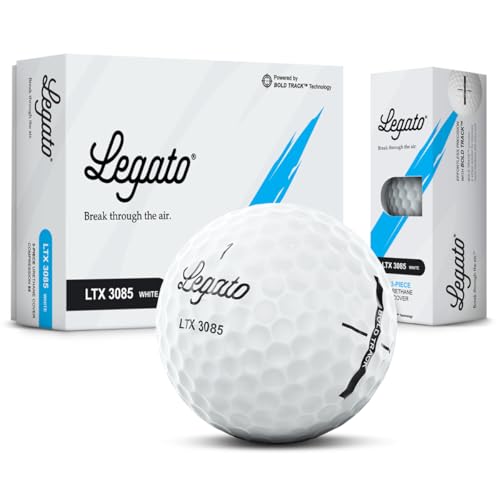 Legato Golf Balls LTX3085, 3 Piece, Urethane Cover, White, 1 Dozen | Maximized Spin Control & Soft Feel, 85 Compression for Maximized Distance, USGA ConformingCheck price on AmazonWe may earn a commission
- Action: Get a reading from a launch monitor. You can find these at most golf shops or during a club fitting.
- What to look for: A number in miles per hour (mph). Most recreational golfers are swinging between 80-100 mph.
- Mistake to avoid: Guessing your swing speed. This is the most common blunder and leads straight to picking the wrong compression. You might think you’re faster than you are, or vice versa.
2. Determine Your Desired Ball Flight.
- Action: Take a moment to reflect on how your ball typically flies off the tee and when it lands on the green.
- What to look for: Your preference for how the ball ascends and descends. Do you want a higher trajectory for more carry, especially if you play in wind? Or is a lower, more penetrating flight better for your game?
- Mistake to avoid: Not considering how your current ball flies or if that flight pattern is actually helping your game. You might be fighting your equipment without realizing it.
3. Research Golf Ball Compression Ratings.
- Action: Match the compression numbers to your measured swing speed.
- What to look for: Compression numbers typically range from 70 to 110. Slower swings (generally under 90 mph) benefit from lower compression balls (70-85). Faster swings (over 95 mph) can handle higher compression (90-100+).
- Mistake to avoid: Choosing a ball that’s too firm or too soft for your swing. A ball that’s too firm won’t compress properly on impact, costing you precious distance. Too soft can feel mushy and lack the crispness needed for control.
4. Evaluate Cover Material Needs.
- Action: Decide if the added spin and premium feel of urethane are worth the extra cost for your game.
- What to look for: Urethane covers provide superior greenside spin and a softer feel, which many players prefer for control on chips and pitches. Ionomer covers are more durable and generally less expensive, often found on distance balls where raw yardage is the priority.
- Mistake to avoid: Overspending on a premium urethane ball if you’re a beginner who tends to lose a lot of balls. Conversely, don’t shy away from urethane if you need serious spin for approach shots into the green.
5. Consider Your Typical Playing Conditions.
- Action: Think about the types of courses you play most often and the weather you usually encounter.
- What to look for: If you play firm, fast courses, you might want a ball with more spin to help it stop on the green. If you often battle strong winds, a lower-spinning ball could be more beneficial for stability and control.
- Mistake to avoid: Buying a ball that’s optimized for a completely different type of player or course than yours. A ball designed for links golf might not perform well on a soggy parkland course.
How to Choose the Right Golf Ball: Finding Your Fit
Choosing the right golf ball is more than just picking a brand off the shelf. It’s about finding a piece of equipment that works with your swing, not against it. The core of how to choose the right golf ball lies in understanding a few key characteristics that directly impact your performance. We’ve covered the basics, but let’s dive a bit deeper into how these elements interact.
Compression and Swing Speed: The Dynamic Duo
Think of golf ball compression like a spring. A slower swing speed needs a softer spring that’s easy to compress. This compression is what stores energy and releases it back to the ball, creating speed and distance. If your swing speed is too low for a high-compression ball, you’re essentially trying to compress a brick. You’ll leave distance on the table and the ball will feel hard and unforgiving.
On the flip side, a fast swing speed can handle and even benefit from higher compression. A firmer ball can withstand the force of a powerful swing without “bottoming out” or deforming too much. If you have a fast swing and use a low-compression ball, it might feel mushy and lack the crisp feedback you want. You might also lose some of the distance potential because the ball is deforming too much and not efficiently transferring energy.
- For slower swings (under 90 mph): Look for balls in the 70-85 compression range. These are softer and easier to compress.
- For moderate swings (90-95 mph): Mid-compression balls, typically 85-95, can offer a good balance.
- For faster swings (over 95 mph): Higher compression balls, 95-105+, are generally suitable.
It’s important to note that “compression” isn’t a standardized industry rating, and different manufacturers measure it differently. However, the general principles of low compression for slower swings and high compression for faster swings hold true. This is why a launch monitor is your best friend. It provides objective data about your swing speed, allowing you to make an informed decision rather than guessing.
Cover Material: Spin, Feel, and Durability
The cover is the outermost layer of the golf ball, and it plays a huge role in how the ball interacts with your clubface, especially on shorter shots.
- Urethane Covers: These are the gold standard for golfers who prioritize spin and feel. Urethane is a softer, more pliable material that creates friction against the grooves of your irons and wedges. This friction translates into significantly more backspin. More backspin means your approach shots will stop faster on the green, giving you better control and making those tricky putts easier. Urethane balls also tend to have a softer feel, which many golfers find more pleasing. The downside? Urethane covers are less durable and more expensive. They can scuff more easily, and you’ll likely go through them faster, especially if you hit a lot of cart paths.
- Ionomer Covers: These covers are made from a tougher, more resilient plastic. They are generally less expensive and more durable than urethane. Ionomer covers produce less spin, which is why they are often found on “distance” balls. If your primary goal is to maximize your carry and roll off the tee, and you’re less concerned about stopping power on approach shots, an ionomer-covered ball might be a good choice. They’re also a great option for beginners or high-handicappers who tend to lose balls more frequently, as the cost per ball is lower.
The choice between urethane and ionomer often comes down to your priorities. Are you a player who needs to control spin around the greens, or are you looking for maximum yardage off the tee with a more forgiving price tag?
Number of Dimples: Aerodynamics in Action
While it might seem like a minor detail, the number, size, and pattern of dimples on a golf ball are carefully engineered to influence its flight. Dimples disrupt the airflow around the ball, creating a thin layer of turbulent air that clings to the ball’s surface. This reduces the drag that the ball experiences as it moves through the air, allowing it to travel farther and more stably.
Different dimple patterns are designed to optimize different aspects of flight. Some might aim to reduce drag for maximum distance, while others might be designed to promote a more consistent trajectory or reduce side spin. For most golfers, the specific dimple pattern is less critical than compression and cover material, but it’s an important factor manufacturers consider when designing a ball for a specific purpose.
Common Mistakes in Choosing Golf Balls
- Using a ball that’s too hard for your swing speed — This is a major distance killer. A ball that’s too firm won’t compress properly on impact, meaning less energy transfer and shorter shots. — Opt for a lower compression ball, typically in the 70-85 range if your swing speed is under 90 mph. It’s designed to give you that satisfying feel and maximum distance.
- Choosing a ball with too much spin off the tee — While spin is great around the greens, too much backspin off the driver can cause your ball to balloon and lose distance. It can also lead to less accuracy if the spin causes side spin. — Look for low-spin or distance-oriented models, often with ionomer covers, that are designed to minimize driver spin.
- Selecting a ball with insufficient spin around the greens — This makes your approach shots and chip shots harder to control. The ball won’t “bite” or stop as quickly on the green, leading to longer putts or balls rolling off the green. — Consider urethane-covered balls. They offer superior greenside spin and the soft feel you need for delicate shots.
- Buying the cheapest ball available without considering performance — Sure, saving a few bucks feels good, but you’re often sacrificing distance, spin, and feel. This can actually hurt your score more than the money saved. — Invest a little more in a ball that matches your game. The performance gains will often outweigh the slight increase in cost.
- Sticking with one ball type forever — Your swing speed, fitness, and overall game can change over time. What worked for you last year might not be ideal this year. — Re-evaluate your needs periodically, especially if you get fitted for clubs or notice performance changes. Your game is evolving, and your equipment should too.
- Confusing “soft feel” with “low compression” — While often related, they aren’t the same. A ball can feel soft but still have a higher compression rating if its internal construction is designed that way. — Focus on the compression rating relative to your swing speed for distance, and the cover material for feel and spin.
- Not understanding the “three-piece” vs. “two-piece” ball difference — Most distance balls are two-piece (core and cover), offering simplicity and durability. Premium balls are often three-piece (core, mantle, cover), allowing for more precise control over spin and feel. — If you’re looking for more control and spin, a three-piece ball is generally the way to go.
FAQ
- What is golf ball compression?
Golf ball compression is a measure of how much the ball deforms when it’s struck by a club. It’s often rated on a scale, with lower numbers indicating a softer ball and higher numbers indicating a firmer ball. The goal is to match the ball’s compression to your swing speed for optimal energy transfer and distance.
- How does swing speed affect golf ball choice?
Swing speed is the primary factor. A faster swing speed can compress a firmer, higher-compression ball, leading to greater distance. A slower swing speed will benefit from a softer, lower-compression ball, which is easier to compress and will yield more distance and a better feel. Using the wrong compression can significantly reduce your yardage.
- What is the difference between urethane and ionomer golf ball covers?
Urethane covers are premium and offer superior greenside spin, feel, and control. They grip the clubface better, allowing your wedges and irons to impart more spin, which helps shots stop on the green. Ionomer covers are more durable, less expensive, and typically found on distance-oriented balls. They provide less spin but are more resilient to damage.
- Does the number of dimples matter?
Yes, the number, size, and pattern of dimples on a golf ball are crucial for its aerodynamics. They help reduce drag and create lift, influencing the ball’s trajectory, distance, and stability in flight. Different dimple designs are engineered to achieve specific flight characteristics.
- Should I use a different ball for driving versus my short game?
While you can, most golfers prefer a single ball that offers a good balance of distance off the tee and spin around the greens. If you’re a serious player looking to optimize every aspect, some might experiment with different balls. However, for the vast majority, finding one ball that performs well in all areas is the most practical approach.
- How often should I change the type of golf ball I use?
It’s a good idea to re-evaluate your golf ball choice at least once a year, or whenever you notice significant changes in your swing speed, fitness, or overall game. Factors like increased practice, a new training regimen, or even just aging can alter your swing, making a different ball more suitable for your current capabilities.
Sources:

Michael Reeves is a PGA Professional with over 20 years of experience in competitive golf and instruction. A former Division I collegiate player at the University of Texas, he competed on the mini-tours before transitioning to full-time coaching and golf journalism. He has been a certified PGA teaching professional since 2005 and has worked with players at every level, from absolute beginners to collegiate champions.
His writing has appeared in Golf Digest, Golf Magazine, and The Left Rough. At GolfHubz, Michael leads the editorial team, overseeing fact-checking and ensuring every answer meets the same standard he demands on the lesson tee: clear, evidence-based, and immediately useful.
When he’s not writing or teaching, Michael plays to a +1.4 handicap at his home club in Austin, Texas. He has attended over 40 major championships as a journalist and fan, and has played more than 200 courses across 15 countries.
You can reach Michael at [email protected] or follow his occasional swing analysis posts on the site.