Daylight Saving Time: When Does It Begin?
← Golf Costs & Economics | Golf Course and Membership Economics
BLOCKQUOTE_0
Quick Answer: What Time Does Daylight Start?
- Daylight Saving Time (DST) officially kicks off on the second Sunday in March.
- At precisely 2:00 AM local time on that Sunday, clocks “spring forward” by one hour.
- This shift means you gain an extra hour of daylight in the evening, perfect for those late-night campfire stories or early morning hikes.
Who This Is For
- Anyone who needs to adjust their daily routines, appointments, or travel plans to align with the changing clock.
- Outdoor enthusiasts, campers, hikers, and anyone who appreciates longer daylight hours for their activities.
- Families trying to manage school schedules, work commutes, and extracurriculars around the time change.
- Businesses that operate across different time zones or rely on precise scheduling.
What Time Does Daylight Start? And The DST Transition
This is the part where we get down to brass tacks. Knowing when the clocks move is crucial for not being that person who shows up an hour late. Here’s what you need to lock down:
- Verify the Exact Date: While it’s always the second Sunday in March, the actual calendar date shifts each year. A quick check on a reliable source like the Farmer’s Almanac, your local news, or an official government website will give you the precise date for the current year. Don’t rely on memory; the date does change. I once missed a crucial early morning fishing trip because I thought I remembered the date. Rookie mistake.
- Note the Precise Time: The change happens at 2:00 AM local time. This is the moment you officially “spring forward.” It’s a good idea to know this so you can plan accordingly, especially if you have early morning commitments.
- Confirm Your Location Observes DST: This is a big one. Not every state or territory in the US observes Daylight Saving Time. Arizona (with the exception of the Navajo Nation) and Hawaii, for example, do not change their clocks. If you’re traveling or communicating with people in different regions, make sure you know if they are on DST or not. This can save a lot of confusion.
- Understand the “Why”: The primary goal of DST is to make better use of natural daylight. By shifting the clocks forward, we extend daylight into the evening hours, which historically was thought to save energy and reduce crime. While the energy savings debate continues, most people just enjoy the extra evening light.
Step-by-Step Plan for the DST Transition
Getting ready for DST is pretty straightforward, but a little preparation goes a long way. Follow these steps to make the transition smooth:
- Action: Pinpoint the exact date Daylight Saving Time begins this year.
- What to look for: The second Sunday in March. Double-check a reliable calendar or online source for the specific date.
- Mistake to avoid: Assuming the date is the same every year. It shifts annually, so always verify.
- Action: Note the precise time the clocks change.
- What to look for: 2:00 AM local time. This is the moment your clock officially jumps forward.
- Mistake to avoid: Forgetting to adjust your clocks the night before. It’s easy to get caught off guard if you’re not proactive. I usually do it right before I go to bed.
- Action: Manually adjust any analog clocks and watches.
- What to look for: Ensure all your non-digital timepieces show the correct time, one hour ahead of where they were.
- Mistake to avoid: Adjusting clocks backward instead of forward. This is a common error that will leave you significantly out of sync. Remember: Spring Forward!
- Action: Check your digital devices.
- What to look for: Most smartphones, computers, tablets, and smart home devices connected to the internet will update automatically. A quick glance at your phone’s clock after the official time change can confirm.
- Mistake to avoid: Blindly trusting that all devices will update. Some older or less sophisticated devices might not. It’s wise to manually check critical ones like your bedside alarm clock.
- Action: Adjust your daily schedule and routine accordingly.
- What to look for: Think about how the time change affects your morning commute, work start time, or evening activities. Plan for potential adjustments.
- Mistake to avoid: Not mentally preparing for the shift. Waking up feeling like it’s an hour earlier than it is can be disorienting.
- Action: Inform others if necessary.
- What to look for: If you’re coordinating with family, friends, or colleagues, especially across different time zones, confirm the adjusted times.
- Mistake to avoid: Assuming everyone else has remembered or adjusted correctly. A quick confirmation can prevent misunderstandings.
It’s wise to manually check critical ones like your bedside alarm clock. Forgetting to adjust your alarm clock is a common mistake that can lead to oversleeping.
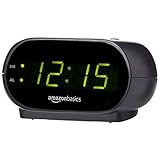
- Digital alarm clock with a 0.7-inch green LED display for easily checking the time at a glance
- Built-in nightlight gently illuminates a dark room
- Repeating snooze function makes it possible to sleep a little longer
- AC powered with integrated power supply. Batteries may be used as a backup power source to ensure time and alarms are retained in memory for 8 hours (refer to User Manual for details)
- Measures 4.5 x 3.5 x 2.4 inches (LxWxH); weighs 0.4 pounds (6.6 oz) Note: Batteries are not included
Common Mistakes When Daylight Saving Time Begins
Even with the best intentions, a few common slip-ups happen every year when DST rolls around. Being aware of them can help you sidestep the hassle:
- Forgetting to change clocks — This is probably the most frequent mistake. It can lead to being late for work, appointments, or school.
- Why it matters: Being late can have professional consequences and cause unnecessary stress.
- Fix: Set multiple reminders on your phone or calendar a day or two before. Make it a habit to change all your clocks before you go to sleep on Saturday night.
- Changing clocks to the wrong hour (back instead of forward) — A classic blunder that causes immediate confusion.
- Why it matters: You’ll be an hour behind everyone else, leading to missed events and a feeling of being out of sync.
- Fix: Remember the mantra: “Spring Forward, Fall Back.” When DST begins in March, you spring forward an hour. Always double-check the direction before turning those hands.
- Assuming all devices update automatically — While many modern devices are smart, not all are.
- Why it matters: Relying solely on automatic updates for critical devices like your primary alarm clock could mean waking up an hour late.
- Fix: Manually check your most important timekeeping devices (like your bedside alarm) after the official change time, just to be sure.
- Not considering time zone differences — If you’re coordinating with people in areas that might be on a different DST schedule (or don’t observe it at all), this can be a pitfall.
- Why it matters: Miscommunication about times can lead to missed connections, especially in business or family coordination.
- Fix: Always confirm the exact meeting or call times with individuals in different time zones. Mentioning DST can help clarify things.
- Ignoring the impact on sleep patterns — Losing an hour of sleep on the night DST begins can affect some people.
- Why it matters: Disrupting your sleep schedule can lead to fatigue, reduced concentration, and irritability for a few days.
- Fix: Try to adjust your sleep schedule gradually in the days leading up to DST. Go to bed and wake up a little earlier in the week before the change.
FAQ: Your Daylight Saving Time Questions Answered
Here are some common questions people have about when Daylight Saving Time begins:
- When does Daylight Saving Time start this year?
Daylight Saving Time begins on the second Sunday in March. For example, in 2024, it started on Sunday, March 10th. Always check a reliable calendar for the specific date each year, as it shifts.
- What time do the clocks actually change?
The official time for the change is 2:00 AM local time. At that exact moment, clocks “spring forward” to 3:00 AM.
- Do all places observe Daylight Saving Time in the US?
No, not all states or territories observe DST. Arizona (except for the Navajo Nation) and Hawaii do not change their clocks. U.S. territories like Puerto Rico, Guam, American Samoa, the Northern Mariana Islands, and the U.S. Virgin Islands also do not observe DST.
- What should I do if I forget to change my clock?
If you realize you’ve forgotten to change your clock, adjust it immediately to the correct time. Then, if you’re late for an appointment or work, contact the relevant parties to let them know what happened and apologize. It’s best to prevent this by setting reminders.
- Will my smartphone automatically update for Daylight Saving Time?
Most modern smartphones, tablets, and computers that are connected to the internet will automatically update their time settings for Daylight Saving Time. However, it’s always a good practice to give your phone a quick glance after the official change time to confirm it has updated correctly.
- Why do we even have Daylight Saving Time?
The primary historical reason for DST was to make better use of natural daylight. By shifting the clocks forward in the spring, daylight hours are extended into the evening, which was believed to conserve energy and potentially reduce crime. While the effectiveness of these benefits is debated today, the tradition continues in many places.
- What happens when Daylight Saving Time ends?
Daylight Saving Time ends on the first Sunday in November. On that day, clocks “fall back” one hour at 2:00 AM local time, returning to standard time. This gives you an extra hour of sleep that night.

Michael Reeves is a PGA Professional with over 20 years of experience in competitive golf and instruction. A former Division I collegiate player at the University of Texas, he competed on the mini-tours before transitioning to full-time coaching and golf journalism. He has been a certified PGA teaching professional since 2005 and has worked with players at every level, from absolute beginners to collegiate champions.
His writing has appeared in Golf Digest, Golf Magazine, and The Left Rough. At GolfHubz, Michael leads the editorial team, overseeing fact-checking and ensuring every answer meets the same standard he demands on the lesson tee: clear, evidence-based, and immediately useful.
When he’s not writing or teaching, Michael plays to a +1.4 handicap at his home club in Austin, Texas. He has attended over 40 major championships as a journalist and fan, and has played more than 200 courses across 15 countries.
You can reach Michael at [email protected] or follow his occasional swing analysis posts on the site.